

Make a useful plan for the day Choose an interest, explore practical options, and find the details for your next stop. The main action is “Plan your day”. Supporting sections cover A short first visit, Arts and culture, Practical local links.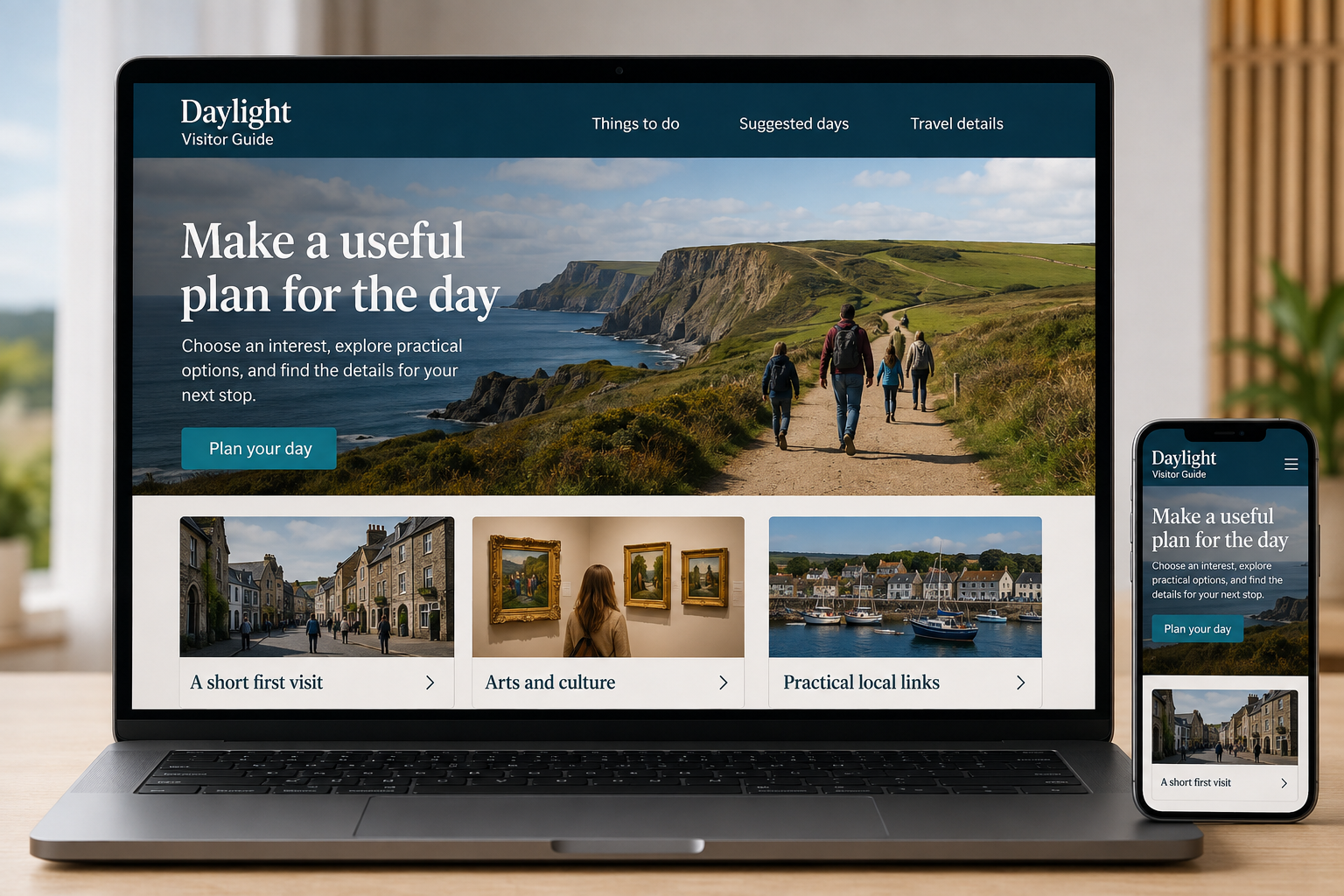
Explore this layout

A visitor center website should help someone make a workable plan, not overwhelm them with every possible attraction at once. Travelers may have an afternoon, a rainy day, or a particular interest to explore. Clear choices and maintained practical information turn a collection of listings into a useful guide. The center's role is to help people decide where to go next with confidence.
Start with time and interests
Offer routes such as a short first visit, family activities, arts, or outdoor interests only where they reflect the destination's actual options. Explain how suggestions fit together and distinguish a proposed itinerary from a guaranteed schedule. Let visitors find individual listings directly as well. A useful plan considers travel between places and the amount of time available, rather than grouping attractions solely because they share a keyword or appear in the same promotional photograph.
Give listings a maintainable structure
Each listing should identify the place, what it offers, location, and a direct source for current hours, prices, or booking details. Record when the center last checked information and establish a review routine. Avoid copying changeable details that nobody can maintain. Use verified descriptions and permission-cleared images. If listings are paid or featured through a partnership, make the arrangement understandable so visitors can assess recommendations without mistaking placement for an independent ranking.
Keep practical travel information close
Provide a clear route to transport, parking, access, and visitor-center contact details, using authoritative local sources where appropriate. Explain seasonal limitations only when verified and date notices that may expire. Maps need readable labels and supporting text links. Visitors using a phone outside should not have to download a large brochure to find the center's address or understand which attraction a marker represents. Practical information is part of the destination experience, not an afterthought.
Measure useful onward journeys
Track clicks to attraction websites, map use, itinerary saves where offered, and requests to the visitor team. Those actions reveal whether the guide helps people move from browsing to a plan. Review searches with no results and questions received at the desk. They can suggest missing categories or unclear terminology. Publish new guides when there is a specific visitor need and enough maintained information to answer it, rather than multiplying nearly identical pages for search visibility alone.
Before you launch
- Link listings to current official information
- Date temporary travel notices
- Provide text links beside map markers
- Explain featured-listing arrangements
Should the center take bookings for every attraction?
Only where there is a clear operational arrangement to support them. Direct links to an attraction's own booking page may be simpler and more accurate. The visitor website can still provide valuable comparison and planning information without taking responsibility for inventories and confirmations it does not control.