

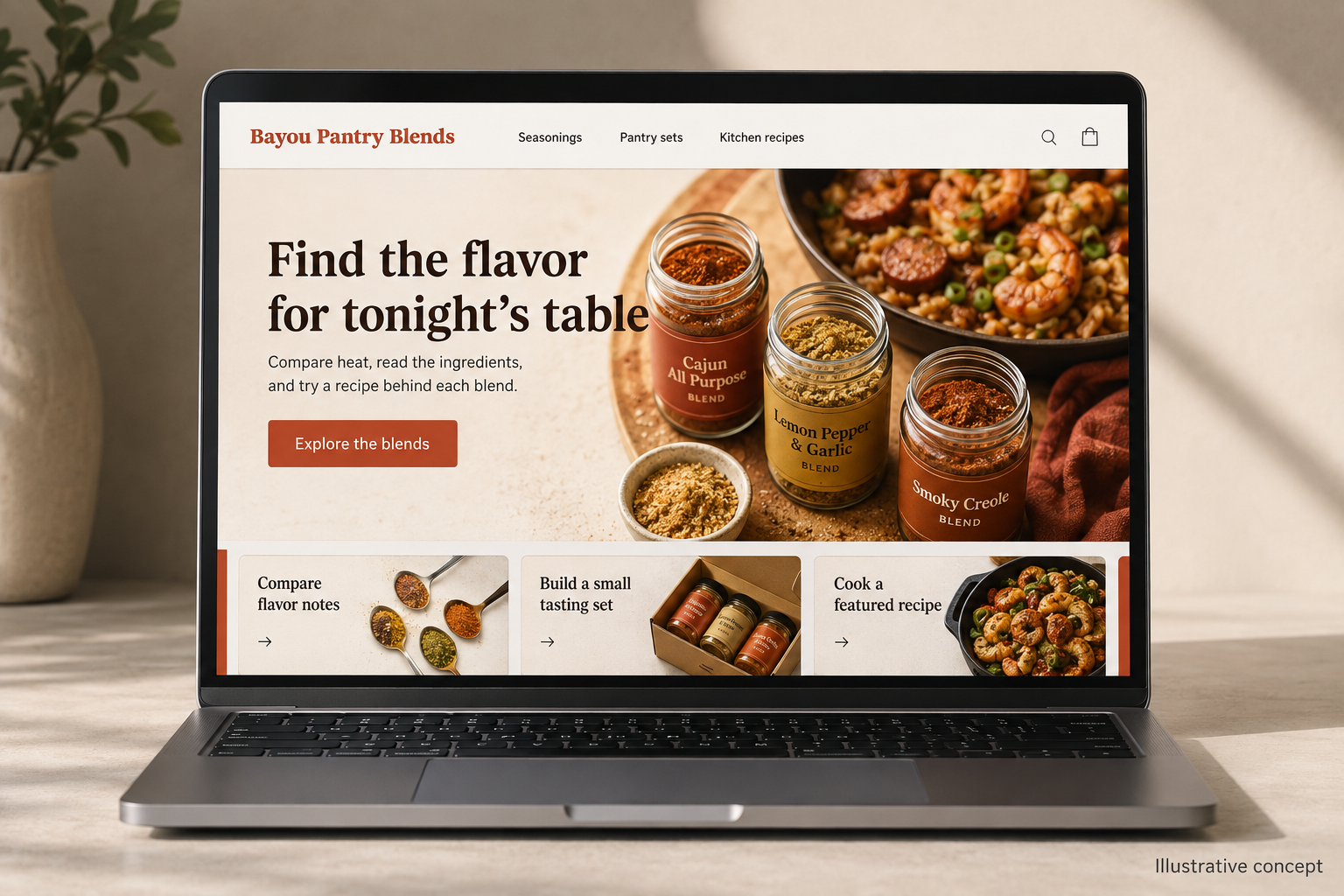
Explore this layout
Find the flavor for tonight’s table
Compare heat, read the ingredients, and try a recipe behind each blend.
The main action is “Explore the blends”. Supporting sections cover Compare flavor notes, Build a small tasting set, Cook a featured recipe.

Words such as bold and authentic do little to explain how a seasoning will taste in dinner. A hypothetical Louisiana spice maker can give online buyers more useful guidance by describing flavor, heat, and intended uses plainly. The store should help someone choose a first blend, inspect its ingredients, and buy an amount that makes sense for their kitchen.
Describe flavor before decorating the label
Give each blend a short, concrete description of its dominant notes and the dishes used in the maker’s own examples. If the shop uses a heat scale, explain how its levels compare within the range and acknowledge that people perceive heat differently. Do not treat a dramatic product name as an ingredient description. A simple comparison can help someone distinguish a smoky blend from an herb-led one without reading several long product stories.
Keep the pantry facts close to purchase
Show net weight, ingredient information, and the product’s stated storage guidance in readable text. Identify whether the container is a jar, pouch, or refill so a buyer knows what arrives. If the recipe changes, update the listing and any relevant comparison pages. Avoid broad dietary or health claims that the product information does not support. People selecting food for someone else need the actual details more than an enthusiastic paragraph about versatility.
Let a bundle reflect the customer’s cooking
Offer small collections organized around the meals demonstrated by the shop, with every included item and size visible. Allow a buyer to inspect the individual blend pages without losing the bundle selection. If substitutions are permitted, show what the swap changes in flavor and ingredients. A gift set may need presentation and message options, while a household refill needs a practical quantity choice; those purposes do not have to share the same default package.
Connect recipes to a confident first order
Publish recipes the business has prepared using a named blend and a stated amount. Show the other ingredients required so the seasoning is not mistaken for a complete meal kit. Link to the exact product and an appropriate starter size. Review which recipes lead to first purchases and which blends generate repeat questions. If visitors ask whether a mix contains salt or how hot it is, improve the product summary rather than sending them into a general FAQ.
Before you launch
- Define the shop’s own heat scale.
- Show jar and refill packaging separately.
- Keep ingredient details visible for bundle swaps.
- Link recipes to the exact blend used.
Is a heat rating enough to help someone choose a spice blend?
Heat is only one part of the decision. Describe the dominant flavors, ingredients, and example uses as well. A customer may enjoy a warm blend but dislike a smoky profile, or need to inspect a specific ingredient. Keep the scale consistent within the shop without implying that everyone experiences the same intensity.