

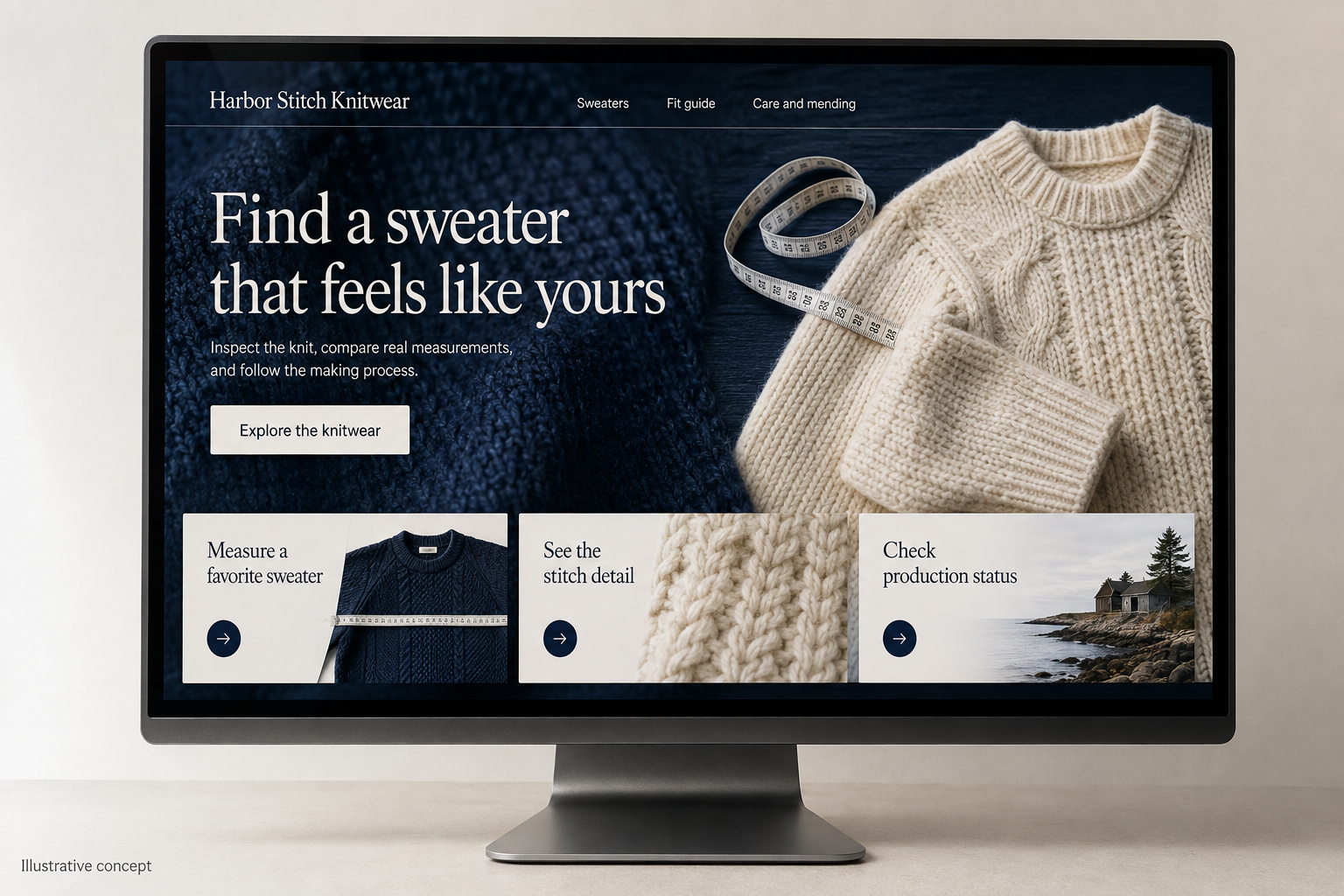
Explore this layout
Find a sweater that feels like yours
Inspect the knit, compare real measurements, and follow the making process.
The main action is “Explore the knitwear”. Supporting sections cover Measure a favorite sweater, See the stitch detail, Check production status.
A sweater should feel considered long before it reaches the wardrobe. For a hypothetical Maine knitwear studio, an online store can bring the details closer: the shape of the shoulder, the weight of the knit, and the actual dimensions of a finished garment. Coastal imagery can establish a mood, but fit and material information should carry the buying decision.
Compare the garment with one already owned
Provide finished-garment measurements for each size and show where they are taken. A simple flat-lay diagram can explain chest width, body length, and sleeve measurement more clearly than a generic size letter. Suggest comparing those numbers with a sweater the customer likes wearing. If photographs show different fits, give the relevant garment size and model measurements with permission. Do not describe one silhouette as universally flattering or imply that a size label settles every question.
Show the wool at a useful distance
Pair a complete garment photograph with close views of the stitch structure, collar, cuff, and inside seams. Describe the fiber composition using the studio’s actual product information. Explain weight and feel with concrete language while recognizing that sensitivity to texture varies between people. If a yarn sample is available, connect it to the exact color options. Screen color is an aid to selection, so avoid promising a perfect match to every device.
Separate stocked pieces from made-to-order work
A finished sweater ready for dispatch and a sweater that still needs to be knitted should have different availability labels. Explain the production sequence, when the customer will receive updates, and which choices become fixed after work begins. If a seasonal queue changes, update the ordering notice rather than leaving an old estimate inside the description. Let someone with a gift date ask about feasibility before completing a customized order.
Give ownership a place on the site
Care notes, storage guidance, and any mending service the studio actually offers can live beside the product record. Make it easy to identify the yarn or garment from a previous purchase when requesting help. Articles comparing sweater shapes can lead readers to the corresponding measurement charts. Track fit questions and size exchanges alongside sales. If one style consistently produces uncertainty about sleeve length, improve its diagram and photography before adding another lifestyle image.
Before you launch
- Publish finished measurements for every size.
- Show cuff, collar, and inside construction.
- Distinguish stocked and made-to-order garments.
- Connect yarn samples to current color options.
Should a sweater page use body measurements or garment measurements?
Both can help, but they answer different questions and need clear labels. Body measurements support a size recommendation; finished-garment measurements show the actual shape and room in the sweater. A diagram that lets customers compare a garment they own often makes the difference easier to understand than a size letter alone.