

Understand the training before you begin Explore programs, see the class routine, and arrange a suitable introductory visit. The main action is “Explore programs”. Supporting sections cover Children's programs, Adult beginners, What to bring.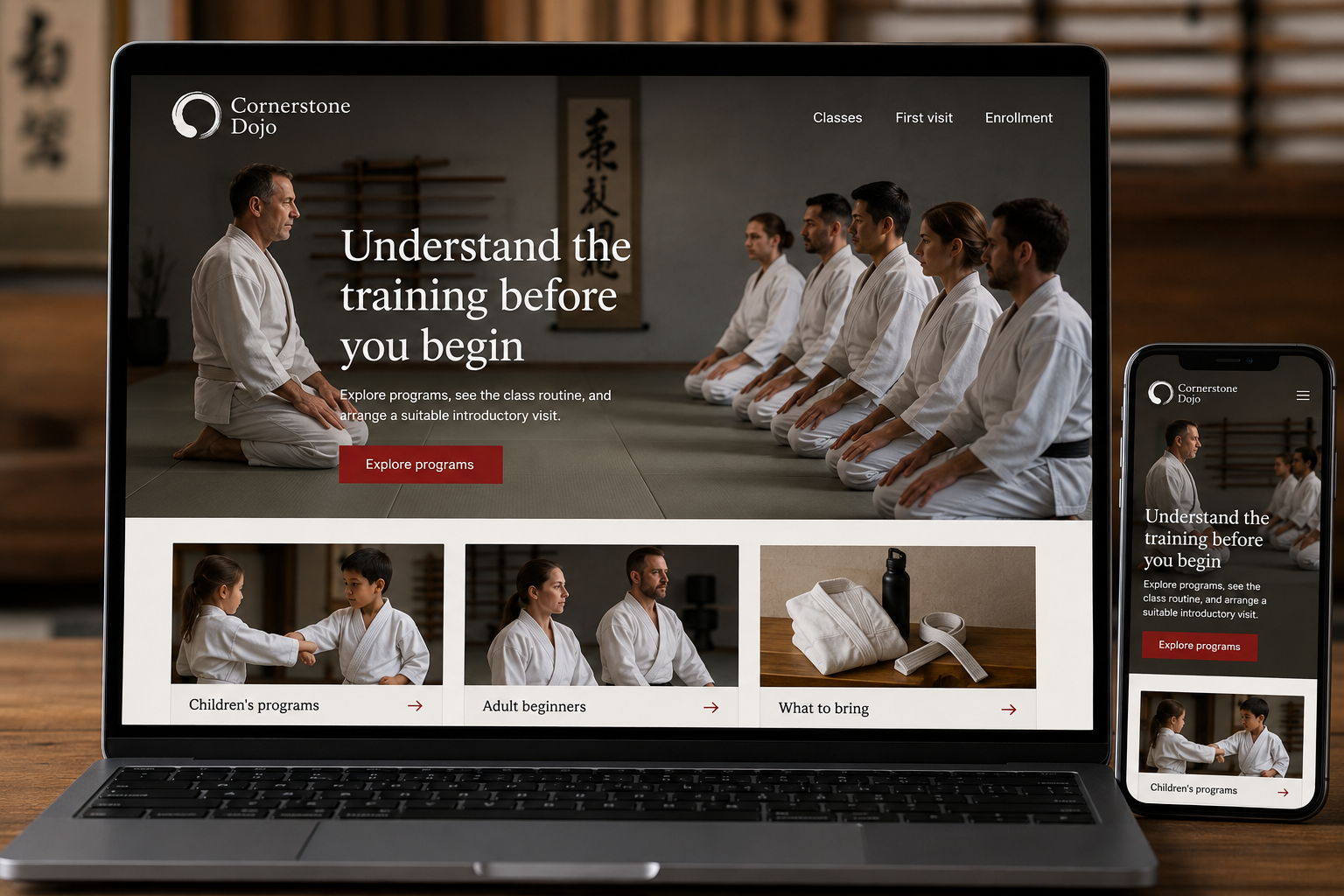
Explore this layout

Families and adults researching martial arts often have little basis for comparing schools beyond style names and photographs. They need to know how classes are taught, who attends, and what joining involves. A useful website makes the everyday training experience understandable. It can communicate the school's character without relying on promises about confidence, fitness, or achievement that no website can guarantee for every student.
Describe the actual class structure
Explain the art or program taught, how sessions are organized, and which age and experience groups attend. Distinguish children's programs from adult classes where the teaching approach differs. State whether beginners join ongoing groups or start in a dedicated introduction. Use real, permission-cleared images that show teaching and ordinary practice, not only competition highlights. Prospective students should understand what happens during a typical lesson before deciding whether they want to observe or participate.
Make trial arrangements clear
Show whether the first visit is an observation, introductory lesson, or regular class with support. Explain booking steps, duration, arrival timing, and what the school asks newcomers to wear or bring. Provide a route for individual participation questions without trying to assess suitability in promotional copy. If a trial includes more than one session, state the dates or selection process. A clear confirmation helps the student arrive prepared and lets instructors know whom to expect.
Explain equipment and enrollment
List what is provided initially and what students may need if they continue. Describe membership, course, or lesson-payment options using the school's actual terms. Keep grading, events, and other separately arranged costs understandable where they affect participation. Avoid hiding important commitments behind a free-trial headline. People should be able to review the ongoing structure before the first visit, even if an instructor later helps them choose the most appropriate option.
Judge the site by informed participation
Track trial bookings, attendance where available, and subsequent enrollment, while reviewing questions about age groups or costs. Publish useful introductions to the school's own programs and the steps for beginning. Avoid broad claims that training will produce a specific personal transformation. If the website attracts many inquiries for an age group the school does not teach, make the boundaries more prominent. Good content helps the right prospective students recognize a suitable program and understand their next step.
Before you launch
- Define the trial visit format
- Show age groups beside the timetable
- List initial equipment needs
- Explain ongoing enrollment terms
Should the site focus mainly on competition results?
Use real achievements where relevant, but explain the everyday program too. Many prospective students are deciding whether they would feel comfortable learning, not selecting a competition team. Show how the school's different pathways work so performance credentials support the information rather than replace it.