

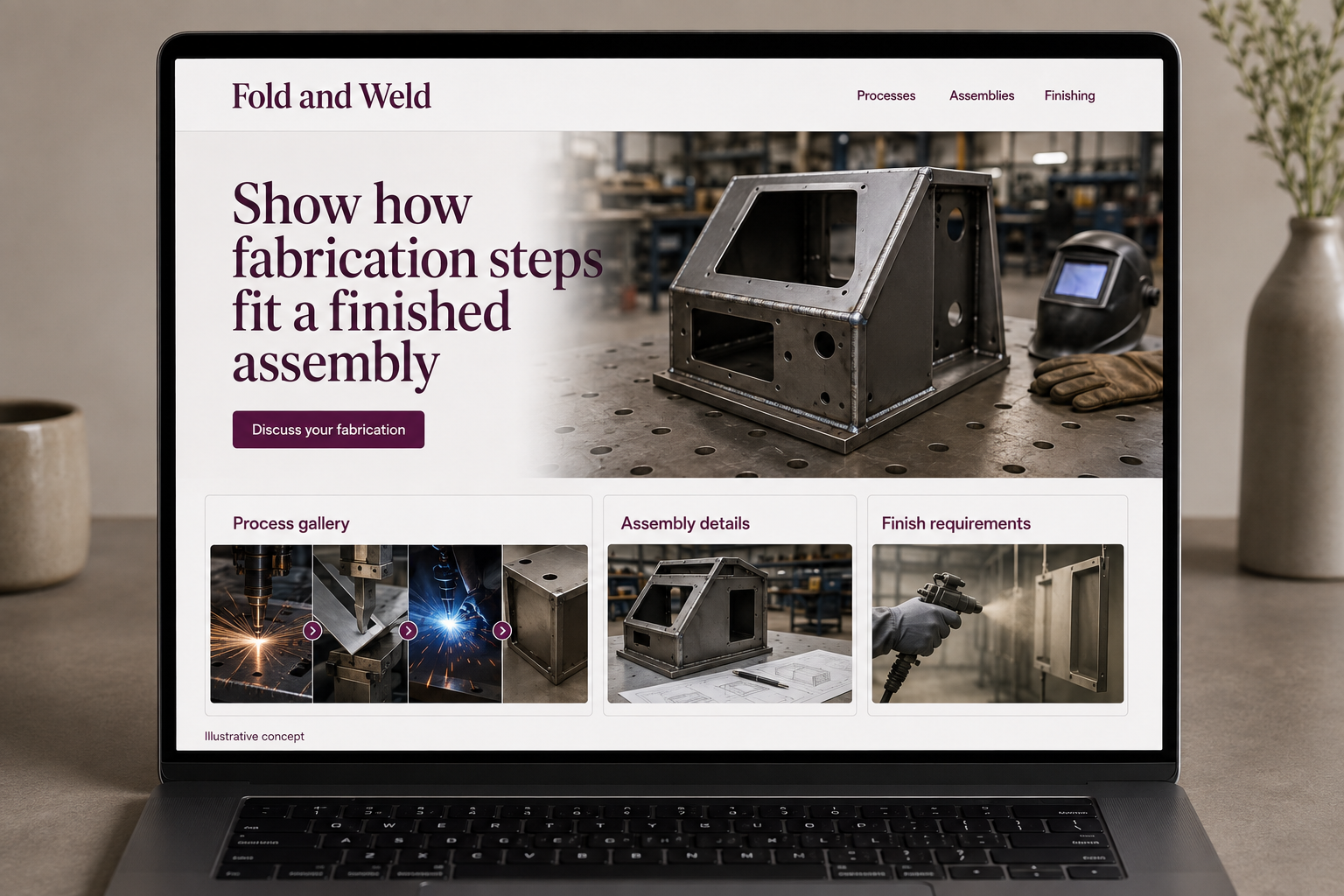
Explore this layout
Show how fabrication steps fit a finished assembly
Explore process gallery, assembly details, and finish requirements.
The main action is “Discuss your fabrication”. Supporting sections cover Process gallery, Assembly details, Finish requirements.

A fabrication customer may need a cut component, a welded assembly, or a finished object ready for the next stage of a project. Those scopes should be easy to distinguish on the website. Show how the business combines its actual processes, where review and approval occur, and which facts make a drawing package useful to the quoting team.
Show how processes create an assembly
A fabrication buyer may need cutting, forming, welding, finishing, or a combination. Explain the processes the business actually provides and how they fit the finished requirement. Avoid implying every service is performed in house if that is not true. Project examples should describe the agreed scope and material without exposing confidential designs. A useful website helps the visitor recognize a suitable partner before they begin a detailed discussion of drawings, quantities, and delivery needs for the work.
Make the scope between stages visible
Describe how the company reviews drawings, material, joins, finish requirements, and assembly expectations. Keep capacity statements specific and maintained. Buyers need to know whether they are requesting individual components or a completed assembly, and which details affect the proposal. A simple process diagram can show the review and approval points. It should explain the business’s actual workflow rather than suggest that every project follows an identical sequence or needs the same production methods and checks.
Ask for a usable fabrication brief
A first request can include general application, material if known, quantities, desired timing, and drawing availability. Allow early questions without demanding final files. Provide a controlled upload route with clear format limits. Explain who reviews the package and what additional detail may be needed. The form should help the team distinguish a design development discussion from a ready to quote assembly while keeping sensitive technical information out of an unsecured general message field on the website.
Measure inquiries by process and scope fit
Track which capability pages produce suitable requests and where buyers misunderstand the offered work. Repeated questions about finishes or assembly should shape the supporting content. A guide to preparing a fabrication package can improve the first conversation without giving engineering instructions. Link it to the quotation route. Judge the site by useful technical opportunities and clearer briefs, not by the number of metalwork images displayed or broad language that says little about the processes the business actually offers.
Before you launch
- Distinguish components from completed assemblies.
- Identify processes performed by outside partners accurately.
- Ask whether finish requirements are already defined.
- Provide a controlled route for fabrication drawings.
What should project photographs explain beyond the finished metalwork?
Captions should identify the relevant material, processes, and scope the business actually performed, using details cleared for publication. Explain whether the example is a component or a complete assembly. That context helps buyers compare their requirements without exposing a customer’s confidential design or implying that every visible stage was done in house.