

Explore this layout
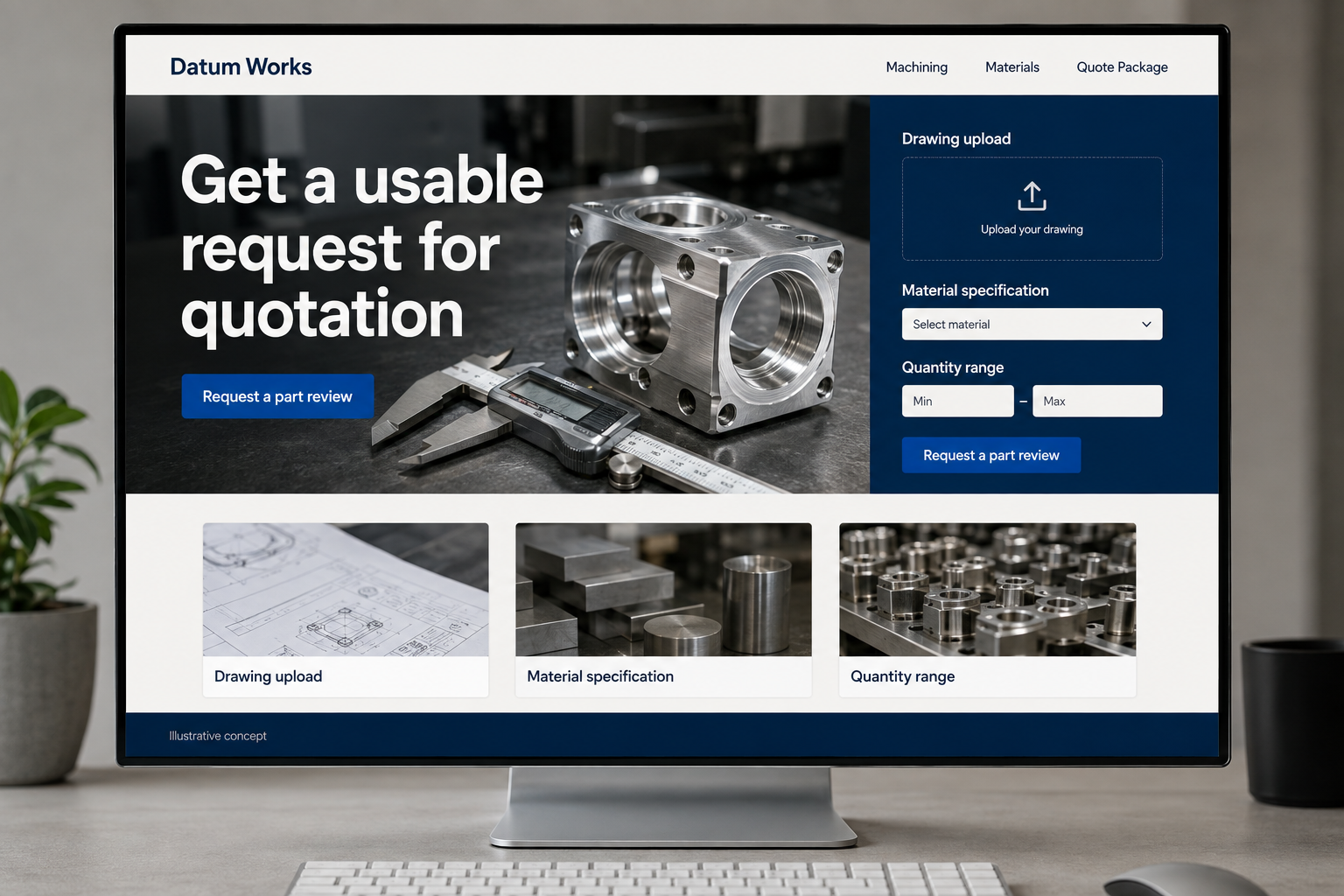
Get a usable request for quotation
Explore drawing upload, material specification, and quantity range.
The main action is “Request a part review”. Supporting sections cover Drawing upload, Material specification, Quantity range.

An impressive machine list can still leave a buyer unsure whether a shop will consider their part. A machine-shop website should explain the work those capabilities support and the information behind a useful quotation. Material, quantity, finish, drawing status, and inspection expectations belong in a clear request process that accommodates both prototypes and established repeat work.
Help buyers match a part to the shop
A machine shop website should connect processes, materials, and part characteristics in language a buyer can use. State actual capabilities without suggesting that every drawing can be accepted. Show representative work with permission and enough context to explain the process involved. A customer should understand whether the shop is a plausible fit for a prototype, repeat part, or other offered work before sending files and expecting a firm price or delivery commitment from the team.
Explain the information behind a quote
Describe the role of drawings, material requirements, quantities, finishes, and inspection expectations in reviewing a job. Do not ask an early stage buyer to settle every detail before contact. A sample quotation checklist can show the categories of information needed without exposing a client design. Keep any tolerances or capacity statements accurate and tied to the relevant process. Buyers need a useful way to prepare their request, not an unexplained wall of machine specifications and abbreviations.
Give technical files a controlled route
Ask for the project’s general purpose, quantity range, timing, and whether drawings are ready. Offer secure file handling that matches the business’s actual process. Explain accepted formats and any practical upload limits. Sensitive material should not be copied into a public comment field. The confirmation should identify the review step and avoid implying that a file upload accepts the job. Let the visitor ask about fit before providing information they are not yet ready to share.
Use quoting feedback to improve capabilities pages
Review inquiries that progress and those declined because of process, material, or volume mismatch. Make common boundaries easier to find. Content about preparing a drawing package or distinguishing prototype and repeat production discussions can bring useful buyers to the site. Link it to the relevant inquiry. Track qualified requests and clearer technical briefs, rather than judging success by file downloads alone or adding broad claims that the shop can machine virtually anything to any specification.
Before you launch
- State accepted drawing formats and upload limits.
- Keep quantity range in the quotation request.
- Tie capability limits to the relevant machining process.
- Explain that file submission starts review rather than accepts work.
How much technical detail belongs in a machine-shop inquiry form?
Collect enough to route the request: the general part need, material if known, quantity range, timing, and drawing availability. Let detailed files follow through the shop’s controlled upload process. Avoid forcing an early-stage buyer to settle every specification before the team can say whether the project is worth discussing.