

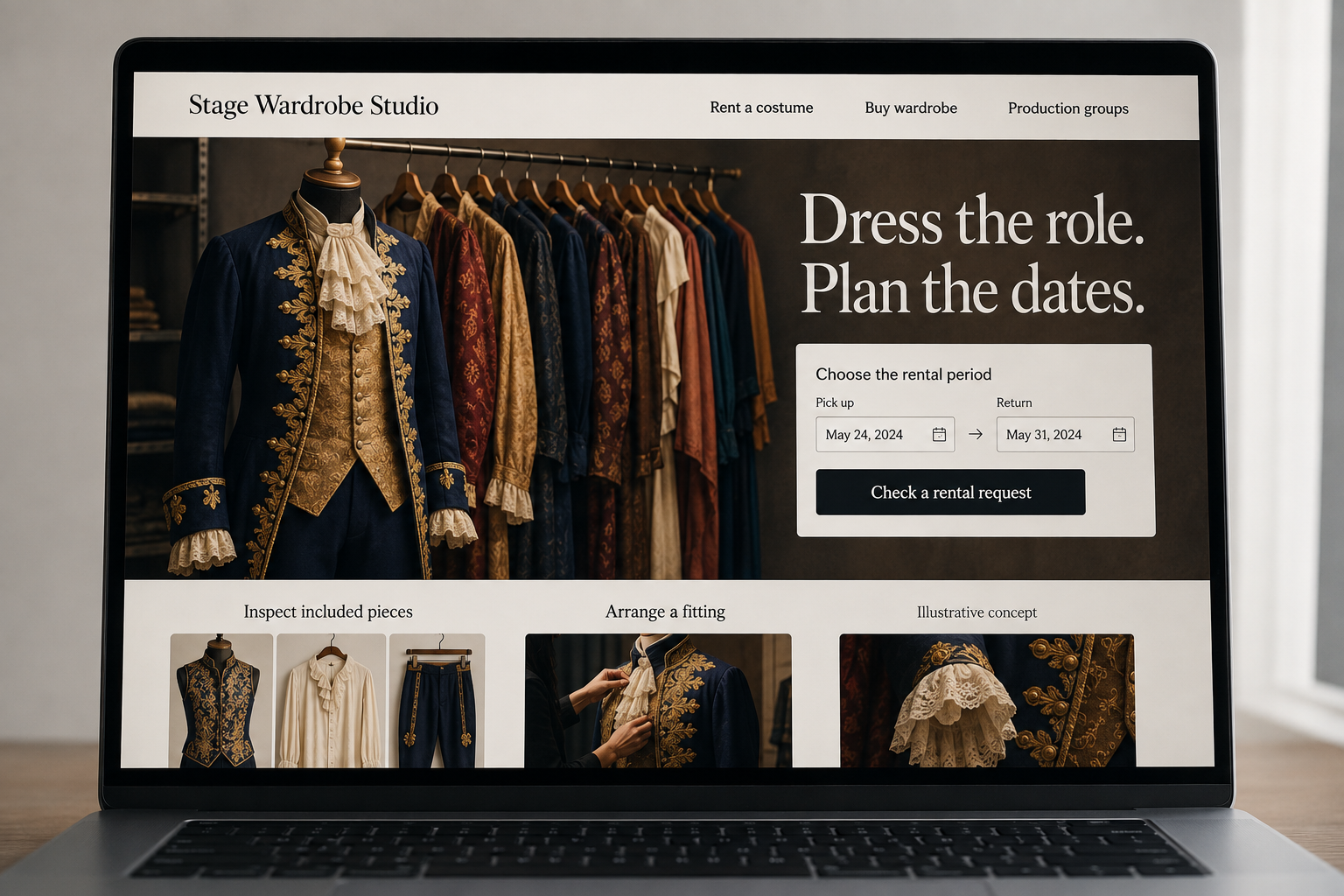
Explore this layout
Dress the role. Plan the dates.
Explore purchase pieces and rental wardrobe with clear fitting steps.
The main action is “Check a rental request”. Supporting sections cover Choose the rental period, Inspect included pieces, Arrange a fitting.

A costume needed for one performance has a different buying journey from a garment joining a permanent wardrobe. A hypothetical Nevada costume studio should let those journeys share a visual identity while keeping their rules separate. Dates, sizing, included pieces, and return arrangements need to appear before a customer becomes attached to an outfit they cannot actually obtain.
Make rent and buy separate decisions
Label rental and purchase items in search results, collections, and the basket. If the same design is offered both ways, explain whether the actual garment, customization options, or accessories differ. A rental price needs its period stated beside it. Do not let a lower rental figure appear as an ordinary purchase price. Show the complete included outfit and identify props or footwear used only to style the photograph.
Ask for the dates that affect availability
A rental request may need collection, performance, and return dates rather than one generic event field. Explain how the studio uses those dates to confirm availability and preparation time. Distinguish a submitted request from a confirmed reservation. If the calendar cannot reflect alterations or cleaning turnaround automatically, say that staff confirmation is required. The customer should be able to review the full rental period before committing to the studio’s stated booking terms.
Show the garment’s actual fit range
Provide garment measurements, adjustment features, and the relevant sizing guidance. State whether alterations are offered and which requests need review. Close photographs can show fastenings and included layers that are hard to see in a full costume shot. For a group order, allow sizes to be collected in a structured list without publishing performer details. Keep the fitting appointment process connected to the reservation so it does not become a separate, easily missed conversation.
Help organizers build a coherent request
A production page can show available style groups and invite an organizer to share the number of performers, dates, and visual requirements. Explain which information leads to a useful response. Retain inspiration galleries only when the pictured garments are marked as available, archived, or illustrative. Measure incomplete booking requests and date-related declines. Those patterns show whether the site is attracting suitable inquiries and making the preparation process understandable.
Before you launch
- Show the rental period beside rental prices.
- Separate requests from confirmed reservations.
- Identify styled accessories that are excluded.
- Collect return dates as well as event dates.
Can a calendar alone confirm a costume rental?
Only if it accounts for the studio’s actual preparation, fitting, and turnaround requirements. Otherwise, label the date selection as a request and explain when confirmation follows. Customers need to know whether they have reserved a garment or merely asked the studio to check that it can be ready.