

Make something, understand the process Choose a clay experience and see how your work moves from the studio table to collection. The main action is “Explore clay classes”. Supporting sections cover Wheel introductions, Handbuilding sessions, After your class.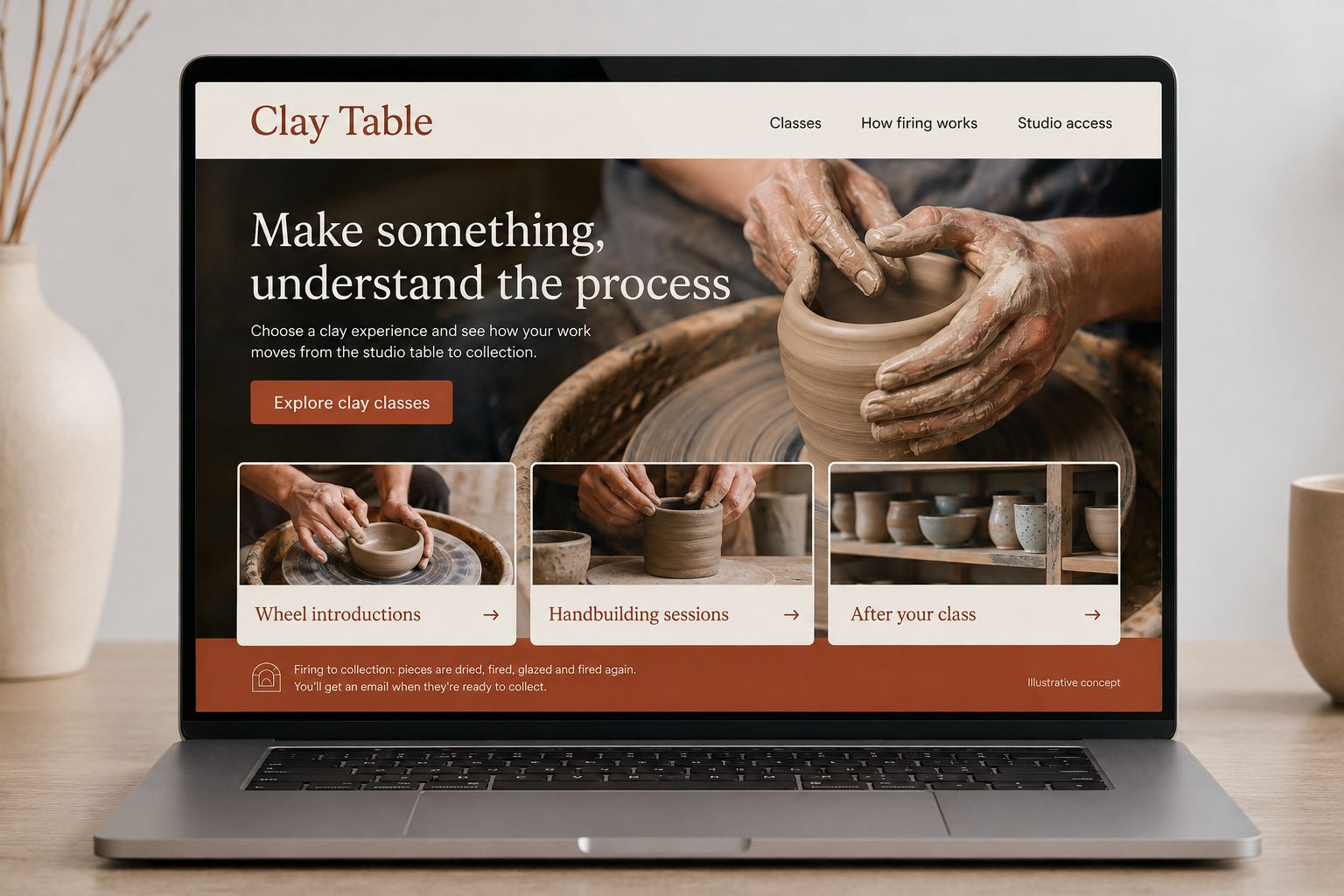
Explore this layout
A pottery class does not always end with a finished piece ready to take home. Clay may need drying, firing, glazing, and another collection visit. A useful studio website explains that journey before someone books. It should also help visitors distinguish a short taster from a longer course or independent studio access, so enthusiasm turns into an experience they actually understand.
Separate the ways people can work with clay
Describe handbuilding, wheel classes, and other offered formats using practical language. Explain what participants do, the experience expected, and how teaching is organized. A taster session should show its limited scope without promising a finished collection of perfect objects. Use real examples with permission and label illustrative pieces accurately. Visitors need to know whether they are learning a process, completing a guided project, or paying for workspace to develop their own ideas.
Explain what happens after the class
Outline the studio's drying, firing, glazing, and collection stages, including which steps participants complete themselves. State how customers are notified when work is ready and the actual collection arrangements. Describe the studio's approach to variation and unsuccessful pieces honestly without guaranteeing every item survives the process unchanged. A clear timeline helps people decide whether a class suits a planned gift or travel schedule and prevents them assuming the object leaves with them that day.
Make inclusions and access visible
Show class duration, materials, firing allowance, and any limits on included work. For independent studio access, explain induction, booking, equipment use, and experience requirements through the studio's established process. Keep membership and taught classes distinct in navigation and checkout. If extra clay or firing carries a separate charge, identify the arrangement before enrollment. The customer should understand whether they are reserving instruction, a workspace session, or a broader access package.
Use process content to support bookings
Publish a first-class guide and a simple explanation of the studio's own finishing workflow. Link these pages from class listings and confirmations. Measure taster bookings, course enrollment, and collection-related inquiries separately. If students repeatedly ask when they can take work home, the timeline needs more prominence. Useful content can preserve the excitement of making while setting realistic expectations for a material that continues changing long after the lesson has ended.
Before you launch
- Explain post-class firing stages
- Show collection notification arrangements
- List included clay and firing
- Separate taught classes from studio access
Can a pottery class promise a take-home piece that day?
Only if the specific activity and materials genuinely support that arrangement. Many ceramic processes require additional stages after class. Explain what participants make, what happens next, and when collection is expected so a visitor does not choose a session based on an impossible timing assumption.