

Explore this layout
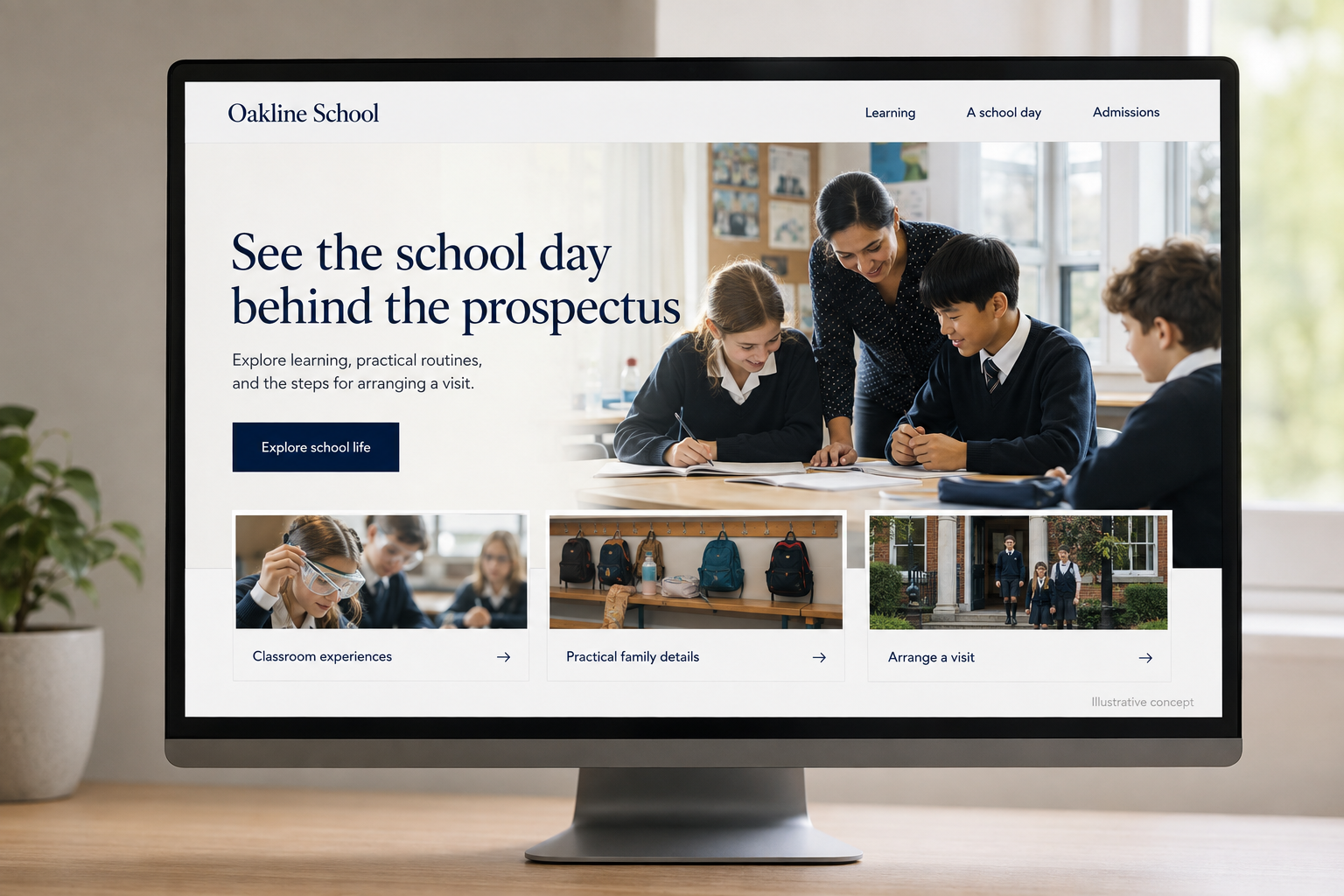
See the school day behind the prospectus
Explore learning, practical routines, and the steps for arranging a visit.
The main action is “Explore school life”. Supporting sections cover Classroom experiences, Practical family details, Arrange a visit.

Families researching a school are trying to understand a place where a child may spend a large part of each day. They need more than a list of values and an impressive entrance photograph. The website should show the learning experience, practical routines, and admissions process in a clear sequence. It should also make room for questions about fit without implying that every family has the same priorities.
Show learning through concrete examples
Describe the school's actual curriculum approach, age groups, and classroom experiences with accurate, permission-cleared examples. Explain specialist programs and how they fit into the ordinary week. Avoid unsupported claims about guaranteed academic or personal outcomes. A family should be able to picture how students spend their time and what the school emphasizes, rather than relying on broad terms that could describe almost any educational setting.
Make daily life visible
Publish the school-day structure, arrival and collection arrangements, meals, transport options where offered, and other practical details families need to evaluate. Use appropriate permissions for images of students and avoid unnecessary personal information in public stories. Explain where families can discuss individual needs through the school's established process. Practical information helps visitors judge whether the school fits their circumstances and prepares them to ask more specific questions during a conversation or tour.
Give admissions a readable sequence
Show entry points, application stages, visit opportunities, and current dates maintained by the admissions team. State which step is an inquiry, which is an application, and when a place is actually offered. Explain fees and required materials using the school's current documents and processes. Keep sensitive application information within the appropriate admissions system rather than a general marketing form. A family should understand the next action without assuming a tour request reserves a place.
Connect school stories to useful research
Feature genuine projects, activities, and community experiences with enough context to explain their educational role. Link stories to relevant learning or admissions information. Measure visit bookings, appropriate inquiries, and completed application stages separately. Review questions families ask repeatedly after reading the site. If daily hours or entry points remain unclear, improve those pages before publishing more promotional stories. Useful content supports a considered family decision rather than simply increasing the volume of admissions messages.
Before you launch
- Distinguish inquiries from applications
- Maintain entry dates centrally
- Show daily arrival and collection routines
- Use appropriate permissions for student images
Should admissions forms request every document at first contact?
A simple inquiry or tour request usually needs far less information than a formal application. Explain the stages and collect documents through the school's appropriate admissions process when needed. This makes the first conversation easier while keeping sensitive materials out of a broad marketing contact form.