
Find your next side one New arrivals, honest used-condition notes, and records chosen for curious listeners. The main action is “Browse records”. Supporting sections cover Exact edition details, Sleeve condition, This week's discoveries.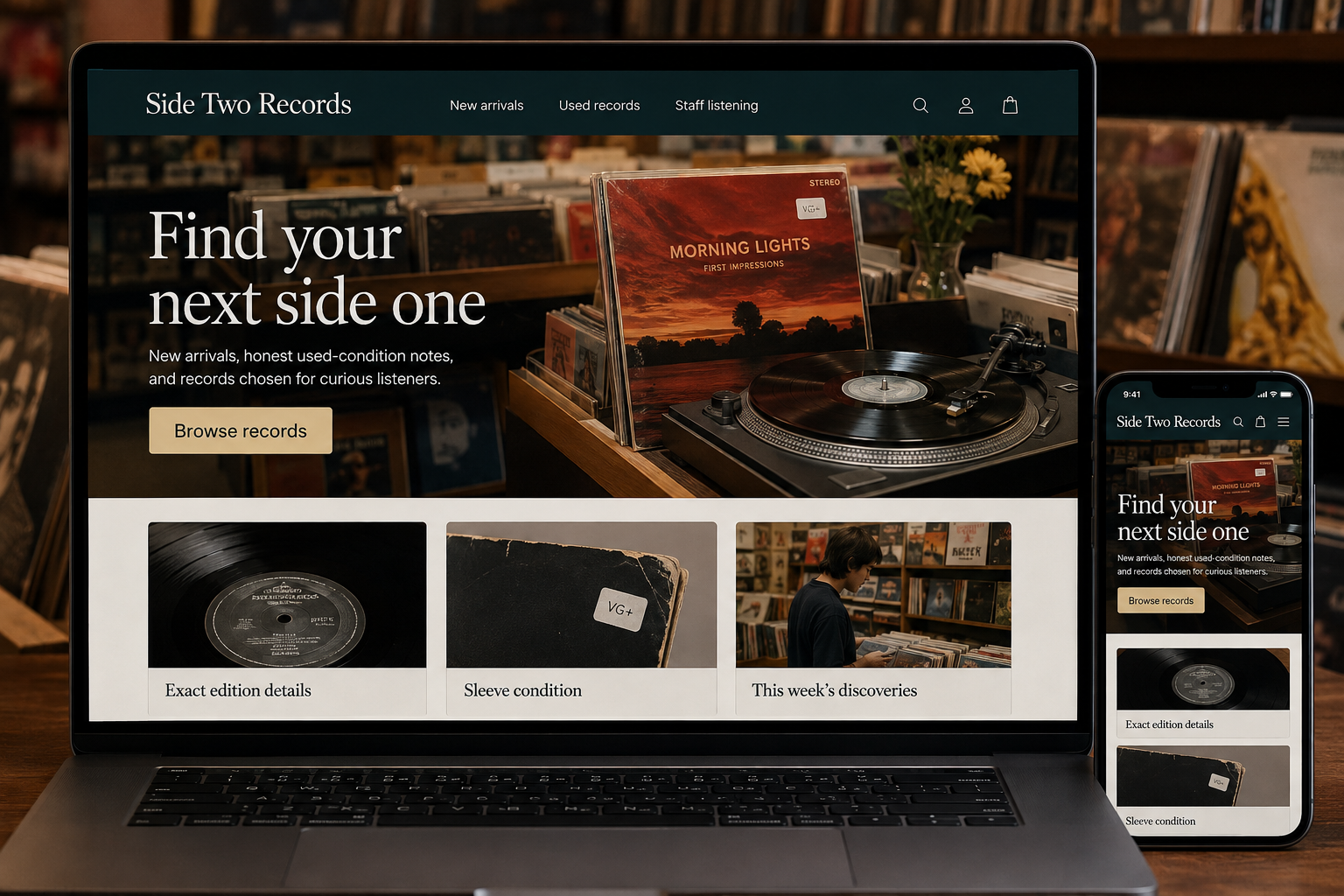
Explore this layout
For a record buyer, the details can be the product. Two copies of the same album may differ in format, edition, packaging, and condition. A useful store website makes those differences visible while preserving the pleasure of browsing. It should serve the person chasing an exact release and the listener hoping the shop will introduce them to something unfamiliar.
Identify each release precisely
Show artist, title, format, label, and available release identifiers when they are known. Separate a vinyl edition from a CD or cassette in both filters and search results. Describe color variants and included extras accurately without assuming every pressing shares them. If the edition cannot be established confidently, say so. A focused product title and a small specification table help collectors check details without burying casual listeners in an unreadable string of abbreviations.
Describe used condition consistently
Explain the shop's grading terms and assess media and sleeve separately. Photograph the actual used item when markings, inserts, or wear matter to the decision. Note whether an item has been play-tested or only visually inspected. Avoid broad assurances that imply every secondhand copy will perform identically. Clear condition evidence lets buyers make their own judgment and gives staff a shared language for discussing an item before it leaves the shop.
Keep arrivals and reservations current
New-arrival pages should link to live availability, with clear collection or shipping expectations. State whether a reservation is held immediately or confirmed by staff. For preorders, distinguish the planned release date from the expected dispatch date and explain how changes are communicated. Sold archive pages can remain useful for reference if they are plainly labeled. They should not keep appearing as available options when a customer filters for records they can purchase today.
Let the shop's listening taste show
Write concise listening notes that describe the sound and a reason someone might enjoy the record. Avoid reproducing label blurbs across every listing. Connect features to related available releases, in-store listening events, or a staff selection. Track discovery pages through to product visits and purchases, but also review exact-release searches that fail. The site needs both editorial personality and catalog precision to support the different reasons people visit a record shop.
Before you launch
- Separate sleeve and media condition
- Label visual versus play inspection
- Show exact format in search
- Define preorder dispatch expectations
Should every record page include an audio preview?
Only use previews you have permission to provide. They can help discovery, but accurate release details and useful listening notes remain valuable without them. Let visitors choose playback and keep the page understandable for people browsing silently or using assistive technology.