

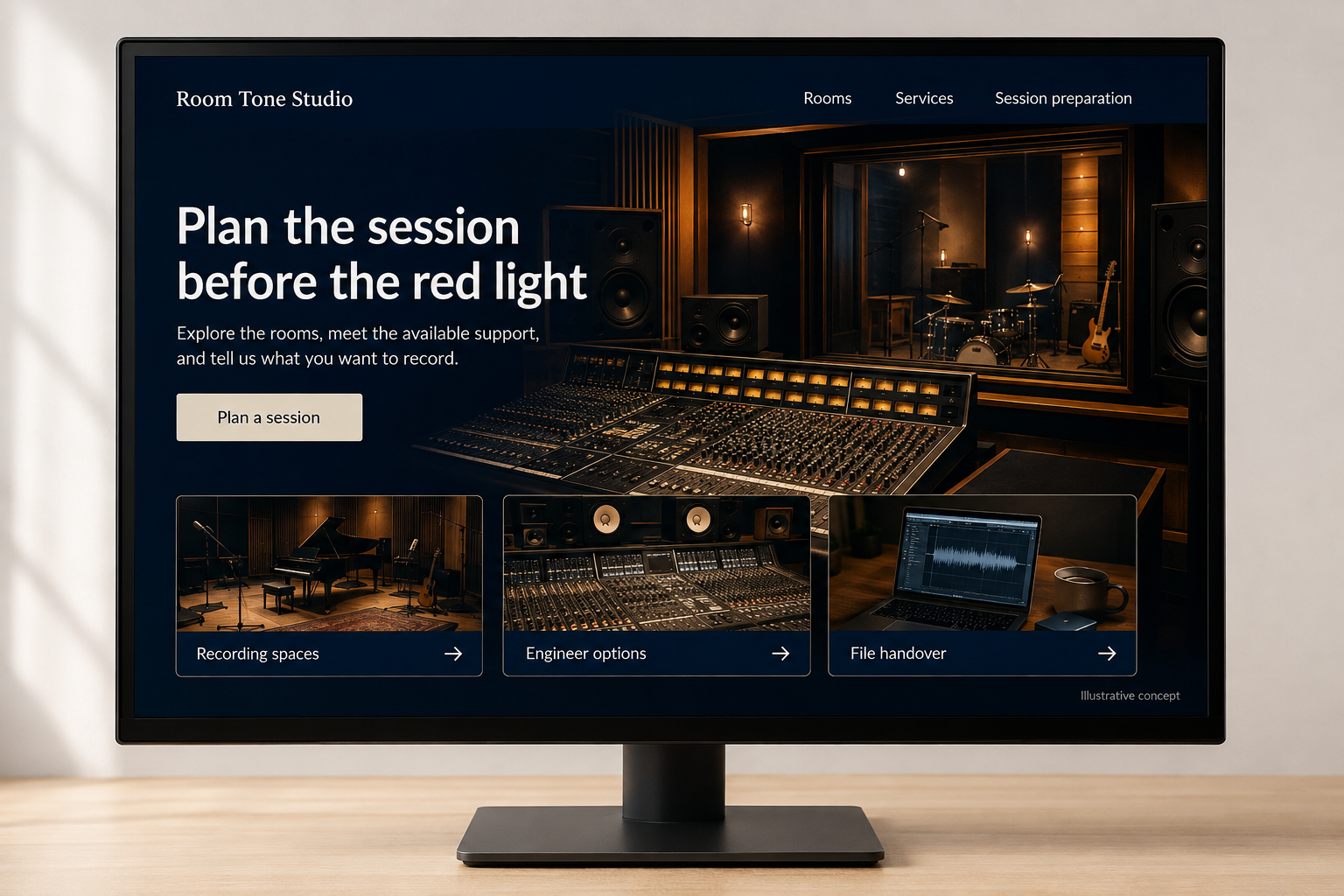
Explore this layout
Plan the session before the red light
Explore the rooms, meet the available support, and tell us what you want to record.
The main action is “Plan a session”. Supporting sections cover Recording spaces, Engineer options, File handover.
A musician planning a session needs to know more than which microphones a studio owns. Room size, monitoring, engineering support, preparation, and file delivery all affect the work. The website should help artists understand how the facility fits their project. An equipment list has value when it sits inside a clear explanation of what booking time in the studio actually includes.
Describe the rooms through their uses
Show the actual recording and control spaces, with capacities and layout information relevant to the studio's setup. Explain which types of sessions the rooms can accommodate without overstating their suitability for every ensemble. Include equipment lists that are kept current and identify items that require advance arrangement. A room diagram or clear photograph can help musicians plan who and what will be present more effectively than a moody close-up of a mixing desk alone.
Explain the people and services involved
Distinguish room hire, recording with an engineer, mixing, and other offered services. State what each booking includes and which work is quoted separately. Give engineers accurate biographies and permission-cleared examples where available. Let visitors control audio playback and label samples with useful context. A prospective client should understand whether they are hiring a space with support, bringing their own team, or asking the studio to manage a broader recording process.
Build a brief around the session
Ask about the project type, number of performers, approximate material, preferred dates, and the stage the recordings have reached. Explain when the studio needs to review technical requirements before confirming time. Show minimum bookings, preparation arrangements, and the actual change process. Avoid suggesting that a set number of hours guarantees a finished record. The booking conversation should establish a realistic scope based on what the artist wants to record and how they plan to work.
Make preparation part of the website
Publish a studio-specific guide covering arrival, instruments, file handover, and the information needed before a session. Keep technical instructions accurate for the equipment and workflow actually used. Measure suitable session inquiries, confirmed bookings, and requests for clarification about deliverables. If clients routinely expect mixing within a tracking booking, revise the service page. Clear preparation information helps the booked time begin with fewer avoidable questions and supports a more useful collaboration in the room.
Before you launch
- Separate tracking from mixing services
- Keep equipment availability current
- Explain engineer inclusions
- State file delivery arrangements
Should studio rates be listed by the hour?
Hourly rates are useful when customers can see what the time includes and any minimum booking. Some projects need a separate proposal for preparation, editing, or mixing. Explain the pricing structure without implying that the same number of hours will produce an identical finished result for every artist.