
Explore this layout
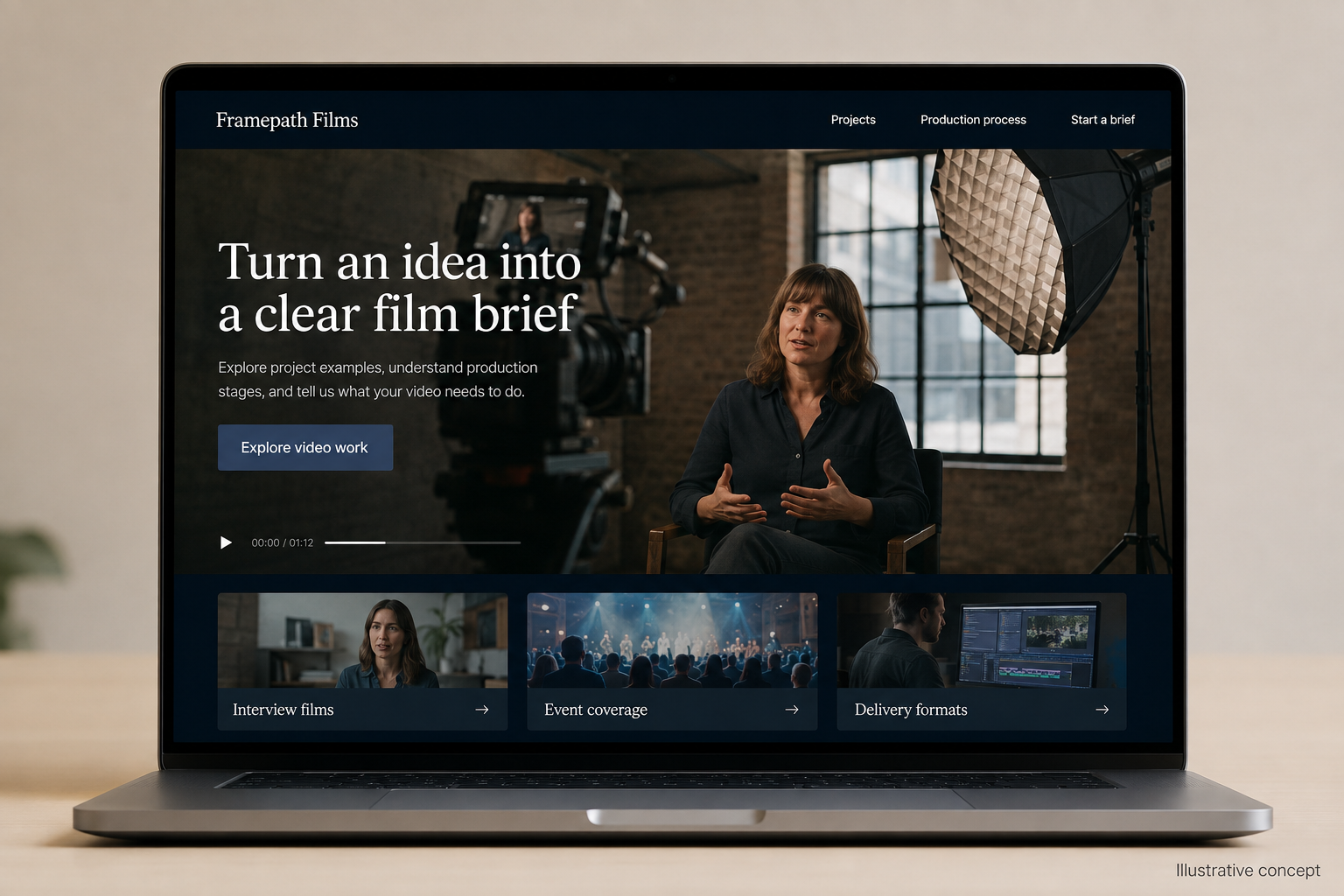
Turn an idea into a clear film brief
Explore project examples, understand production stages, and tell us what your video needs to do.
The main action is “Explore video work”. Supporting sections cover Interview films, Event coverage, Delivery formats.

A showreel can demonstrate visual range, but it rarely tells a buyer how a video project comes together. Prospective clients need to understand what the videographer produces, what they must contribute, and how scope affects the work. The website should turn interest in a moving image into a useful brief, with examples that explain purpose as well as style.
Show complete examples with context
Organize work by project need, such as an event film, interview, or product demonstration, only where those services are offered. Describe the brief, delivered formats, and the videographer's actual role in each real project. Obtain permission before publishing client material. Let visitors control playback and provide useful text summaries or captions. A full example often helps buyers assess pacing and communication more effectively than a rapid montage that shows only the most striking shots.
Explain what production includes
Describe planning, filming, editing, review, and delivery as a sequence the client can understand. State where scripting, presenters, locations, or additional crew are included or separately arranged. Explain the difference between a single finished film and a package containing shorter edits or different aspect ratios. Avoid assuming the buyer knows production terminology. Clear scope helps someone compare proposals without believing that every service labeled video production covers the same amount of preparation and finishing work.
Collect the decisions that shape a brief
Ask what the video needs to communicate, where it will be used, the desired timeframe, and any known filming location. An optional budget range can help direct the conversation when its purpose is explained. Let customers say that a detail is undecided. Explain how the initial inquiry leads to a discussion and proposal rather than implying immediate booking. A useful form reduces missing context while leaving creative decisions open for the planning stage.
Use content to improve project readiness
Publish focused guides about preparing for an interview shoot or choosing the deliverables needed for a particular communication task. Keep recommendations grounded in the service offered, not claims that a video guarantees sales. Measure suitable briefs, proposal conversations, and inquiries from specific work examples. If clients often expect extra versions after a project is quoted, clarify deliverable options on the website. Better expectations can make the planning conversation more productive for both sides.
Before you launch
- Explain your role on each sample
- Provide playback controls and captions
- List included edit versions
- Ask where the video will be used
Should the homepage rely entirely on a showreel?
A showreel can create interest, but it needs clear service information and a route to relevant full examples. Some visitors cannot watch with sound or have limited time. Text summaries, still images, and a concise explanation of the offer help them understand the work and begin an inquiry.