

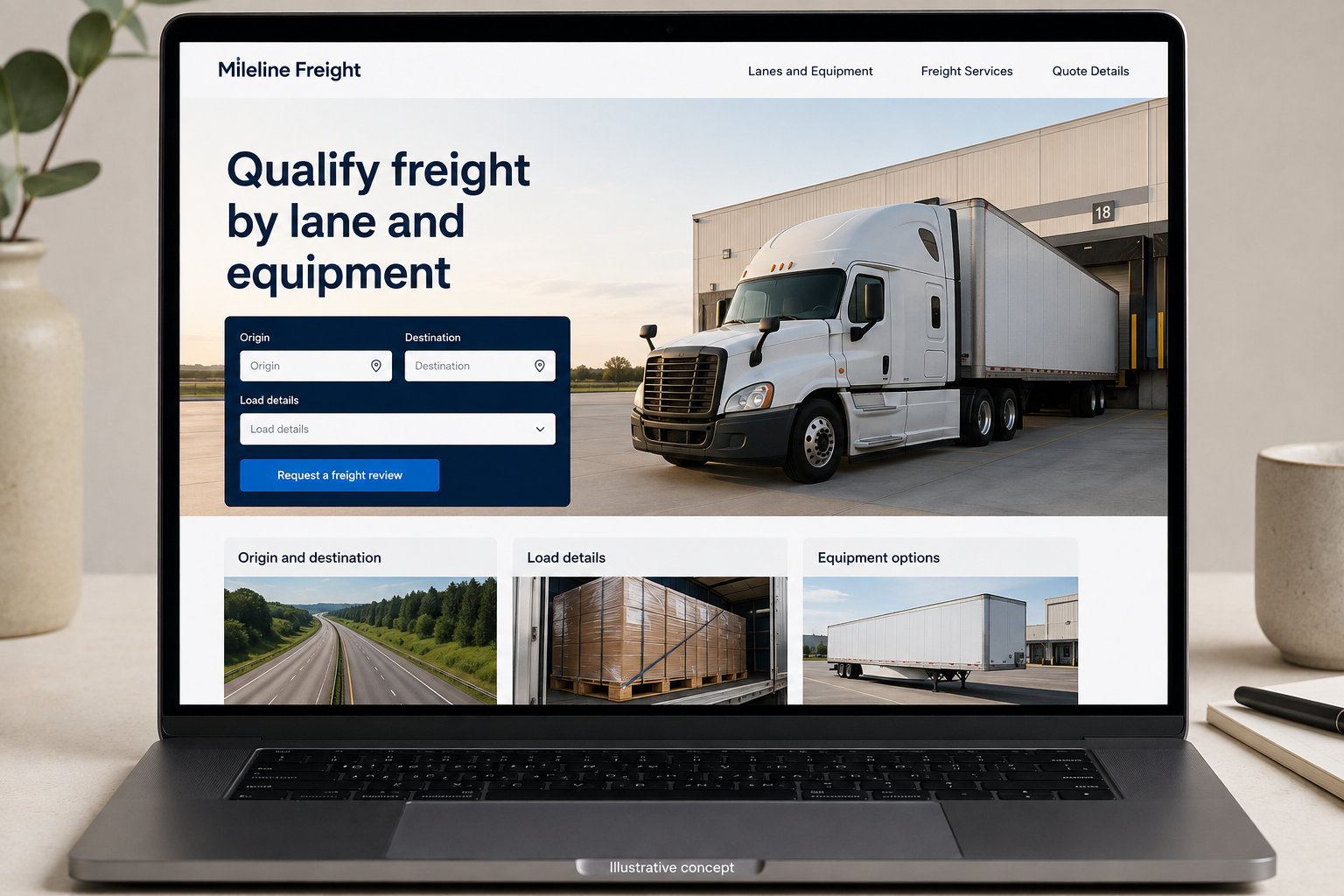
Explore this layout
Qualify freight by lane and equipment
Explore origin and destination, load details, and equipment options.
The main action is “Request a freight review”. Supporting sections cover Origin and destination, Load details, Equipment options.
A shipper’s first question is usually whether the carrier can handle this load on this route. A trucking website should answer that with clear equipment and coverage information before a long company introduction. The quote journey then needs to preserve the operational details: origin, destination, timing, load characteristics, and the conditions at each end of the trip.
Make lanes and equipment easy to understand
A shipping customer needs to know whether a carrier can handle the route and load. State actual coverage, equipment types, and the services offered in readable language. Avoid implying that a broad map guarantees capacity on every lane. A useful homepage lets the visitor recognize a plausible fit and start a quote request. Company history can support trust, but it should not hide the operating information a buyer needs before discussing a specific shipment.
Describe service limits beside the capability
Explain which freight types the business accepts and what information is needed to review a load. Keep any special capabilities tied to actual equipment and maintained credentials. Separate recurring contract discussions from a single shipment inquiry where helpful. A project or route example should use documented details without exposing a customer’s private information. Buyers need enough context to understand the service while recognizing that dates, capacity, and handling requirements are confirmed for their own request.
Build a shipment form around operational facts
Ask for origin, destination, pickup window, shipment dimensions or weight when known, and the general freight type. Give room for loading and delivery constraints. Do not require a customer to create an account just to ask whether a service fits. Explain who reviews the request and what is still needed before a quote or acceptance. A submitted shipment should never appear booked merely because the visitor has completed an unreviewed form on the website.
Track qualified freight requests
Review inquiries by lane, equipment need, and shipment type. If many requests fall outside the company’s coverage, improve the service description and map labels. Helpful content can explain how to prepare shipment details for a quote or distinguish the services the carrier actually offers. Link it to the inquiry. Measure accepted quote opportunities and repeat shipper conversations rather than publishing many nearly identical location pages that add little beyond a place name and a contact button.
Before you launch
- Label coverage maps without implying live capacity.
- Ask for loading and delivery constraints in the quote form.
- Keep equipment types connected to supported freight.
- Describe a submitted load as awaiting review until accepted.
What should a trucking quote form ask before detailed documents?
Start with the route, pickup window, general freight description, and known dimensions or weight. Add a place for loading and delivery constraints. These facts help the team assess fit without demanding a complete commercial file at first contact. Explain which further information is needed before a rate or booking can be confirmed.