
Explore this layout
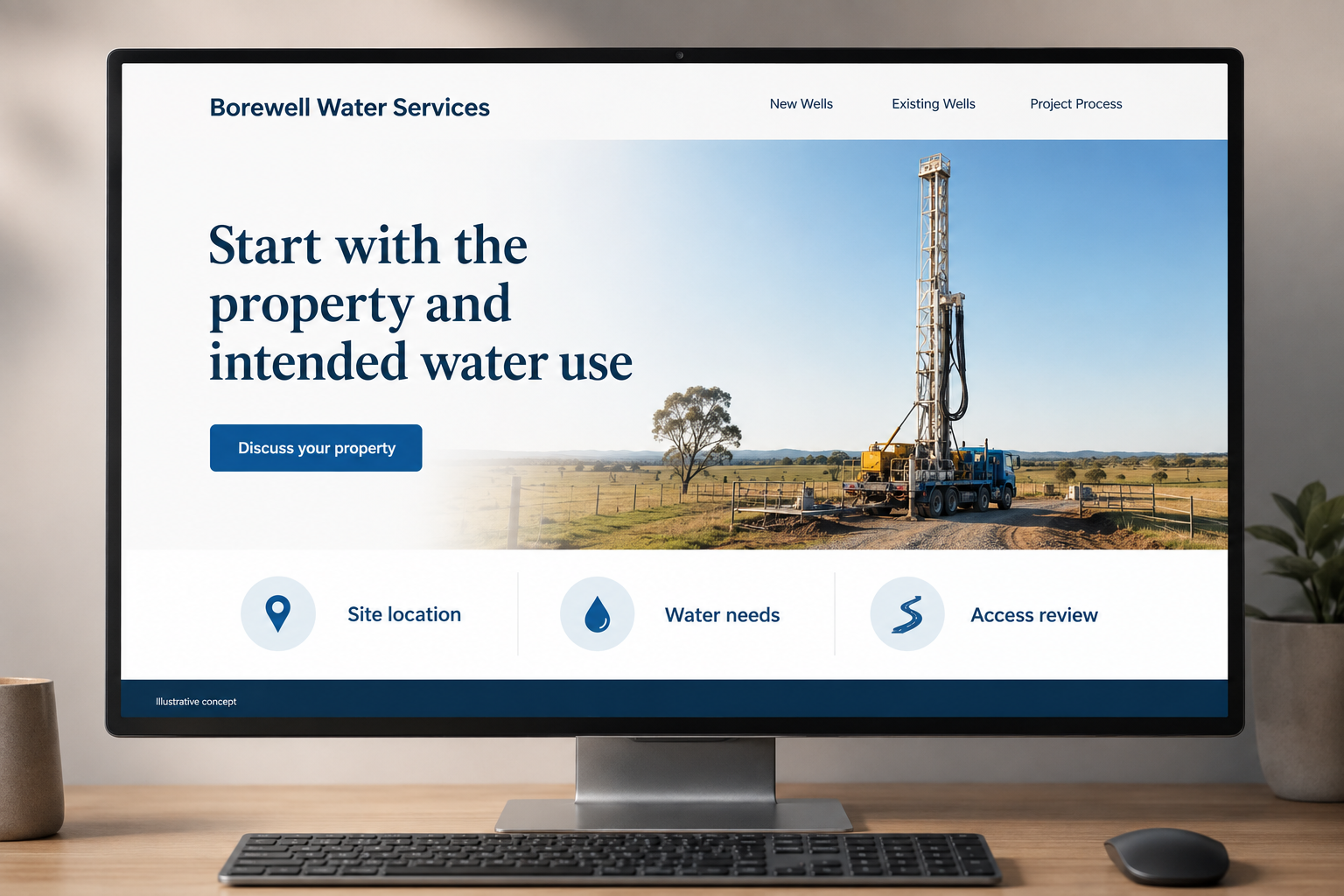
Start with the property and intended water use
Explore site location, water needs, and access review.
The main action is “Discuss your property”. Supporting sections cover Site location, Water needs, Access review.
A well drilling inquiry starts with a property and a need for water, not a reliable prediction about what lies below the ground. The website should explain the services offered and the information reviewed before a proposal. That gives homeowners, farms, and other buyers a useful starting point without promising a result the site cannot establish.
Begin with the property and intended use
Someone planning water supply for a home brings different questions from a farm or commercial site. Make those service paths clear where offered. Explain that the site and intended use shape the discussion, and avoid promising a particular yield or depth from a web form. A simple project overview can help visitors understand why the first conversation needs location and use details before the company can discuss a meaningful proposal for drilling work.
Show the stages without guessing the outcome
Describe site review, planning, drilling, and related services at a high level, using the business’s actual process. Separate new work from service to existing wells if both are offered. Be precise about which equipment or follow on work the company supplies. Project examples can describe documented scope without suggesting that a nearby result predicts another property. Clear boundaries help owners compare proposals and ask informed questions about what is included in the work.
Request useful site information
Ask for location, property use, current water arrangements, and whether the inquiry concerns a new or existing well. Allow plans or records through an optional upload. Customers should be able to say they do not know technical details. Explain how access is reviewed and who contacts them next. The initial form should start a planning conversation rather than ask the owner to select drilling specifications or make assumptions about the conditions below the site.
Build discovery around the real service
Useful pages can explain how to prepare for a consultation, what existing records help, and how new well inquiries differ from service calls. Connect each to the right contact route. Track whether the website attracts the property types and work the business handles. If readers expect related services that are not included, clarify the scope. Avoid location pages that imply guaranteed local outcomes; meaningful project context and a readable process provide better information.
Before you launch
- Separate new and existing well work
- Ask about intended water use
- Allow optional existing records
- Avoid predicted yield claims
Can the website give a firm drilling quote from an address?
An address can begin a review, but it does not by itself define the work. Explain which property information, intended uses, and existing records the business needs to discuss. Make a preliminary inquiry feel easy while keeping the actual proposal tied to the company’s review process.