

Explore this layout
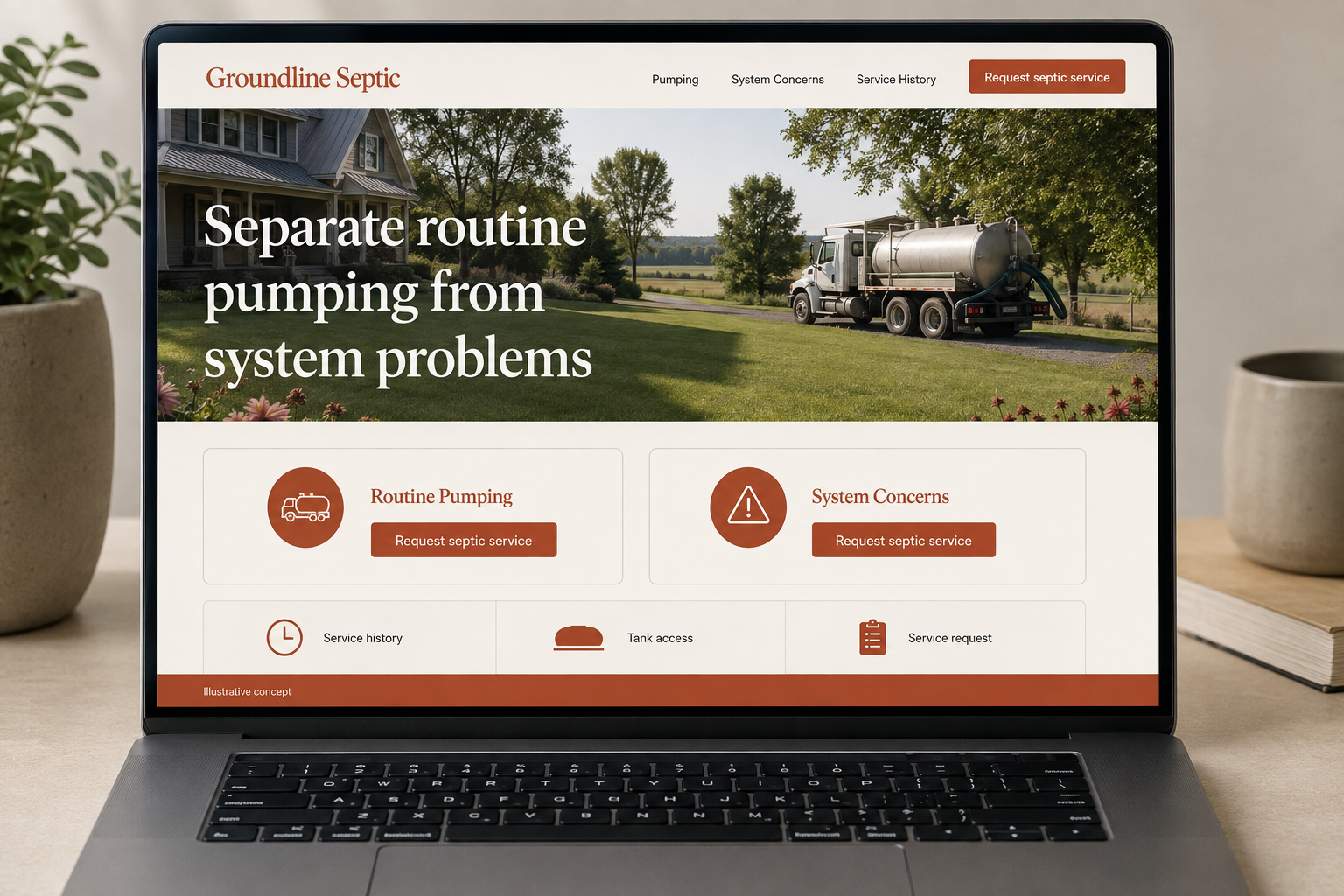
Separate routine pumping from system problems
Explore service history, tank access, and service request.
The main action is “Request septic service”. Supporting sections cover Service history, Tank access, Service request.

A routine pumping customer and an owner noticing a new septic problem may land on the same page. They need different routes. A well planned website makes the offered services clear, accepts incomplete system records, and tells each person how the office will review the request before arranging the appropriate next conversation or visit.
Separate routine pumping from a system concern
A customer scheduling known maintenance needs a direct route, while someone noticing a problem needs a conversation about the appropriate service. State what the company offers and its real availability. Avoid diagnostic claims based on a few symptoms. Explain the information that helps the office prepare and keep the phone action easy to reach on mobile. The website should route requests well without implying that all septic work is the same visit.
Describe access and service scope
Explain what the team needs to know about the property and access to the tank, while allowing customers to be unsure about records or location. State which tasks are included in the offered service and which need separate discussion. Use a process diagram to show the appointment journey rather than technical repair instructions. Customers comparing businesses should be able to understand what they are requesting and which details may change the planned work.
Build an intake that accepts incomplete records
Ask for the address, reason for contact, known service history, and any available system information. Make document uploads optional and avoid requiring a precise tank size. Tell the visitor who will confirm access and scheduling. Do not present a requested date as an accepted appointment until it is reviewed. A returning customer should have a simple route to ask about their account or next service without repeating the entire new customer inquiry.
Measure the requests the team can serve
Review inquiries by service type and location. Repeated questions about inspections, pumping, or repair boundaries indicate where the navigation needs work. A guide to gathering existing system records can help customers prepare without giving maintenance instructions that require professional judgment. Link it to a clear contact route. Track scheduled jobs and useful follow up conversations, then improve the pages that repeatedly send the office requests outside the actual scope of the business.
Before you launch
- Allow unknown system details
- Separate pumping and problem inquiries
- Explain access review
- Distinguish requested and confirmed dates
What if a customer does not know the tank size?
Let them leave that field unanswered and provide the property location and any existing records they have. The initial inquiry should help the office prepare a discussion. Requiring a guessed tank size can create misleading information without establishing the scope of the service the property needs.