

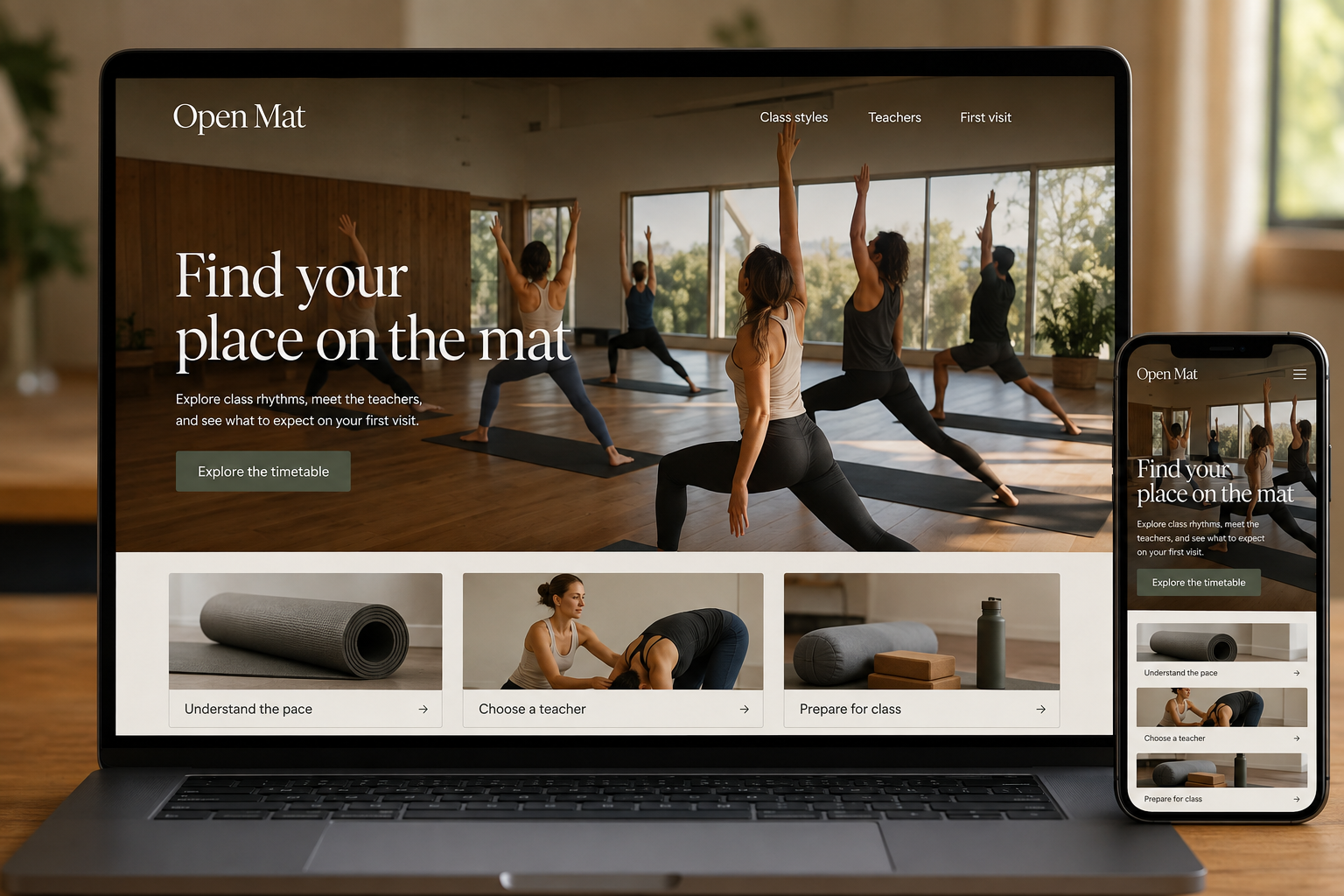
Explore this layout
Find your place on the mat
Explore class rhythms, meet the teachers, and see what to expect on your first visit.
The main action is “Explore the timetable”. Supporting sections cover Understand the pace, Choose a teacher, Prepare for class.
A timetable full of yoga terms can be inviting to regular practitioners and confusing to everyone else. Someone new to the studio needs to know what a class feels like in practical terms: its pace, structure, and expectations. The website should make those distinctions clear while giving experienced students a quick way to find teachers, times, and the classes they already enjoy.
Describe the rhythm of each class
Explain whether the session moves steadily, spends longer in positions, includes guided rest, or follows another structure the teacher actually uses. State duration and any expected experience. Keep traditional style names where appropriate, but add plain-language context. Avoid promising that a class treats a condition or suits every body. A useful description helps students choose a format and identify questions to discuss with the studio before attending.
Make teacher information relevant
Give teachers concise biographies focused on their actual teaching background and approach, using verified qualifications where included. Link each teacher to the classes they currently teach. Photographs and descriptions should communicate the studio accurately without making one advanced pose the only image of participation. New students may be trying to understand whether questions and options are part of the class environment. Explain the studio's practice clearly rather than assuming the imagery answers that concern.
Plan the first visit in ordinary steps
Explain mats and other equipment, arrival timing, storage, and how to find the room. Show whether a first-time visitor can book a drop-in or needs an introductory appointment. Memberships and passes should state what classes they cover and how booking works. Keep the selected date, session, and teacher visible in confirmation. If a class changes or is covered by another teacher, use a consistent update process so the website and booking messages remain aligned.
Use content to help students choose
Write short comparisons of the studio's own class formats or explain how a multiweek course differs from open sessions. Link these guides from the timetable where uncertainty arises. Measure first bookings, repeat participation where supported, and questions about class suitability. If visitors repeatedly choose a format they did not expect, revise the description. The goal is a clearer match between the published experience and the class people walk into, rather than a larger collection of generic wellness articles.
Before you launch
- Explain pace alongside style names
- List equipment provided
- Show pass coverage clearly
- Keep teacher substitutions updated
Does every class need a beginner label?
A label is helpful only when its meaning is explained. Describe expected experience, pace, and how the studio supports newcomers. Some students may prefer a slower format while others want an introductory course, so give enough detail to choose a sensible starting point without assuming one label fits everyone.