

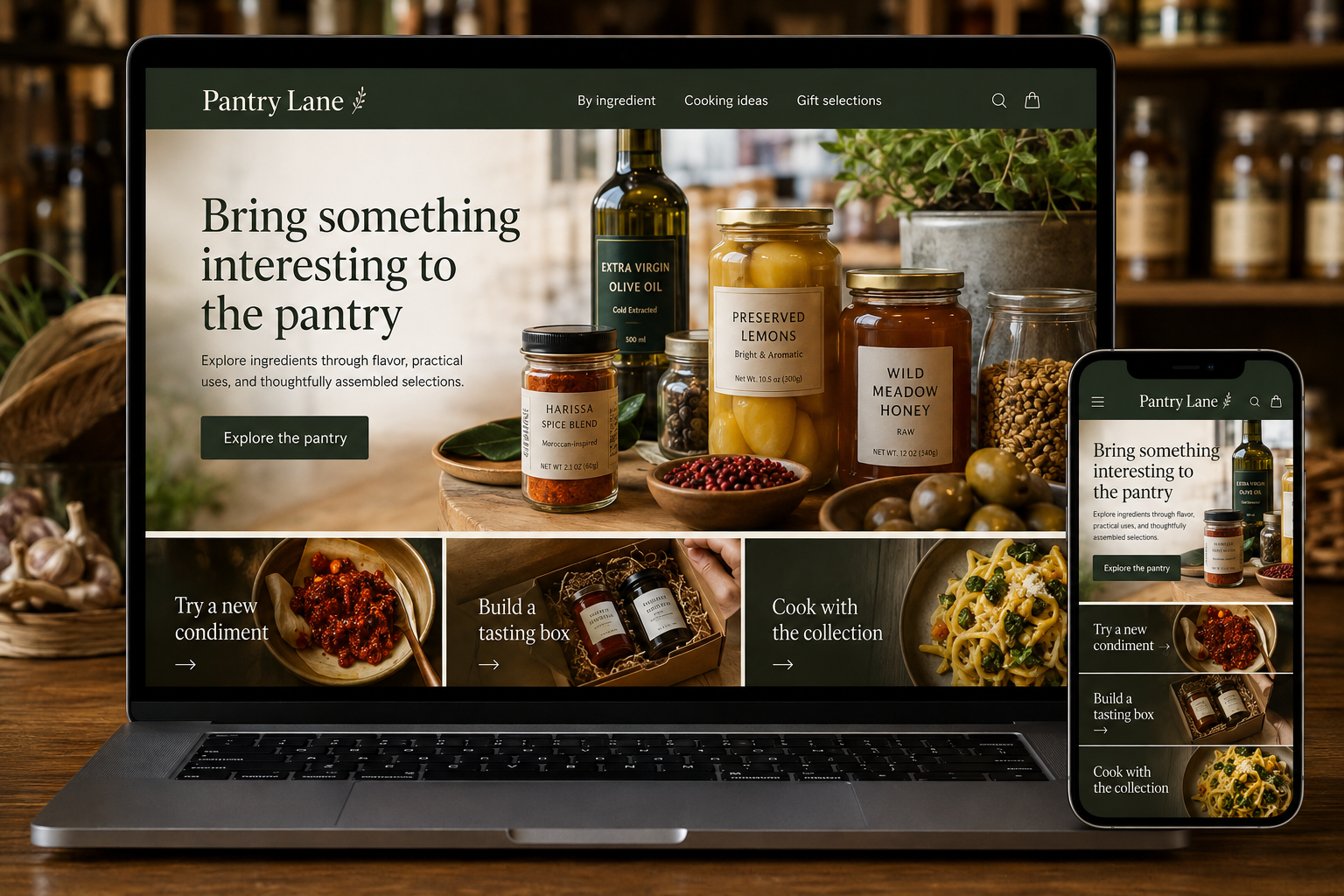
Explore this layout
Bring something interesting to the pantry
Explore ingredients through flavor, practical uses, and thoughtfully assembled selections.
The main action is “Explore the pantry”. Supporting sections cover Try a new condiment, Build a tasting box, Cook with the collection.
A specialty food shop often sells ingredients customers are curious about but do not yet know how to use. The website should close that gap with clear descriptions and practical examples. It can preserve the pleasure of discovery while answering ordinary questions about flavor, quantity, storage, and what else belongs in the basket for a meal or gift.
Describe flavor in familiar terms
Explain the taste, texture, and common uses of a product without leaning entirely on its origin story. Keep documented producer and origin information accurate, and distinguish an ingredient from a tasting comparison. A sauce described as smoky should also state whether it contains added flavorings where relevant to the product information. Give shoppers a way to browse by cooking purpose as well as product type, especially when unfamiliar names would otherwise stop exploration.
Make package details easy to check
Show net weight or volume, ingredients, and relevant storage information from a reliable product source. Explain whether a pictured jar, board, or serving suggestion is included. For chilled or delicate goods, state the available fulfillment methods and any ordering restrictions the shop actually uses. Keep those details near the purchase control. Customers need to know that an interesting ingredient can reach them appropriately before they build a whole meal around it.
Build combinations with a practical reason
A tasting box or pantry set should list every component and explain how the items work together. Link individual products so customers can reorder a favorite later. If gift packaging is available, show what it looks like and how messages are handled. Avoid assembling bundles merely to move unrelated stock. A coherent selection helps an uncertain shopper understand the shop's expertise and gives the recipient a sensible starting point for using unfamiliar ingredients.
Use recipes as shopping support
A short recipe or serving idea can introduce a product, but it should include enough detail to be useful and clearly distinguish optional items. Link to current stock without making the recipe impossible when one brand changes. Measure recipe-to-product visits, bundle purchases, and questions about preparation. If customers repeatedly ask what a condiment goes with, answer that on the product page too. Helpful editorial content should make the catalog easier to use, not compensate for missing basics.
Before you launch
- Show weight and storage details
- List all tasting-box components
- Label serving props clearly
- Link recipe ingredients to current products
How much producer storytelling belongs on a product page?
Include the details that help explain the product's character, sourcing, or preparation, using information you can verify. Keep flavor, quantity, ingredients, and fulfillment easy to find first. A compelling story works best when customers can also understand what they are buying and how they might use it.