

Picture the day, understand the details Explore the spaces, see what's included, and arrange a tour around your plans. The main action is “Explore the venue”. Supporting sections cover Ceremony to reception, Layout capacities, Plan your visit.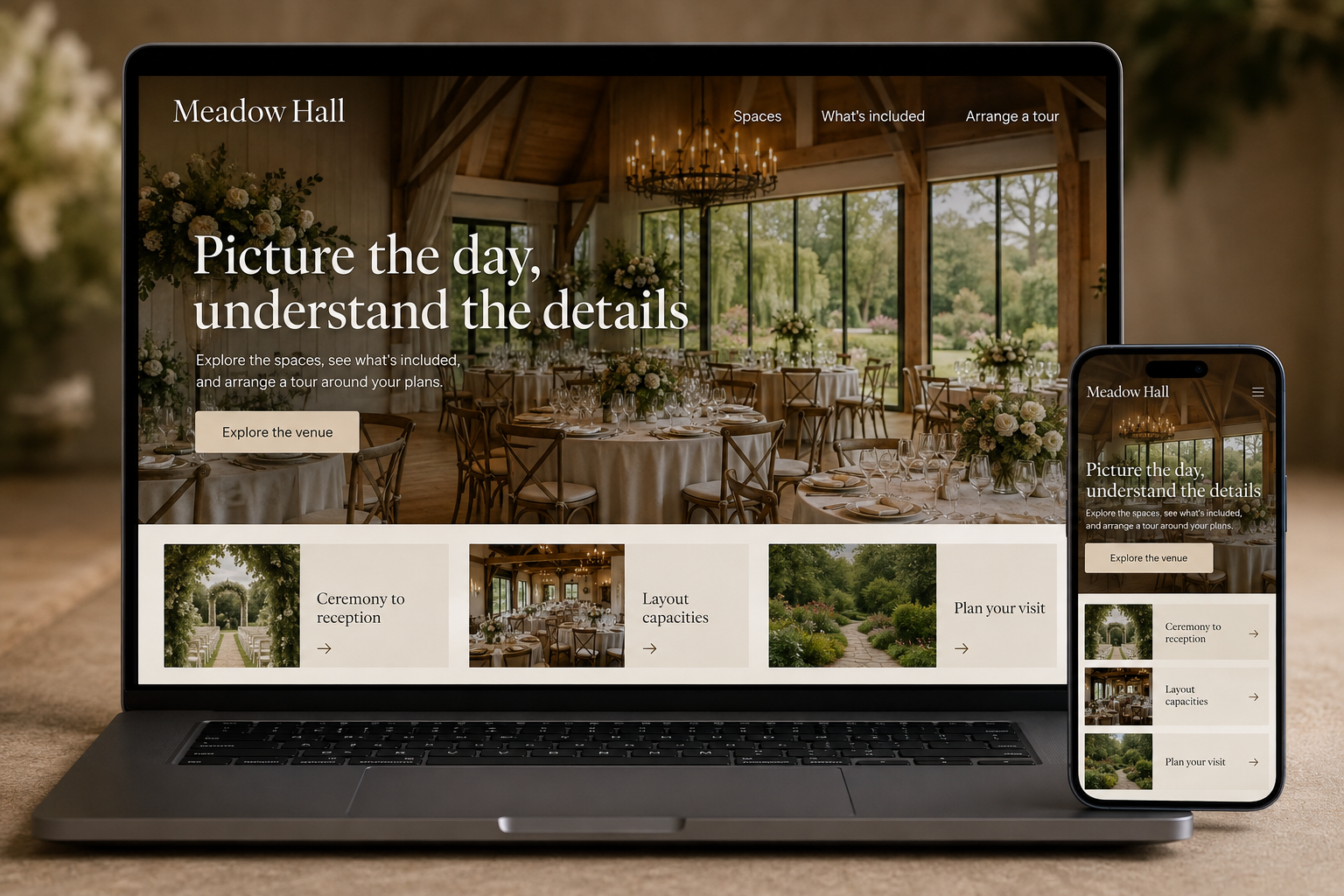
Explore this layout
Couples often begin with photographs and then need to answer much less glamorous questions about guest numbers, weather plans, timing, and what a venue package includes. A good website supports both stages. It should make the setting appealing while giving visitors enough specific information to decide whether a tour is a sensible next step for the celebration they are considering.
Explain how the event moves through the space
Show ceremony, drinks, dining, and evening areas as distinct parts of a possible day. Describe capacities in relation to the actual layout rather than presenting one maximum number for every use. Use a plan or labeled photographs to explain transitions between spaces. If indoor and outdoor arrangements differ, show the alternative clearly. Couples need to picture the event's practical flow, including a change of plan, before the setting can be judged properly.
Separate inclusions from optional arrangements
List what the venue provides and what the couple or other suppliers arrange. Explain tables, chairs, catering arrangements, staffing, and preparation access using the venue's actual offer. If pricing depends on date or format, describe those variables and provide a useful inquiry route. Avoid an enticing package name that leaves the scope unclear. Buyers comparing venues need a common understanding of the responsibilities before comparing headline figures or assuming two packages cover the same work.
Ask enough to prepare a useful tour
The inquiry form should collect preferred dates or a date range, guest estimate, event format, and the couple's main questions. Let people indicate that plans are still flexible. Explain whether a tour request confirms an appointment or requires a response. Provide practical visiting instructions once arranged. A focused form helps staff prepare relevant spaces and information instead of delivering the same general tour regardless of whether the couple imagines a small lunch or a larger evening event.
Use real examples with clear boundaries
Publish permission-cleared event features that explain layout and choices, distinguishing the venue's contribution from suppliers' work. Concept arrangements should be labeled as such. Link examples to the relevant spaces and inquiry form. Measure suitable tour requests and subsequent planning conversations, not simply gallery views. If inquiries repeatedly exceed capacity or assume unavailable services, revise the prominent information. The website should help the right couples recognize a fit and understand the next discussion.
Before you launch
- State capacity by event layout
- Show an indoor alternative where offered
- List included furnishings and services
- Explain tour confirmation steps
Should a venue publish a full wedding price online?
A clear package price is useful when the scope is fixed. Where dates, guest counts, and service choices change the proposal, explain those variables and what a sample price includes. Couples need enough information to assess fit without mistaking an illustrative figure for a confirmed quotation.