

Explore this layout
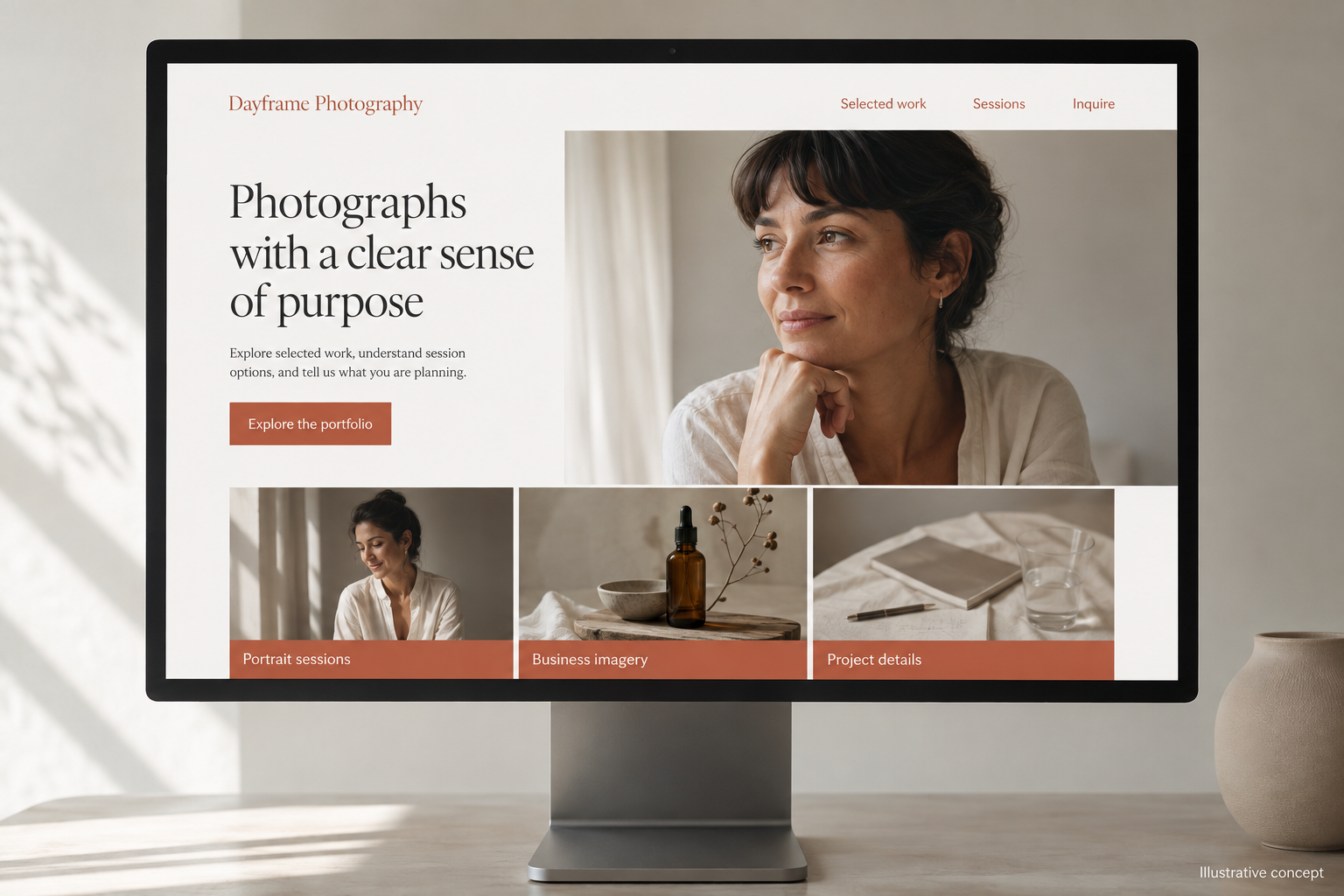
Photographs with a clear sense of purpose
Explore selected work, understand session options, and tell us what you are planning.
The main action is “Explore the portfolio”. Supporting sections cover Portrait sessions, Business imagery, Project details.

A photography portfolio can create an immediate connection, but a potential client still needs to understand what booking involves. They may be planning portraits, an event, or photographs for a business. The website should connect relevant work with the scope of the service and a clear next step, helping someone turn an aesthetic preference into a conversation the photographer can use.
Curate for the client you want to help
Separate portfolio categories when the buying needs differ, rather than combining every assignment into one long feed. Show coherent selections that reveal the photographer's approach across a session or project. Use real work with appropriate permissions and accurate captions. Avoid implying that personal projects are paid client assignments. A visitor should be able to find examples relevant to their own situation without sorting through unrelated images or guessing what kind of work is available to book.
Explain the session and the deliverables
Describe duration or coverage approach, location arrangements, image selection, and how finished files or products are supplied. State what an example package includes and which elements require discussion. Where usage affects a commercial project, explain that it will be agreed in the proposal rather than offering legal advice. Keep turnaround expectations grounded in the photographer's actual process. Clients need to understand whether they are buying a short session, extended coverage, prints, or a broader production.
Make the inquiry carry useful context
Ask for project type, preferred date or timeframe, location, and intended use where relevant. Let visitors explain their idea without requiring a fully written creative brief. Carry the portfolio category into the form when possible, so the photographer knows which work prompted the inquiry. Explain what happens next and distinguish availability requests from confirmed bookings. A concise form can prepare a meaningful response without collecting details that only become necessary once a project is agreed.
Assess interest beyond image views
Track portfolio-to-inquiry journeys and whether inquiries match the photographer's actual services. Review questions about deliverables or pricing to improve the corresponding pages. Publish helpful preparation or project-planning content tied to the offered work, using specific examples without invented client stories. A gallery that attracts many viewers but produces unrelated requests may need clearer framing. The website should help people understand both the visual approach and the practical service behind it.
Before you launch
- Separate portfolio categories by client need
- State delivered file or print options
- Collect date and project type
- Label personal projects accurately
Should photography packages include exact prices?
Show fixed prices where the scope is well defined. For projects that vary by coverage, production, or intended use, explain the variables and provide a useful starting conversation. Clear inclusions matter as much as the figure, because clients need to understand what a package actually covers.