Explore this layout
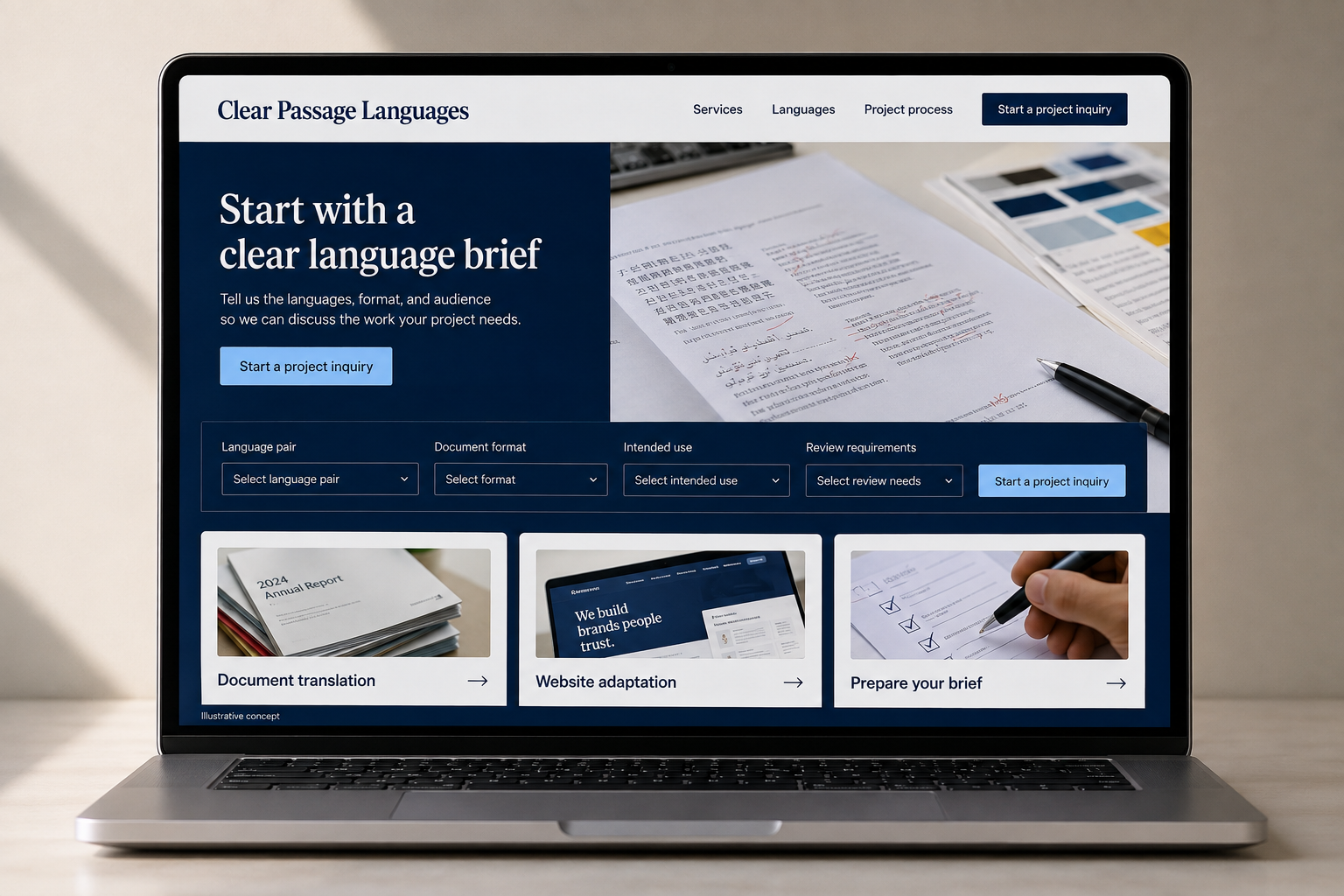
Start with a clear language brief
Tell us the languages, format, and audience so we can discuss the work your project needs.
The main action is “Start a project inquiry”. Supporting sections cover Document translation, Website adaptation, Prepare your brief.

A translation buyer may know the languages involved but not which details affect scope and timing. File format, length, intended use, and review requirements all shape the work. The website should explain those variables in plain language and provide a sensible first inquiry route. It should also make clear which services the agency offers instead of treating every language-related request as the same product.
Separate services by the work required
Explain translation, editing, localization, or interpreting only where the agency actually provides them. Show supported language pairs and subject areas accurately, with a clear inquiry route when a combination needs confirmation. Avoid suggesting that every language and specialist field is covered equally. Buyers should understand whether they are requesting written document work, software or website adaptation, or live language support before they choose a form or assume a turnaround.
Describe the inputs that affect a proposal
Ask about the source and target languages, approximate volume, file type, intended audience, and deadline. Explain why editable files and scanned material may involve different preparation. Let customers begin with a description instead of requiring immediate upload of the full document. Sensitive materials should use the agency's appropriate agreed transfer process when needed. A helpful inquiry form gathers enough context to assess the project without encouraging unnecessary disclosure at the first marketing contact.
Make review and delivery understandable
Describe the agency's actual assignment, review, client query, and delivery stages. Explain which output formats are available and how terminology or reference material can be supplied. If a particular use requires additional formalities, direct the customer to confirm requirements with the receiving organization and discuss the agency's relevant service. Avoid broad promises of acceptance or compliance. The website should establish a clear scope for language work rather than offer legal guidance about every possible document use.
Measure useful briefs and repeat projects
Track inquiries that contain workable language and timing information, and review questions that delay quotations. Publish focused guides about preparing a document set or planning multilingual website content, using the agency's real process. Link those guides to appropriate service pages. If requests often confuse translation with interpreting, improve the navigation. A clear website helps customers commission the right work and gives the project team a better starting point for discussing quality, timing, and delivery.
Before you launch
- Show language direction clearly
- Allow description before document upload
- State available output formats
- Distinguish translation from interpreting
Should clients upload their full document to receive any response?
Not always. A short description, approximate volume, and language pair can begin the discussion. Explain the agency's appropriate file-transfer process when documents are needed for assessment. This lets customers understand the service and sharing arrangements before sending material that may contain personal or confidential information.