

Explore this layout
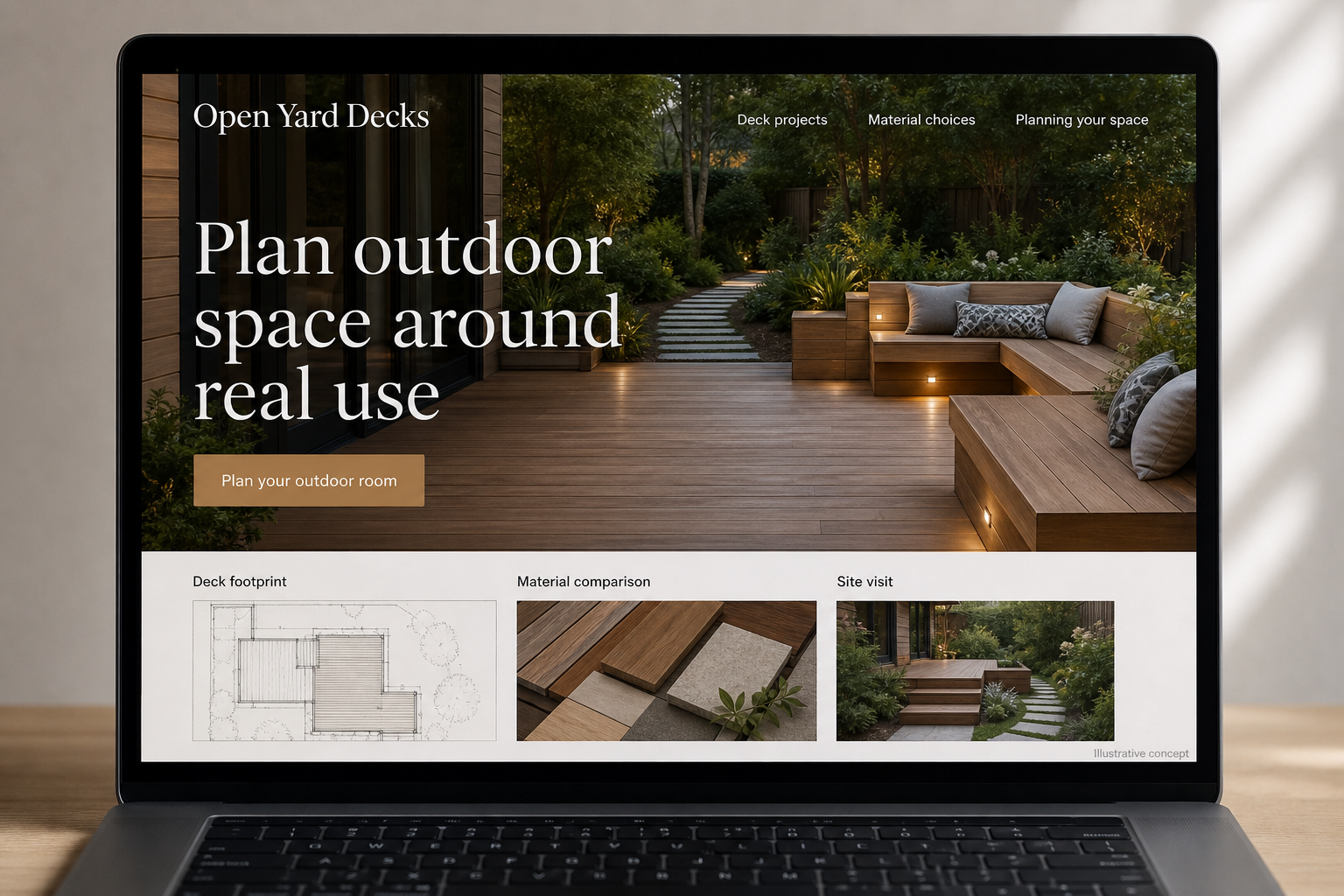
Plan outdoor space around real use
Explore deck footprint, material comparison, and site visit.
The main action is “Plan your outdoor room”. Supporting sections cover Deck footprint, Material comparison, Site visit.
A homeowner planning a deck is picturing how they will use the space: a quiet chair, a family meal, or a route from the back door to the garden. Start there. A deck builder's website should connect finished projects with layout decisions, material choices, and the site itself, giving visitors a better brief than simply asking how many square feet they want.
Begin with the outdoor space people want
A deck might serve quiet meals, a busy family entrance, or a larger gathering area. Organize the design conversation around those uses before showing a grid of board colors. A concept drawing can illustrate zones for seating and movement, clearly labeled as an example. Explain that the relationship to the house, ground conditions, and access shape a real proposal, so a pictured layout is inspiration rather than a ready made answer.
Make material comparisons useful to owners
Compare the materials the builder actually uses in terms of appearance, upkeep, and the choices discussed during planning. Avoid unsupported lifetime claims. Project captions should identify the material and the features included, such as stairs, rails, or built in seating. Show the whole deck as well as details. This helps a visitor understand what they like and keeps a photograph of one feature from implying that every project includes it.
Collect a brief that starts a design meeting
Ask how the customer expects to use the deck, whether an existing structure needs attention, and the approximate footprint they have in mind. Photos of the house and yard can be optional. Let visitors describe preferences without choosing every component. Explain how the initial conversation leads to a site review and proposal. If the business has a minimum project scope, state it politely before the form rather than after submission.
Evaluate interest in the right projects
Track inquiries from material comparisons, project stories, and the main deck service page separately. Ask whether visitors arrive with a clearer brief after reading them. If a popular gallery image consistently attracts requests outside the company’s scope, add context or replace it with a more representative example. Helpful planning content should lead to a relevant consultation and give the team a better starting point than a generic request for a price.
Before you launch
- Explain how each featured deck connects to the home.
- Show stairs, railings, and changes in level.
- Provide a clear route for replacing an existing deck.
- Ask what activities the new outdoor space should support.
Should we organize the gallery by material or by layout?
Both can be useful, but let the main browsing route follow the questions you hear most often. A customer with a difficult yard may start with layout; another may be comparing maintenance needs. Add material labels and short project explanations so either visitor can understand what they are looking at.