

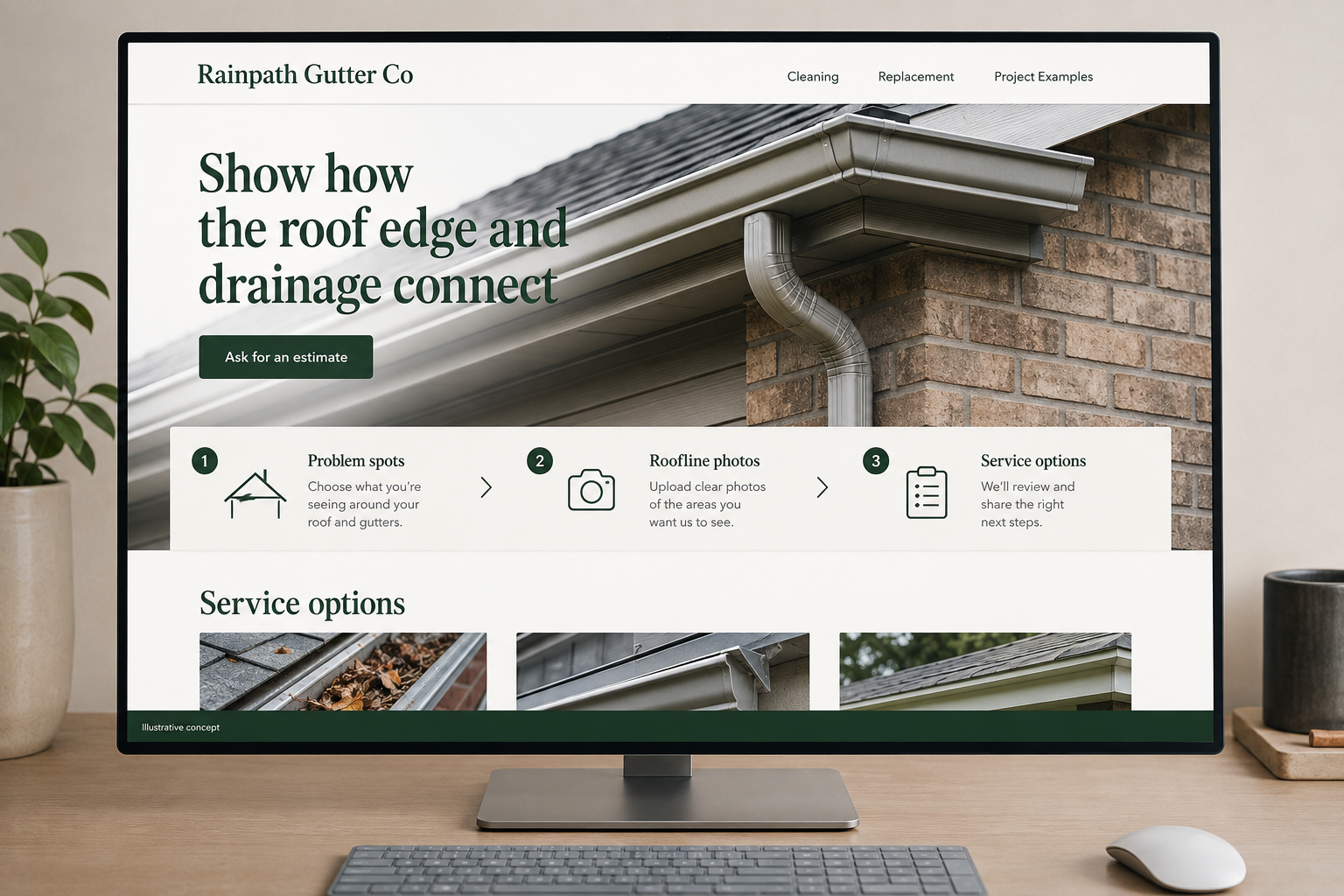
Explore this layout
Show how the roof edge and drainage connect
Explore problem spots, roofline photos, and service options.
The main action is “Ask for an estimate”. Supporting sections cover Problem spots, Roofline photos, Service options.

Someone seeing water spill over a gutter may not know which service to request. The website can help them describe the observation and reach the right team without declaring a cause. Separate cleaning, repair, and replacement where offered, then show how photographs, access details, and a site review contribute to a useful estimate conversation.
Distinguish cleaning from new gutter work
An owner with overflowing gutters might need a conversation about cleaning, repair, or replacement. Give those offered services separate descriptions and let visitors explain what they have observed. Avoid a remote diagnosis. Show the real service area and whether the company works on the customer’s property type. A clear route from the symptom to the relevant contact option is more useful than a homepage that treats every request as a full new installation.
Show the whole roof edge and drainage route
Project photos should explain the area of work and the components included, not just a close view of new metal. Describe whether a job involved gutters, downspouts, guards, or related repairs. Keep product claims attached to the specific product and actual terms. Customers comparing options need to know how the business assesses a property and why a proposal may include several connected tasks rather than a single price for a length of gutter.
Collect observations from a safe viewpoint
Ask for location, the service being considered, the affected side of the building, and available ground level photos. Let the customer mention a height or access issue without requiring exact measurements. Do not encourage ladder use to complete the inquiry. Explain whether the team first discusses the request by phone or arranges a visit. The form should help the office prepare while keeping final measurements and scope with the person assessing the property.
Improve the pages that bring mismatched requests
Track cleaning appointments separately from replacement estimates. If a product page attracts expectations about services the business does not provide, revise the supporting copy. Useful content can explain how to describe an overflow problem or prepare questions for a replacement estimate. Link it to a relevant action. Evaluate scheduled work and suitable consultations, then update the scope details that repeatedly require clarification rather than publishing many area pages with the same broad sales language.
Before you launch
- Split cleaning and replacement routes
- Request ground level photos only
- Explain downspout scope
- Check guard product descriptions
Should customers measure the whole roofline before contact?
Approximate information is enough to start an inquiry. Ask for the affected area and any ground level photos the customer already has, then explain how the business confirms measurements. A web form should not send people onto ladders simply to obtain an initial discussion about gutter work.