

Explore this layout
Collect the details that change a moving estimate
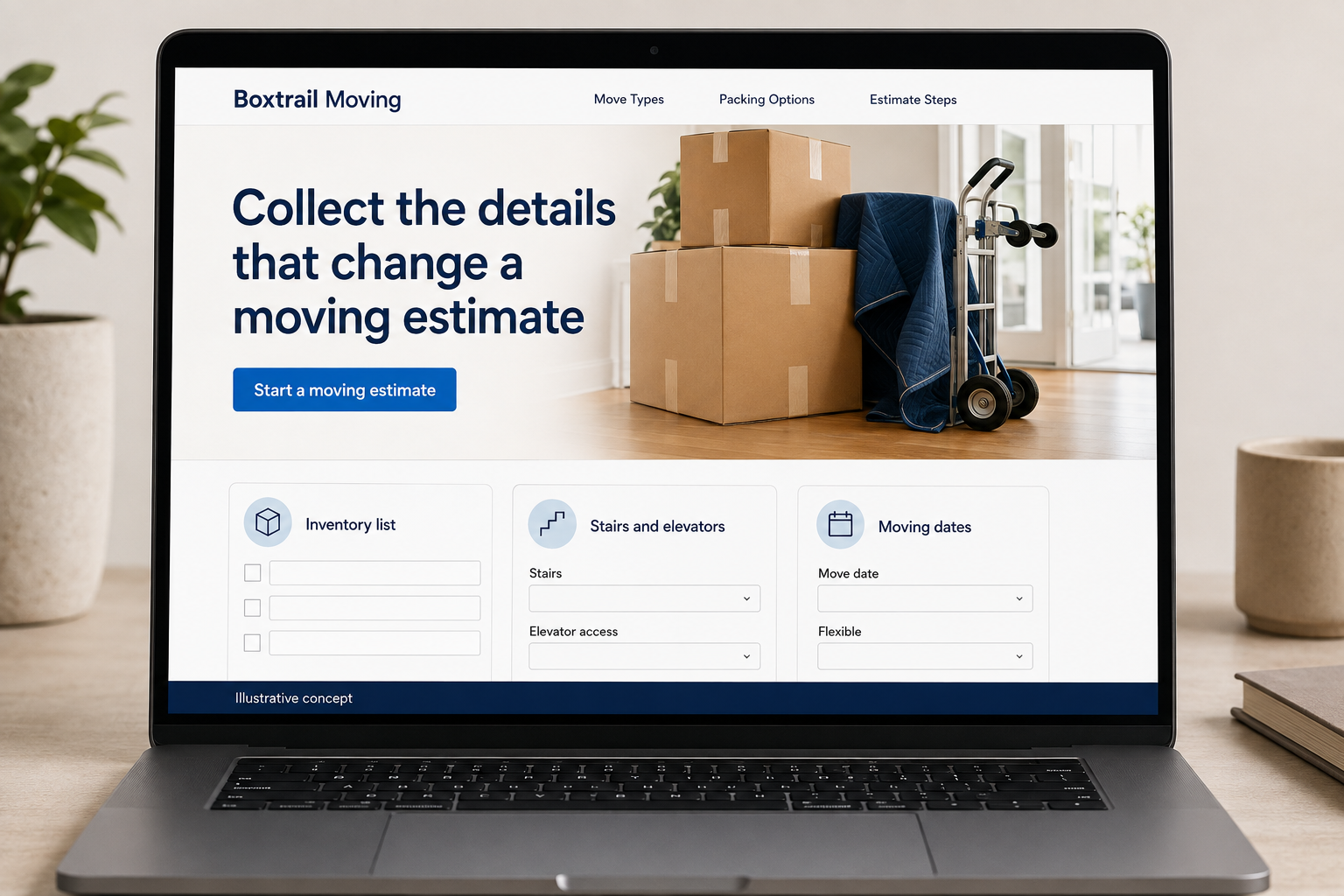
Explore inventory list, stairs and elevators, and moving dates.
The main action is “Start a moving estimate”. Supporting sections cover Inventory list, Stairs and elevators, Moving dates.

Two moves between the same towns can involve very different work. Inventory, stairs, parking, packing, and dates all matter to the conversation. A moving company website should help customers gather those details in manageable steps, explain the offered service, and distinguish a quote request from a date the company has actually agreed to reserve.
Make the estimate depend on the move
The important details are not just the two addresses. Inventory, stairs, elevators, parking, and packing needs can shape the work. Explain those factors in plain language and give local, longer distance, or commercial moves separate routes where offered. Avoid presenting a small example price as a universal quote. A visitor should understand how the company gathers information and what remains to be confirmed before a moving arrangement is accepted by both sides.
Show the service boundaries around packing
Describe whether packing, materials, disassembly, storage, or special item handling are offered and how they are requested. Do not imply that every move includes every task. A sample move plan can illustrate the sequence with fictional details clearly labeled. Explain how customers update an inventory and communicate changes. This gives them a practical basis for comparing providers while reducing the chance that a photo of a full service move creates expectations about a basic booking.
Build an inquiry people can finish in stages
Start with origin, destination, desired date, property type, and a broad inventory. Allow detailed lists or photos later through an appropriate process. Ask about stairs and elevators without burying those questions in a long optional note. Clarify that date selection is a request until confirmed. On mobile, save progress only if the feature works reliably and explain it. A partially completed form should not leave a customer unsure whether the company received a request.
Measure estimates that match the actual work
Track inquiries by move type and compare them with accepted jobs. Repeated changes caused by missing inventory or access details suggest where the form needs improvement. Content about preparing a room by room list can attract readers and improve their first estimate conversation. Link it to the relevant moving service. Review confusing price language with the office team, and judge the website by suitable bookings and clearer scopes rather than the raw number of quote requests.
Before you launch
- Separate move types
- Collect stairs and elevator details
- Explain inventory updates
- Confirm dates through the actual schedule
Should a customer finish a detailed inventory before making contact?
Let them begin with the route, property type, timing, and a broad account of what is moving. Explain how a fuller inventory is gathered afterward. This gives early planners a useful entry point while making clear that the company needs more detail before confirming the final scope and arrangement.