
Translate production capability into buyer questions Explore process capabilities, application examples, and quote package. The main action is “Start a production inquiry”. Supporting sections cover Process capabilities, Application examples, Quote package.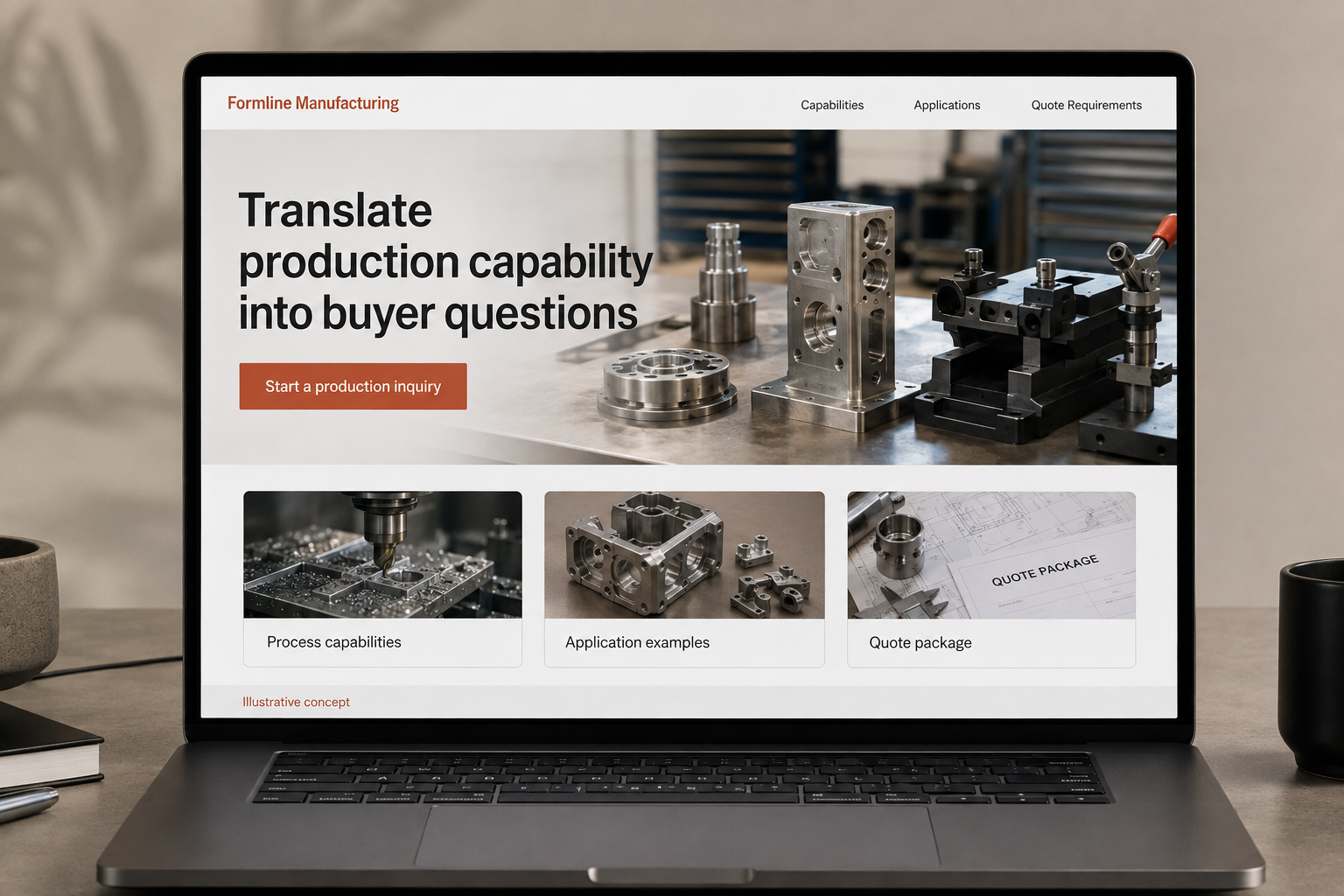
Explore this layout
A buyer with a part to make is trying to connect a requirement with a production capability. A manufacturer’s website should make that connection readable through materials, processes, applications, and representative work. It also needs two comfortable starting points: an early question about feasibility and a more developed quotation request with a controlled way to share the supporting documents.
Describe what the factory can actually make
A manufacturing buyer usually arrives with an application, part family, or process need. Organize the site around those questions alongside the company’s actual capabilities. Avoid a list of machines with no explanation of what they support. Show materials, processes, and production scope accurately. A visitor should be able to recognize a plausible supplier and understand the next review step without assuming that a broad capability statement means every design or volume can be accepted for production.
Turn examples into technical buying context
Permissioned examples can explain the application, process used, and agreed scope without exposing customer designs or confidential dimensions. Label concepts as concepts. Keep any quality credentials current and tied to the correct facility or process. Buyers need enough information to assess relevance, but public pages should not pretend to replace a detailed technical review. A readable explanation of development, sampling, and production handoffs often helps more than a gallery of finished parts with no context.
Make the quotation package easy to send
Ask for the general requirement, material if known, quantity range, desired timing, and available documentation. Provide a controlled route for drawings and explain how sensitive files are handled. Do not require a full technical package before allowing an initial question. State what the team reviews before preparing a quote. The form should help distinguish an early development conversation from a production ready request, so each reaches the person best placed to respond to it.
Measure opportunities by production fit
Track inquiries by process, application, and volume rather than treating every download as a sales lead. Ask the quoting team why requests are unsuitable. If visitors repeatedly misunderstand a material or quantity boundary, revise that capability page. Useful content can explain what belongs in an initial request for quotation or how sample approval is discussed. Link it to the relevant contact route. Strong acquisition content helps buyers assess fit and makes the next technical conversation more productive.
Before you launch
- Connect machine capabilities to supported applications.
- Label concept parts separately from completed work.
- Let early inquiries proceed without final drawings.
- Keep credentials tied to the correct facility or process.
Should a manufacturer require drawings before accepting any inquiry?
Not every useful conversation starts with a completed drawing package. Let an early-stage buyer describe the application, material if known, approximate quantity, and project stage. Provide a separate controlled route for ready-to-review documents. The team can then identify what is missing before a meaningful technical review or quotation.