

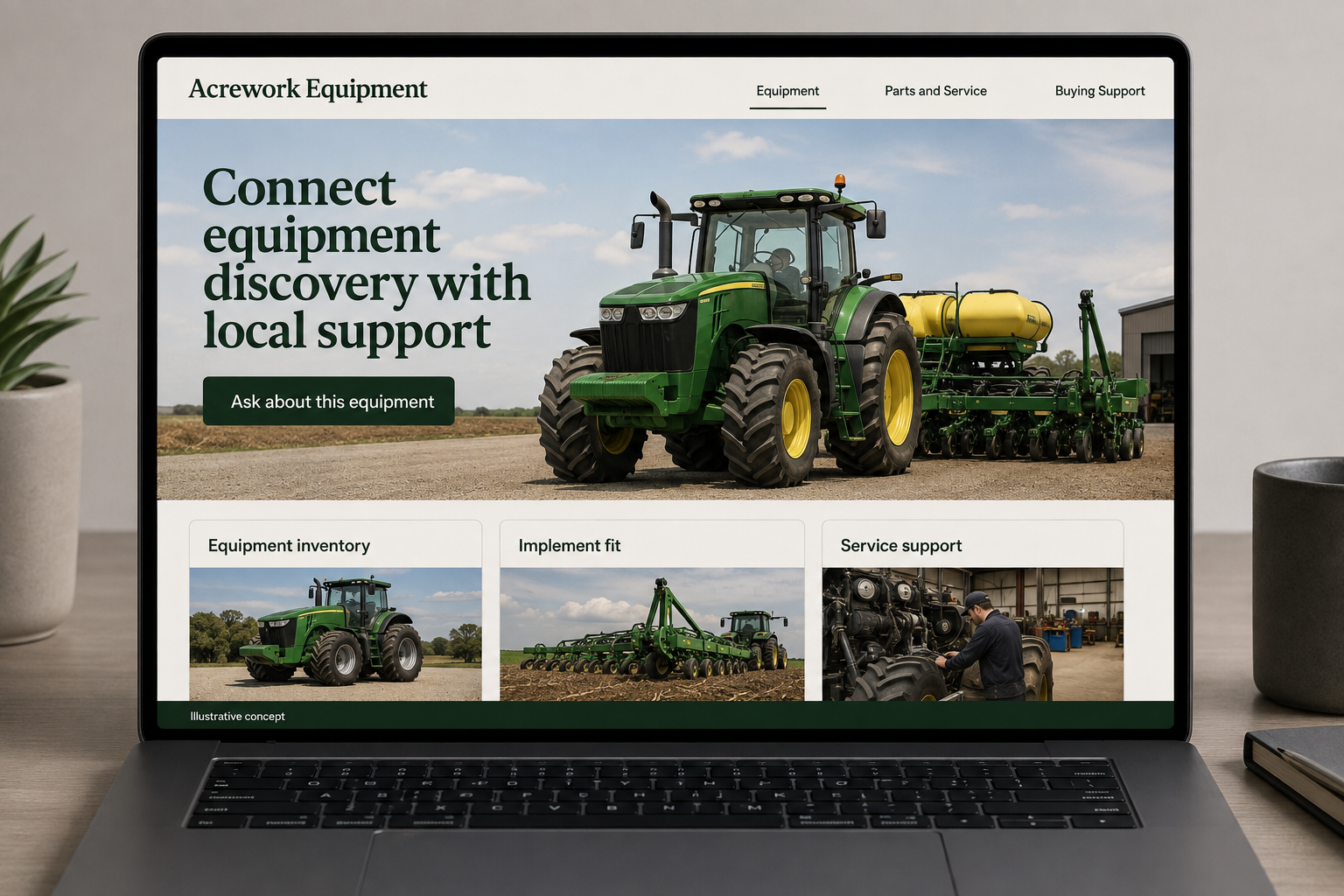
Explore this layout
Connect equipment discovery with local support
Explore equipment inventory, implement fit, and service support.
The main action is “Ask about this equipment”. Supporting sections cover Equipment inventory, Implement fit, Service support.
An equipment listing needs to explain the particular machine on offer and the support around it. For an agricultural dealer, that means clear specifications, honest condition details, and visible parts and service routes. The website should help a buyer shortlist a unit, preserve that selection in an inquiry, and begin a practical discussion about the work and existing implements involved.
Connect the machine with the work it must do
An agricultural equipment buyer wants to understand fit, condition, and support. Organize inventory by equipment type and intended task, with accurate specifications for each actual unit. Distinguish new, used, and illustrative listings. Avoid implying that a general category confirms suitability for every farm. A useful equipment page gives the buyer enough context to shortlist a machine and start a practical discussion about the work, implements, and operating needs involved in the proposed purchase or arrangement.
Show the support around the sale
Explain the parts, service, delivery, and other support the dealership actually offers. Keep those routes visible alongside inventory rather than burying them in a footer. Used equipment listings should state known details accurately and make further inspection or discussion easy. Buyers comparing dealers need to know what happens after the initial purchase conversation. A page full of specifications does not answer questions about the service relationship or whether the relevant support is available through that particular business.
Make the equipment inquiry preserve context
Carry the selected unit into the form and ask for the buyer’s location, intended use, and the questions they want to discuss. Let them mention existing implements or a possible trade without requiring a full appraisal online. Explain who confirms availability and what happens next. If a listing is sold, update it promptly and offer a relevant route to current inventory. Do not let an old product page continue to imply a machine is available for immediate purchase.
Use buyer questions to improve listings
Track inquiries by equipment type and compare them with suitable sales and service conversations. Repeated compatibility questions suggest where specifications or support links need work. Helpful content can explain which details to gather before an equipment discussion or how used unit information is presented. Link it to actual inventory and support pages. Measure useful opportunities and clearer expectations, rather than relying on broad claims that one machine can handle every task or solve every challenge across different farms.
Before you launch
- Label actual used units separately from illustrative images.
- Preserve the selected stock unit in the inquiry.
- Link relevant parts and service support beside inventory.
- Mark sold equipment promptly and point to current alternatives.
What should happen to a sold machine’s listing?
Update it promptly so it cannot be mistaken for available inventory. The page may remain useful as a clearly labeled archive, with a route to relevant current equipment or a stock inquiry. Preserve factual specifications if retained, but remove any action that implies the sold unit can still be purchased immediately.