

Beautiful growing photographs can make someone interested in a farm while leaving them unsure how to buy anything. The website should answer that ordinary question early. Whether the business sells through a stand, pickup orders, subscriptions, or wholesale arrangements, current availability and clear handover instructions turn a visitor’s interest into a practical next step the farm can actually fulfill.
Explain how customers can actually buy Explore seasonal availability, pickup options, and order details. The main action is “See what is available”. Supporting sections cover Seasonal availability, Pickup options, Order details.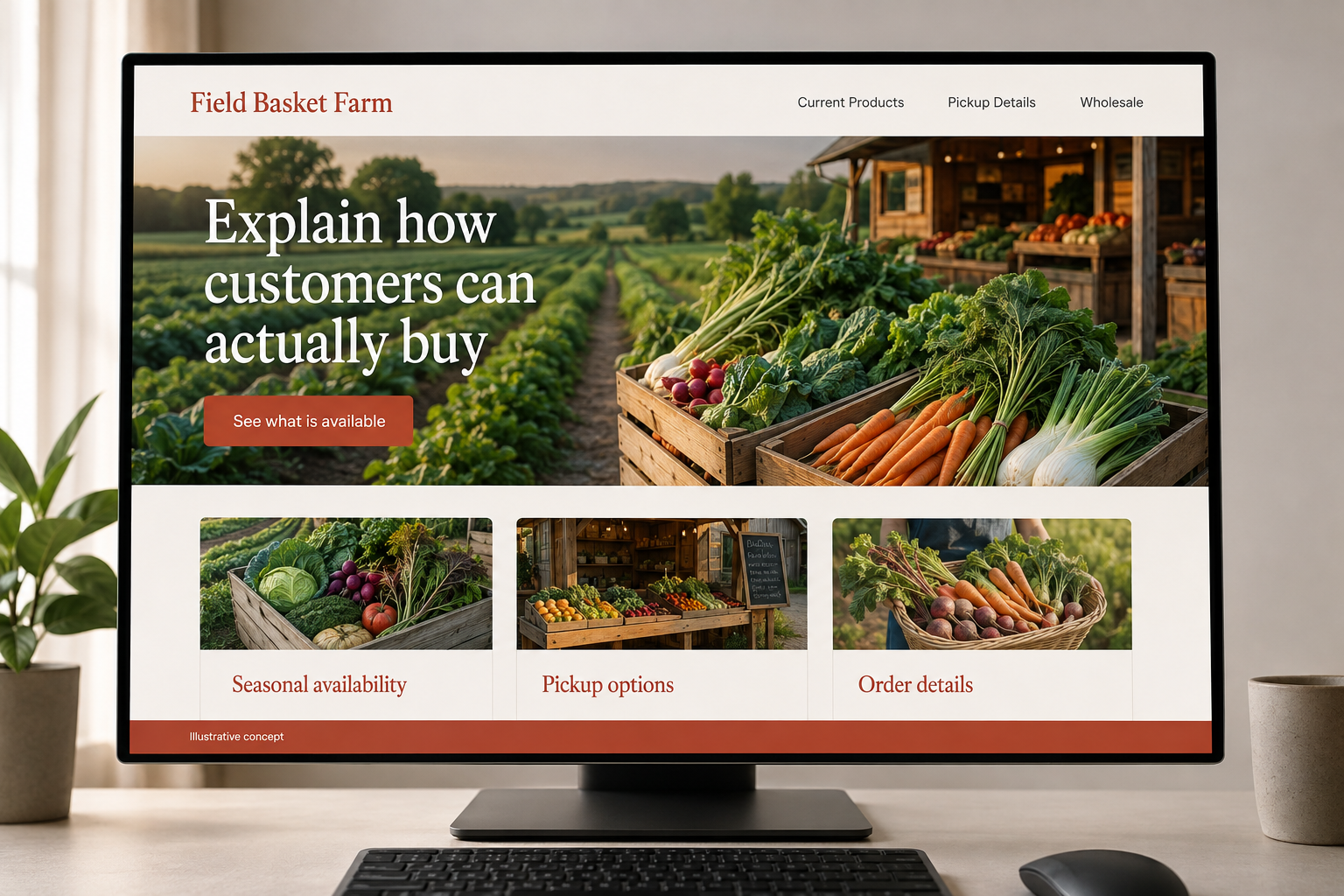
Explore this layout
Tell customers how buying from the farm works
A farm website should make the sales model obvious: pickup orders, a farm stand, subscriptions, wholesale inquiries, or other actual routes. Do not make visitors guess from photographs. State where and when purchases can happen using maintained information. A customer should be able to understand the next step before reading the farm’s full story. Clear availability and buying instructions turn interest in the place and its products into a practical way to become a customer.
Keep seasonal information easy to update
Use product pages or a simple availability section that the farm can maintain. Distinguish current stock from examples of what may be offered at another time. Avoid promising harvest dates or quantities that have not been confirmed. Explain order cutoffs and collection arrangements where relevant. Photos and growing stories can support trust, but they should not leave a visitor unsure whether a pictured product is available today, later in the season, or only as an illustration of past production.
Give retail and wholesale requests different routes
An individual pickup order needs different details from a buyer asking about regular supply. Keep those journeys separate if both are offered. Ask wholesale visitors about product interest, approximate quantities, and collection or delivery needs without promising capacity. For direct orders, show the accepted payment and fulfillment steps. Do not describe an inquiry as a confirmed order until the farm’s actual process accepts it. Customers should receive clear instructions about where to go and what happens after submission.
Measure purchases and useful supply conversations
Track order starts, completed orders, and wholesale inquiries independently from story page views. Repeated messages asking where to collect suggest that practical information needs to move closer to the action. Helpful content can explain how the offered subscription or pickup system works. Link it from product pages. A farm story has more value when interested readers can act on it, while accurate stock and collection details help prevent wasted journeys and repeated questions for the people running the business.
Before you launch
- Put the actual buying method near the first product link.
- Separate current availability from past-season photographs.
- Repeat pickup location and timing in order confirmations.
- Route wholesale quantity inquiries separately from household orders.
Should a farm keep last season’s product photographs online?
They can support the farm’s story if they are labeled accurately and do not imply current availability. Keep today’s buying information in a maintained section with clear dates or status. A customer should be able to enjoy the archive without assuming the pictured product is ready for collection now.