

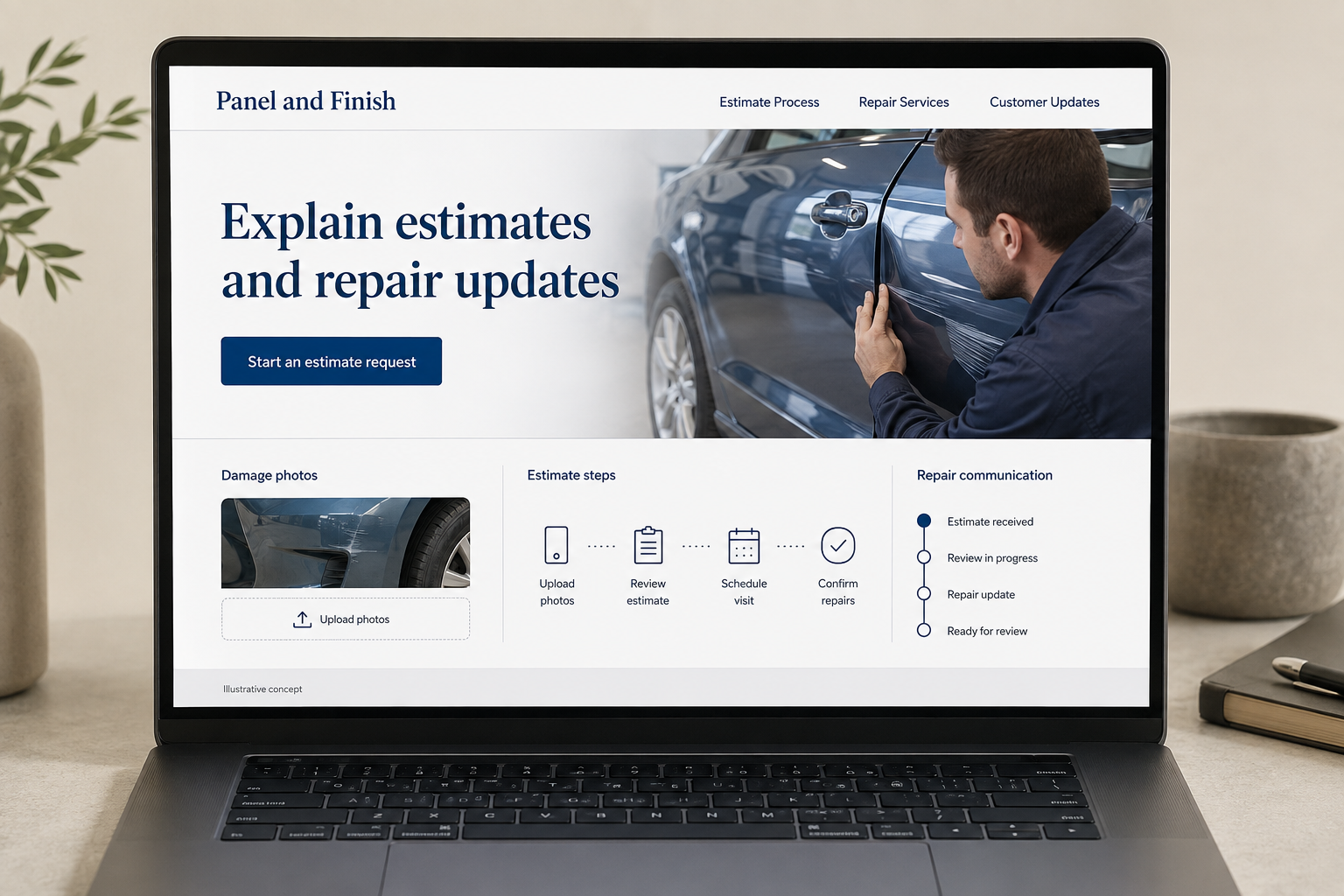
Explore this layout
Explain estimates and repair updates
Explore damage photos, estimate steps, and repair communication.
The main action is “Start an estimate request”. Supporting sections cover Damage photos, Estimate steps, Repair communication.

After body damage, a driver often wants a straightforward explanation of the next step. Should they call, send photographs, or arrange an estimate visit? Put that answer first. The rest of the website can explain repair scope and communication, show honest examples, and help customers understand what remains to be reviewed before work is accepted.
Explain the route from damage to an estimate
A driver with body damage may be unsure whether to send photos, visit the shop, or call first. Put the actual estimate process near the top of the page. Explain what photos can help establish and what still requires review. Avoid promising a final repair scope from an image alone. Customers should understand the next step without needing to know repair terminology or assume that every visible dent follows the same process in the shop.
Show the work and communication involved
Use permissioned repair examples with clear captions about the agreed scope. Avoid invented turnaround times or claims about a customer’s insurance outcome. Describe how updates, approvals, and changes are communicated during a job. Separate refinishing, collision repair, and other offered services where that helps customers choose a route. A readable process gives people a better basis for comparing shops than an image gallery that shows only glossy finished vehicles with no explanation of the service provided.
Collect photos without overloading the customer
Ask for vehicle details, contact information, and a short description of the affected areas. Offer simple photo guidance from safe, accessible positions and make uploads optional. Do not request sensitive insurance documents in the first public form. Explain whether an estimate visit needs an appointment. A confirmation should say who reviews the request and whether the customer should expect a call, rather than presenting a submitted photo set as an accepted repair booking.
Measure estimates that become appropriate work
Track which service pages produce estimate requests and which requests cannot be served. Repeated questions about rental transport, refinishing scope, or scheduling point to missing explanations. A guide to preparing for an estimate can attract useful readers without offering claims advice. Link it to the actual estimate route. Review the website with the people handling calls so the promises about contact and updates reflect the process customers experience once their vehicle reaches the shop.
Before you launch
- Explain the estimate route
- Make damage uploads optional
- Keep repair examples accurate
- Avoid insurance outcome promises
What should a photo estimate request promise?
Promise only the review the shop actually provides. Explain which vehicle details and images help, who examines them, and when a visit may still be needed. A photo submission should not imply that the final repair scope, price, completion date, or any insurance outcome has already been determined by the business.