

Explore this layout
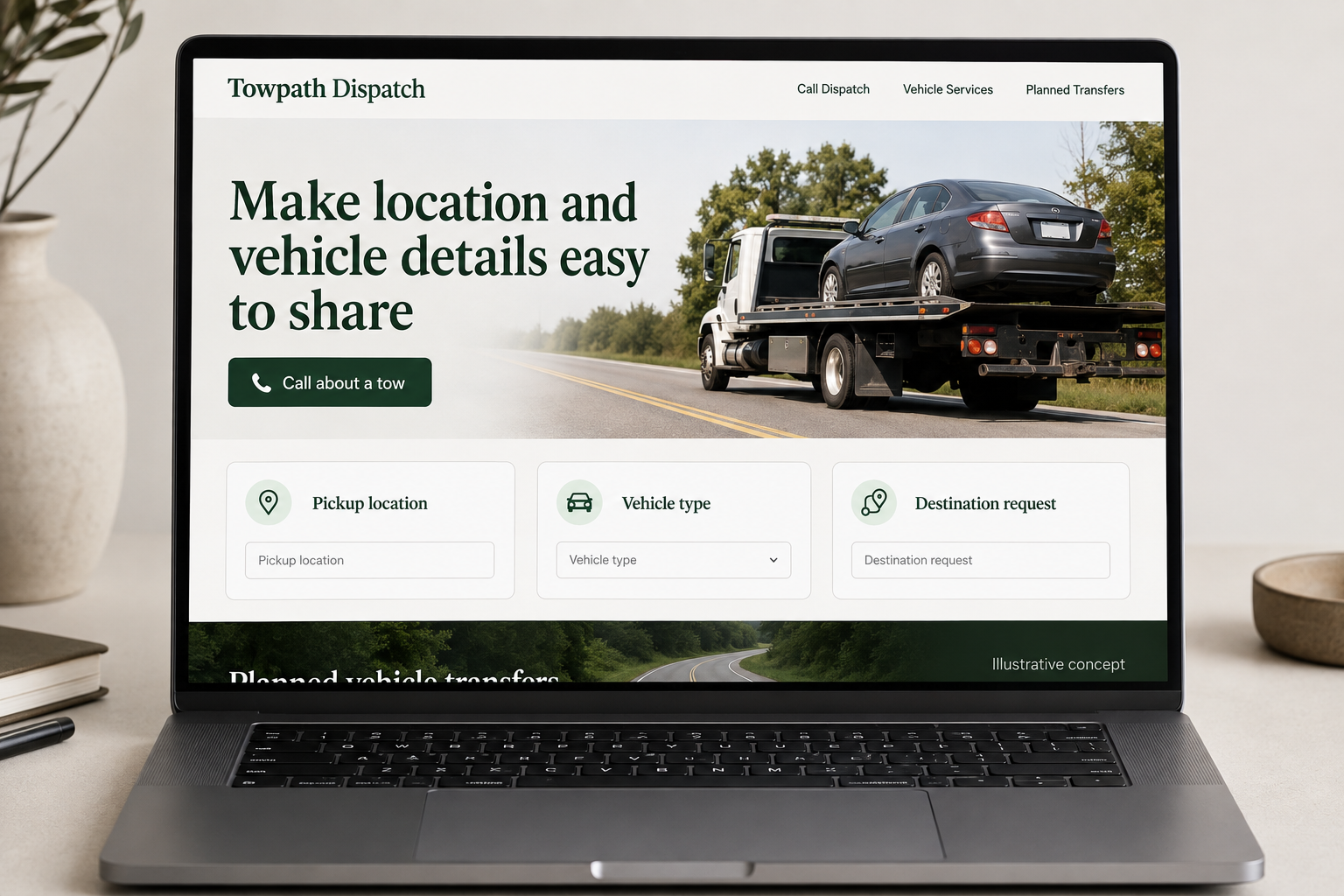
Make location and vehicle details easy to share
Explore pickup location, vehicle type, and destination request.
The main action is “Call about a tow”. Supporting sections cover Pickup location, Vehicle type, Destination request.
Someone looking for a tow may be reading a phone screen in an unfamiliar place. The website should make the next contact easy: a visible call action, real coverage information, and a short explanation of what dispatch needs to know. Planned vehicle transfers deserve their own route so scheduling questions do not compete with a request that needs immediate attention.
Put dispatch information before the gallery
A towing visitor often needs a clear phone route and a quick explanation of service coverage. State real contact hours and the kinds of vehicles the business handles. Avoid a universal arrival promise. The first screen should help the caller share location and vehicle details without making them read a long company history. Keep the website’s role clear: it starts a dispatch conversation, while availability and the job are confirmed through the business’s actual process.
Explain the details that affect the request
Describe the information the team asks about, including pickup location, vehicle type, destination, and any known access issue. Separate roadside assistance from towing if both are offered. Do not imply every truck can handle every situation. A service page can explain coverage and request handling without giving recovery instructions. Customers need to know whether the business is a plausible fit and how the dispatcher will confirm the appropriate next step for the specific request.
Design mobile contact for a difficult moment
Use a visible call action and a short form only if it is monitored appropriately. Let a visitor share a typed location rather than requiring device location permission. Explain what happens after submission and do not display a dispatch confirmation unless a dispatch has actually been accepted. Keep optional photos optional. If the visitor wants to arrange a planned vehicle transfer, provide a calmer inquiry route that collects dates and destination without competing with immediate phone contact.
Measure whether requests reach the right team
Track successful contact actions and the share of requests inside the supported area and vehicle range. Review abandoned forms and reports of unclear response expectations. If customers often ask for unsupported services, clarify the first screen. Useful supporting content can explain the details to have ready for a towing inquiry. Link it from the service page. The website’s success depends on accurate routing and useful information, not on how long a stranded visitor stays reading the site.
Before you launch
- Test the call action on a small phone screen.
- Allow typed pickup locations without device permission.
- State whether the request form is monitored for urgent work.
- Separate planned transfers from immediate dispatch inquiries.
Does submitting a towing form mean a truck is on its way?
Only if the business has actually accepted and dispatched the request through its operating process. An ordinary form confirmation should say that the details were received and explain the next contact step. Avoid a message or vehicle animation that makes an unreviewed inquiry appear to be an active dispatch.