

Make urgent contact clear and realistic Explore affected rooms, contact route, and assessment process. The main action is “Contact the response team”. Supporting sections cover Affected rooms, Contact route, Assessment process.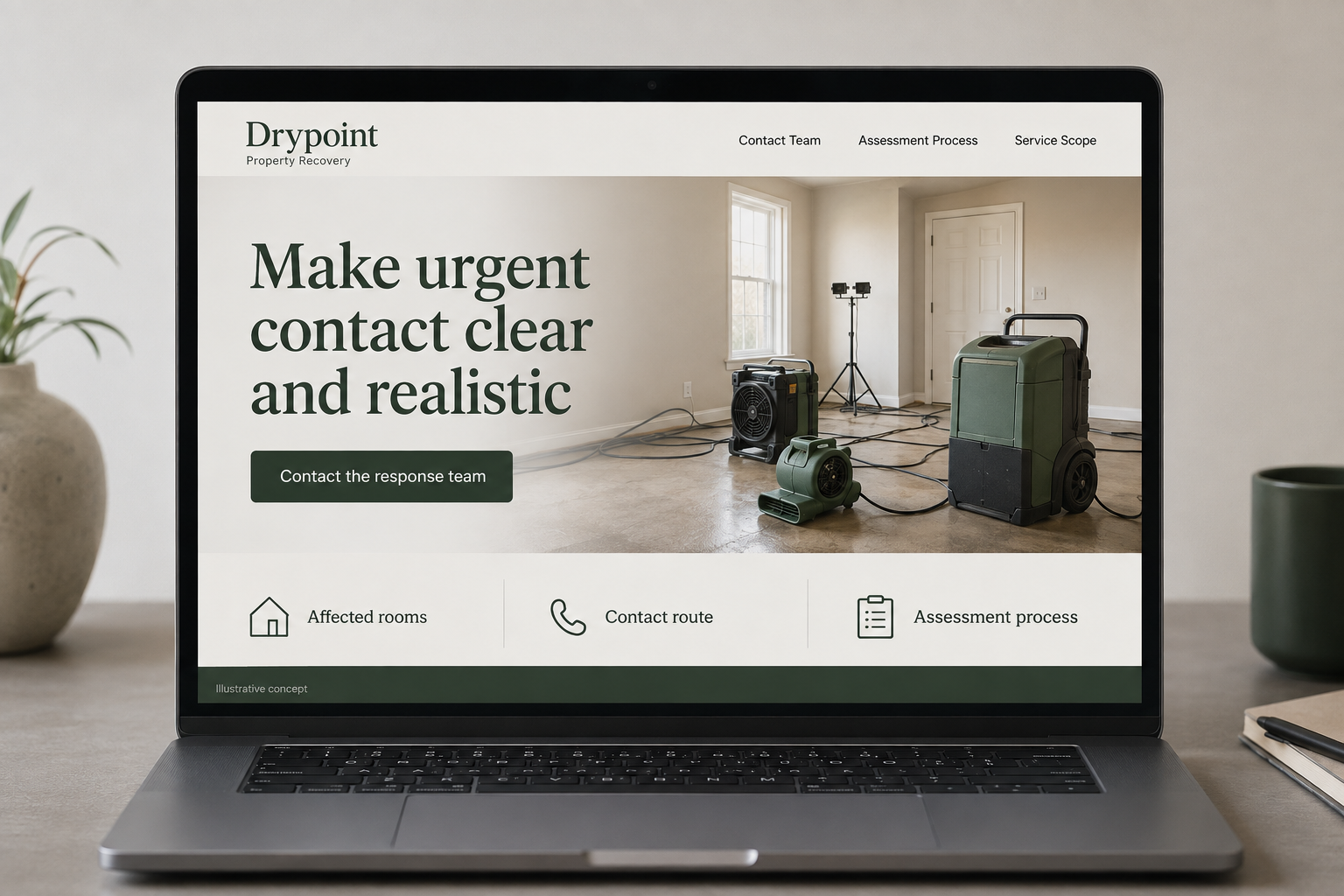
Explore this layout
Someone dealing with water in a property needs to know who to contact and what will happen next. Keep that route visible and the language calm. A restoration website should describe actual availability, explain the assessment and service boundaries, and avoid making an unreviewed online request look like a crew has already been dispatched.
Make the contact route obvious under stress
A visitor dealing with water in a property should not have to search through a portfolio for the phone number. State the company’s actual contact hours and coverage, and explain whether the line reaches dispatch or takes a message. Keep language calm and direct. Do not claim a universal arrival time. A short page can help someone describe the location and affected area while avoiding diagnosis or instructions for entering an unsafe space.
Explain the first assessment and later work
Separate the initial response discussion from the scope of drying, removal, restoration, or other services the business actually provides. Customers may assume one company handles every stage, so make the boundaries visible. Describe how findings and proposed work are communicated. Avoid promising insurance coverage or speaking for a customer’s insurer. A simple process diagram can show decision points without making every property’s work appear identical or already determined before an assessment.
Keep urgent intake short
Ask for the address, contact number, affected areas, and whether the request concerns a home or commercial property. Photos should be optional and never required before calling. Explain whether online requests are actively monitored at the time they are submitted. Do not collect policy documents or other sensitive material in an initial public form. The confirmation must say what happens next and must not imply a crew is dispatched unless that action has actually occurred.
Measure successful routing rather than form volume
Review whether callers reach the right team and whether online inquiries receive the response the page describes. Track out of area requests and misunderstandings about reconstruction or other follow on work. Useful supporting content can explain the company’s documentation and communication process without offering claims advice. Link it from the service page. In this setting, a clear contact path and honest service scope matter more than a long article designed only to attract broad search traffic.
Before you launch
- Show actual contact coverage
- Verify urgent form monitoring
- Separate restoration stages
- Avoid unsupported dispatch promises
Should an urgent form display a dispatch confirmation?
Only if the business has actually accepted and dispatched the job through a connected process. Otherwise, confirm receipt and state the real next contact step. Visitors under stress need precise language, especially when the form is not monitored continuously or the request requires a conversation before service is arranged.