

Choose an experience you can picture Explore the route, pace, and practical details before reserving your place. The main action is “Explore tours”. Supporting sections cover Compare tour formats, Meeting instructions, Choose a departure.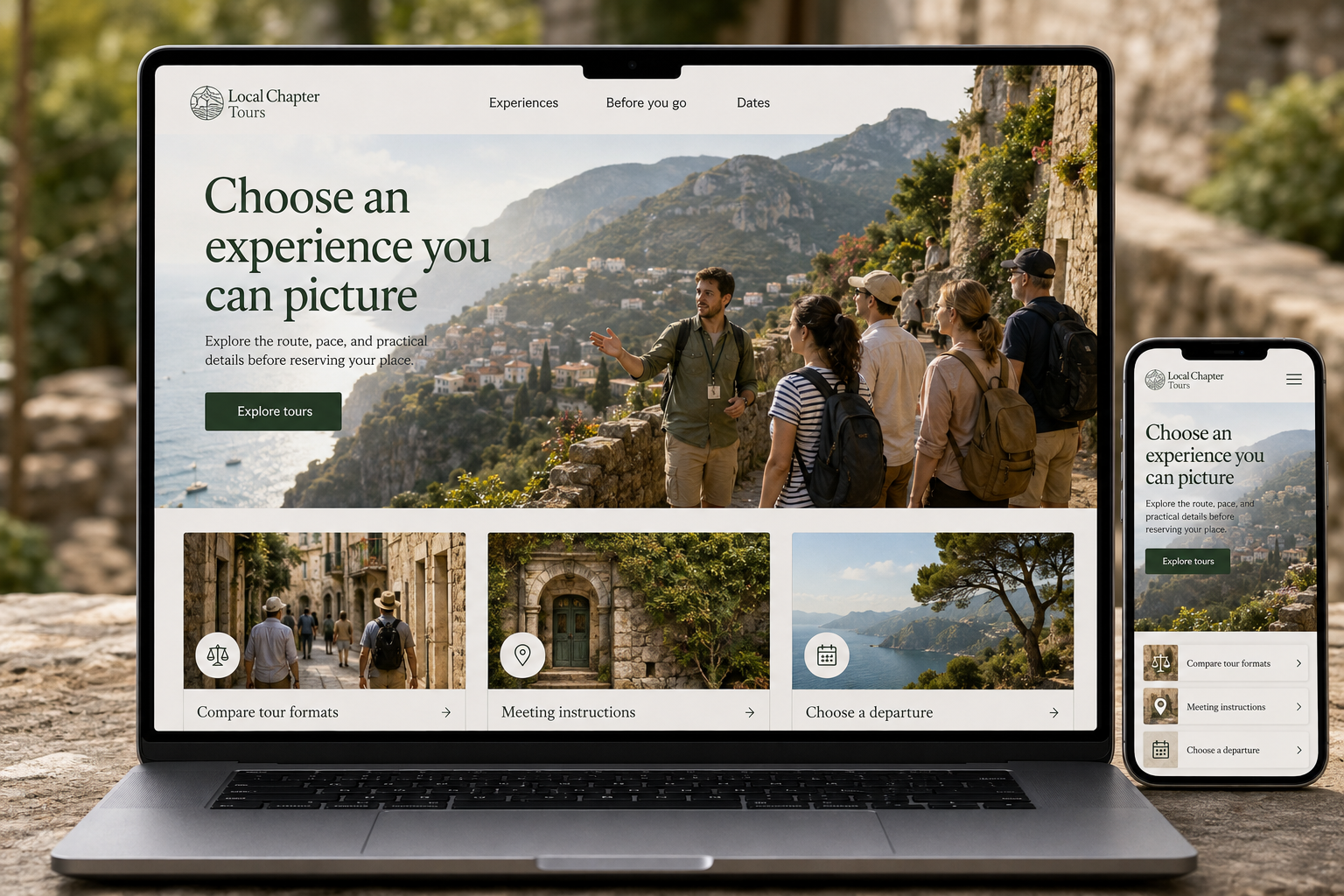
Explore this layout
Travelers buying a tour are trying to imagine a few hours or a day they have not experienced yet. A compelling description helps, but so do ordinary details about walking, waiting, transport, and meeting the group. The website should explain the experience clearly enough for people to decide whether it fits their interests and circumstances without revealing every enjoyable surprise.
Describe the actual shape of the experience
Outline the main stages, approximate duration, and type of participation. Explain what guests do rather than listing only places or adjectives. Where the itinerary can vary, identify the reason and the parts that are indicative. Use real, authorized photographs of the experience when available. A walking tour and a vehicle-based outing may visit similar places, but they ask very different things of participants. Those differences belong near the booking decision.
Give suitability questions a clear home
State relevant age limits, walking distance, terrain, equipment needs, and group size arrangements using verified operational information. Explain how travelers can ask about individual access requirements before reserving. Do not use a broad phrase such as suitable for everyone in place of specifics. Show what is included and what guests must arrange themselves. The customer should understand whether meals, entry tickets, or transport are part of the purchase or separate decisions.
Make joining instructions dependable
Show the meeting area and explain when detailed instructions are provided. Distinguish start time from the recommended arrival time. Keep date, participant count, and selected options visible throughout checkout, alongside the actual booking conditions. If a minimum group arrangement affects confirmation, explain how it works. Travelers may be planning other commitments around the tour, so the website should not leave them uncertain about whether their reservation is confirmed or still awaiting review.
Connect travel questions to suitable bookings
Write focused pages about choosing between the operator's experiences or preparing for a particular format. Use checked location information and avoid inventing local stories to fill search pages. Measure completed bookings, date searches, and suitability inquiries separately. Review questions asked immediately after purchase; they often reveal information missing from the sales page. A useful tour website attracts people who understand the experience, which helps the operator prepare and guests arrive with realistic expectations.
Before you launch
- Separate start and arrival times
- State included tickets and transport
- Describe terrain and participation
- Explain itinerary variations
Should a tour page show the complete itinerary?
Show enough to explain the experience, timing, and practical commitments. You can preserve small discoveries without withholding information that affects suitability. If stops depend on conditions or opening arrangements, label the itinerary as indicative and explain how changes are communicated rather than promising an inflexible route.