

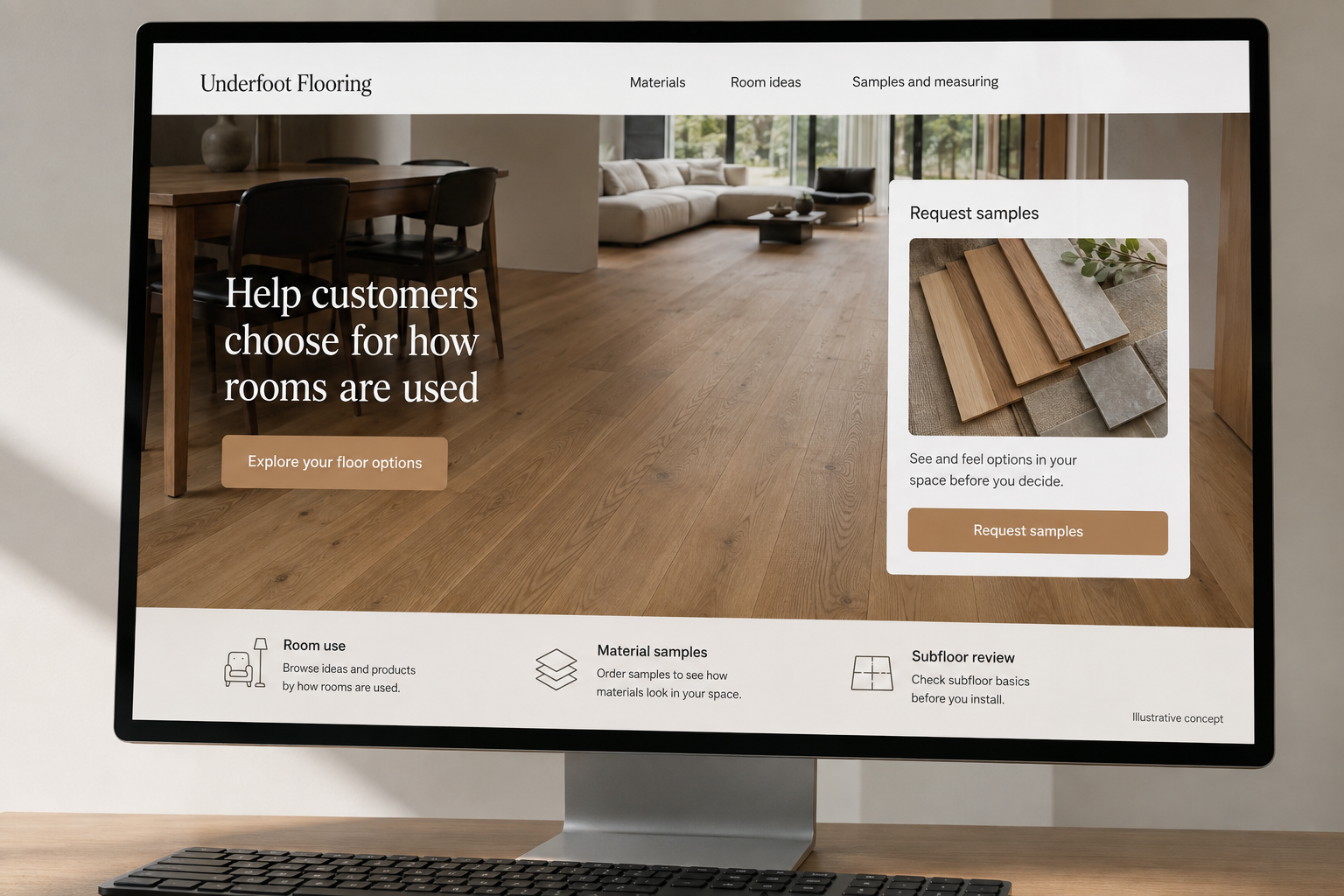
Explore this layout
Help customers choose for how rooms are used
Explore room use, material samples, and subfloor review.
The main action is “Explore your floor options”. Supporting sections cover Room use, Material samples, Subfloor review.
Flooring shoppers are choosing a surface they will walk on, clean, and live with for years. A useful website helps them compare materials in that context. Organize examples around the rooms and routines they need to support, then explain measurement, samples, and installation. The goal is to turn a broad preference for a look into a conversation about a suitable floor.
Organize flooring by the room’s demands
Shoppers often start with a material name before considering how the room is used. Offer routes for busy entryways, living spaces, and commercial rooms where relevant. Explain practical comparisons in plain language and use photos that show the floor within a room. Samples and product details should help visitors narrow a choice, while making clear that a site review may reveal preparation work before installation can be priced properly.
Make the estimate more than a square foot figure
Describe the parts of the job that can affect scope: removal of existing flooring, subfloor condition, transitions, stairs, and moving furniture. Do not publish one installed price as if every room were alike. If the business sells materials separately, distinguish product purchasing from installation inquiries. A customer should understand which route applies and what measurements or photos are useful before speaking with the team about a specific project.
Connect samples to an actual consultation
Let visitors save a few materials or styles and include those selections in an inquiry. Ask about the property, the rooms involved, approximate area, and desired timing. Avoid requiring exact measurements before contact. Explain whether samples are viewed in a showroom, brought to a visit, or ordered separately. On mobile, saved choices and the contact action should remain easy to reach without repeatedly navigating through the whole product catalog.
Measure the step after browsing
Track sample requests and installation consultations by material or room page, then compare them with the projects that progress. Lots of product views with few useful inquiries may mean stock or installation coverage is unclear. Ask staff what customers misunderstood about preparation. Add those answers to the relevant pages. A useful flooring website lets people make a shortlist and understand the next step, rather than merely scroll through patterns.
Before you launch
- Show material names beneath room photographs.
- Explain how sample requests and measurements are arranged.
- Ask about the existing floor and occupied rooms.
- Distinguish supplied material from installation-only services.
Should the website display every flooring sample?
A complete catalog is useful only if someone can maintain it and visitors can narrow the options. Begin with the ranges you actively supply, clear material information, and a route to see samples. Avoid presenting an old collection as available simply because its photographs still look good.