

Explore this layout
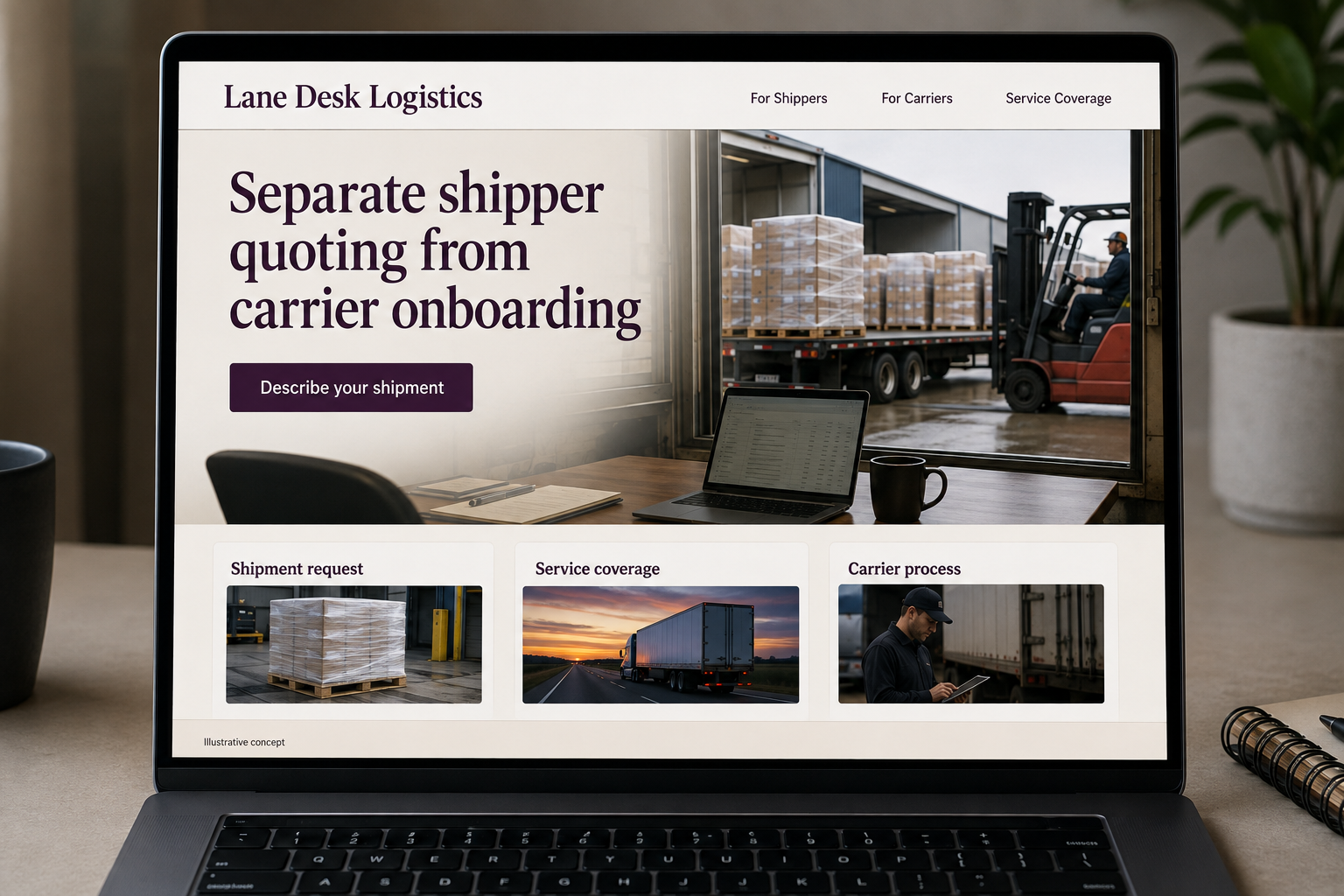
Separate shipper quoting from carrier onboarding
Explore shipment request, service coverage, and carrier process.
The main action is “Describe your shipment”. Supporting sections cover Shipment request, Service coverage, Carrier process.

A shipper requesting a rate and a carrier applying to work with a brokerage should not land in the same form. Clear entrances for those two audiences make a freight-broker website easier to use and easier to operate. The rest of the page should explain the brokerage’s actual coordination role, the details needed to review freight, and how the next conversation begins.
Give shippers and carriers different entrances
A shipper seeking capacity and a carrier asking about onboarding are trying to do different jobs. Put those routes in plain language near the top of the site. Explain the brokerage’s actual services and coverage without suggesting that every shipment can be accepted. A buyer should understand who reviews the freight request and how the conversation starts, while a carrier can find the appropriate process without sending documents through the shipper’s quote form by mistake.
Explain coordination rather than imply owned assets
Describe how the business handles quoting, communication, and shipment coordination according to its actual role. Do not use imagery or wording that falsely suggests ownership of trucks or facilities. Service pages can explain the freight types and arrangements the brokerage supports. Buyers need to know what information is gathered, how updates are communicated, and which details are confirmed for a specific load. Clear role descriptions help the visitor compare the offer on an accurate basis.
Keep the first shipment request focused
Ask for origin, destination, timing, freight description, and known dimensions or weight. Let the shipper flag special handling questions without forcing technical certainty. Sensitive commercial documents can follow through an appropriate channel. Explain that the form requests review and does not guarantee capacity or a rate. The confirmation should identify the next contact step. Carrier onboarding should use its own controlled process, with current requirements available from the team responsible for that relationship.
Measure useful opportunities on both routes
Track suitable shipper inquiries separately from carrier interest. Repeated documents arriving in the wrong inbox signal a navigation problem rather than a lack of traffic. Content about preparing a freight brief can support customer acquisition when linked to the quote request. Review the fields with operations staff so they collect information that actually helps assess a shipment. The site should reduce confusion about roles and next steps, not rely on broad language about moving anything anywhere at any time.
Before you launch
- Give shippers and carriers distinct navigation actions.
- Check that imagery does not imply owned trucks inaccurately.
- Keep onboarding documents out of the shipper quote form.
- Explain what a freight request still needs before acceptance.
Should carrier onboarding appear inside the shipper quote form?
Separate it. The two audiences provide different information and need different follow-up teams. A shipper form can focus on a proposed shipment, while carrier onboarding follows the brokerage’s controlled process for that relationship. Clear labels also make it easier to measure useful shipper opportunities without mixing them with supplier interest.