

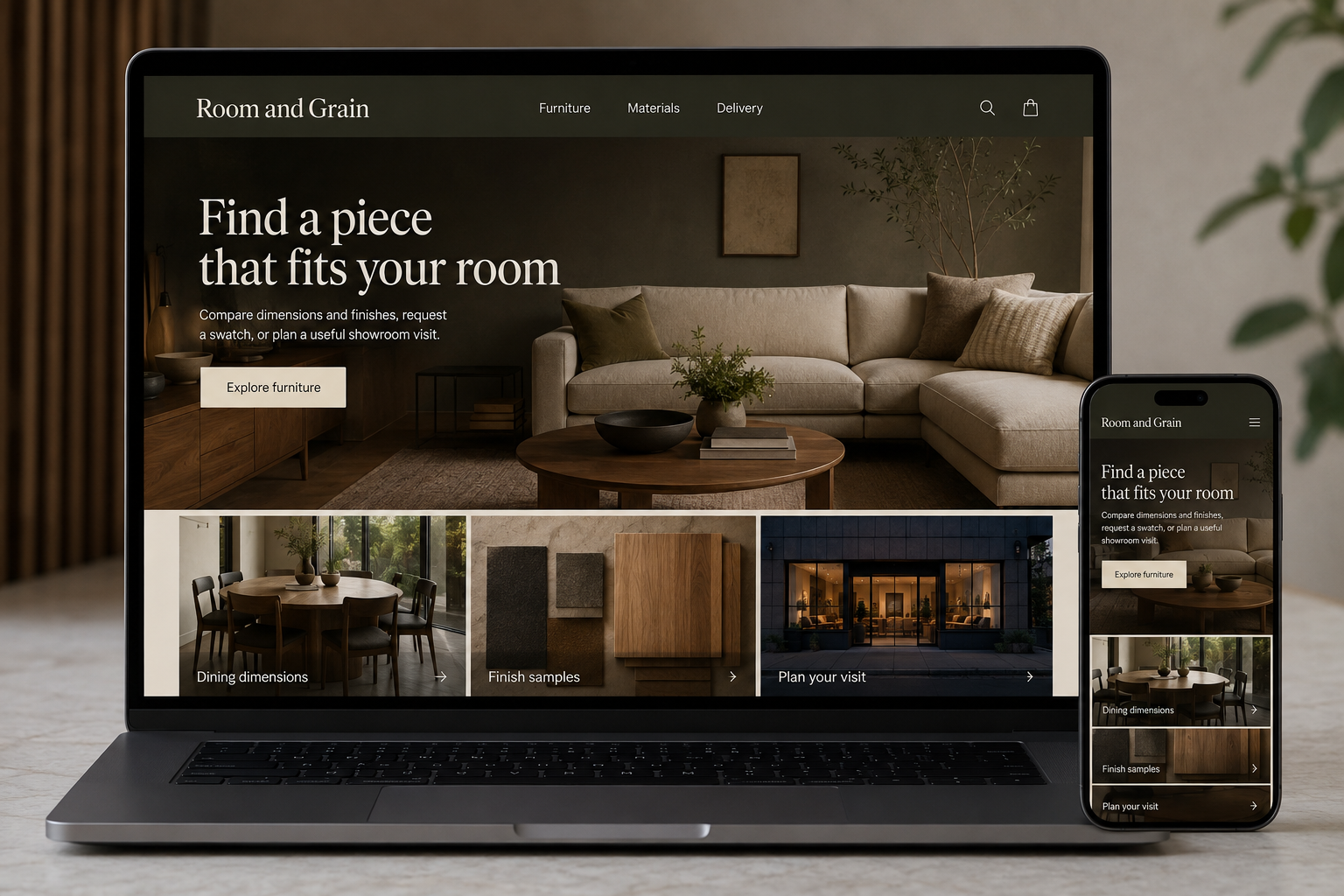
Explore this layout
Find a piece that fits your room
Compare dimensions and finishes, request a swatch, or plan a useful showroom visit.
The main action is “Explore furniture”. Supporting sections cover Dining dimensions, Finish samples, Plan your visit.
Furniture buyers are imagining an object in a room they already live in. They need to know whether it fits through the door, suits the space, and feels right in daily use. A store website can make that decision easier with consistent dimensions and material details, then offer a useful showroom or inquiry route when photographs cannot settle the question.
Help customers check the footprint
Show overall dimensions, usable dimensions where relevant, and a diagram that makes their meaning clear. For seating, include seat height and depth rather than only the outer frame. An extending table should show both configurations. Describe assembly and packaged dimensions if they affect access. A simple printable measuring checklist can be more useful than a room visualization that makes the product look convincing without confirming it will fit through the customer's hallway.
Make materials tangible online
Provide close photographs of finishes, upholstery, and construction details. Explain which variation is expected in natural materials and whether a swatch is available. Keep selected finishes reflected in the product summary and price. If a sample photograph shows a different combination, label it. Customers comparing two similar pieces need facts about surfaces, care, and configuration, not interchangeable claims that both products are beautiful, timeless, and suitable for every room.
Explain the journey into the home
Distinguish collection, doorstep delivery, room placement, and assembly if the store offers those different services. State how delivery areas, access information, and scheduling are checked. Made-to-order lead times should be presented as the store can actually support them, with a clear process for updates. Ask for access details at a sensible point in the order. A buyer should not discover after payment that the selected service leaves a heavy item outside.
Give showroom visits a purpose
Let shoppers save a shortlist or request to see a particular finish before traveling. Explain which pieces are on display and which are catalog-only. Publish practical guides about comparing table sizes or preparing for a delivery, linking to the relevant product information. Measure showroom appointments, sample requests, and qualified product inquiries alongside sales. These steps often belong to a longer buying process, so the website should help staff continue the conversation with context.
Before you launch
- Show packaged dimensions where relevant
- Label showroom display availability
- Define each delivery service
- Update price with selected finishes
Is a room visualizer essential for selling furniture?
It can help people explore appearance, but accurate dimensions and clear photographs come first. Treat any visualization as an aid rather than a measurement tool. Customers still need to check room space, access routes, and the actual product specifications before ordering a large piece.