

Find the artist for your idea Explore individual portfolios and begin a clear conversation about your next project. The main action is “Explore the artists”. Supporting sections cover Browse by approach, Describe your idea, From inquiry to booking.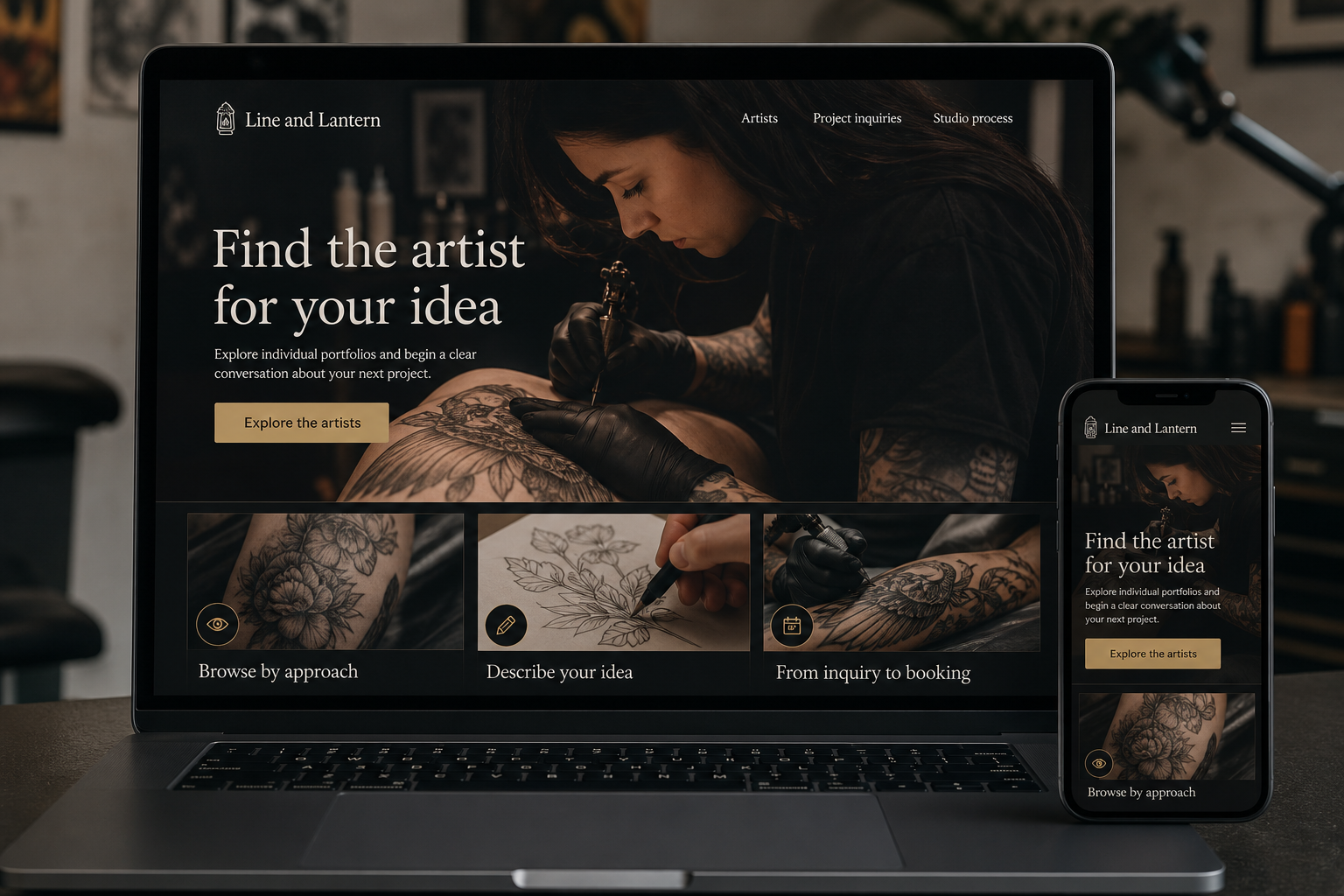
Explore this layout
Tattoo clients often start with a visual idea and then need to find an artist whose work fits it. The website should make that matching process easier without reducing individual projects to a generic booking slot. A strong portfolio and a thoughtful inquiry form can help the studio understand the request, explain its process, and identify the right conversation before a date is arranged.
Let each artist's work stand on its own
Give artists distinct portfolio pages with real, permission-cleared images and concise descriptions of the kinds of work they take on. Show healed work where available and label images accurately. Keep cropping and editing from obscuring the tattoo itself. Let visitors browse by meaningful style or subject without implying that every artist offers every approach. The purpose is to help a client recognize an appropriate fit, not to fill the screen with an unstructured image feed.
Ask for the shape of the project
A useful inquiry captures the idea, approximate size, proposed placement, preferred artist if any, and scheduling flexibility. Allow reference images as optional context and explain that they support a discussion rather than guarantee a copy. Give uncertain clients a way to describe what they do know. Avoid collecting sensitive personal histories through a broad marketing form. The first step should gather enough creative context for the studio to route the request thoughtfully.
Explain how an inquiry becomes an appointment
Describe consultation, design discussion, quotation, and deposit stages as the studio actually handles them. Make clear when a date is held and what confirmation the client receives. If flash designs are bookable through a different route, distinguish their availability and customization limits. Publish studio policies in readable language close to the relevant decision. A successful form submission should not look like a confirmed tattoo appointment when the artist still needs to review the project.
Build trust through useful process information
Write focused pages about preparing a project brief or choosing among the studio's artistic approaches. Keep health or aftercare matters within the studio's qualified process rather than improvising advice in search content. Measure suitable project inquiries and consultations that progress, alongside the reasons requests are redirected. If the wrong artist receives many inquiries, improve portfolio navigation. The site should make the first conversation more informed, not simply maximize the volume of messages.
Before you launch
- Identify the artist on portfolio images
- Keep references optional
- Explain when dates are held
- Separate flash and custom inquiries
Should a tattoo studio offer instant online booking?
It can work for clearly defined appointments or available flash under the studio's own process. Custom work often needs review before duration and pricing can be established. Keep the routes distinct and explain exactly what an online reservation covers so clients do not assume a project has been accepted automatically.