

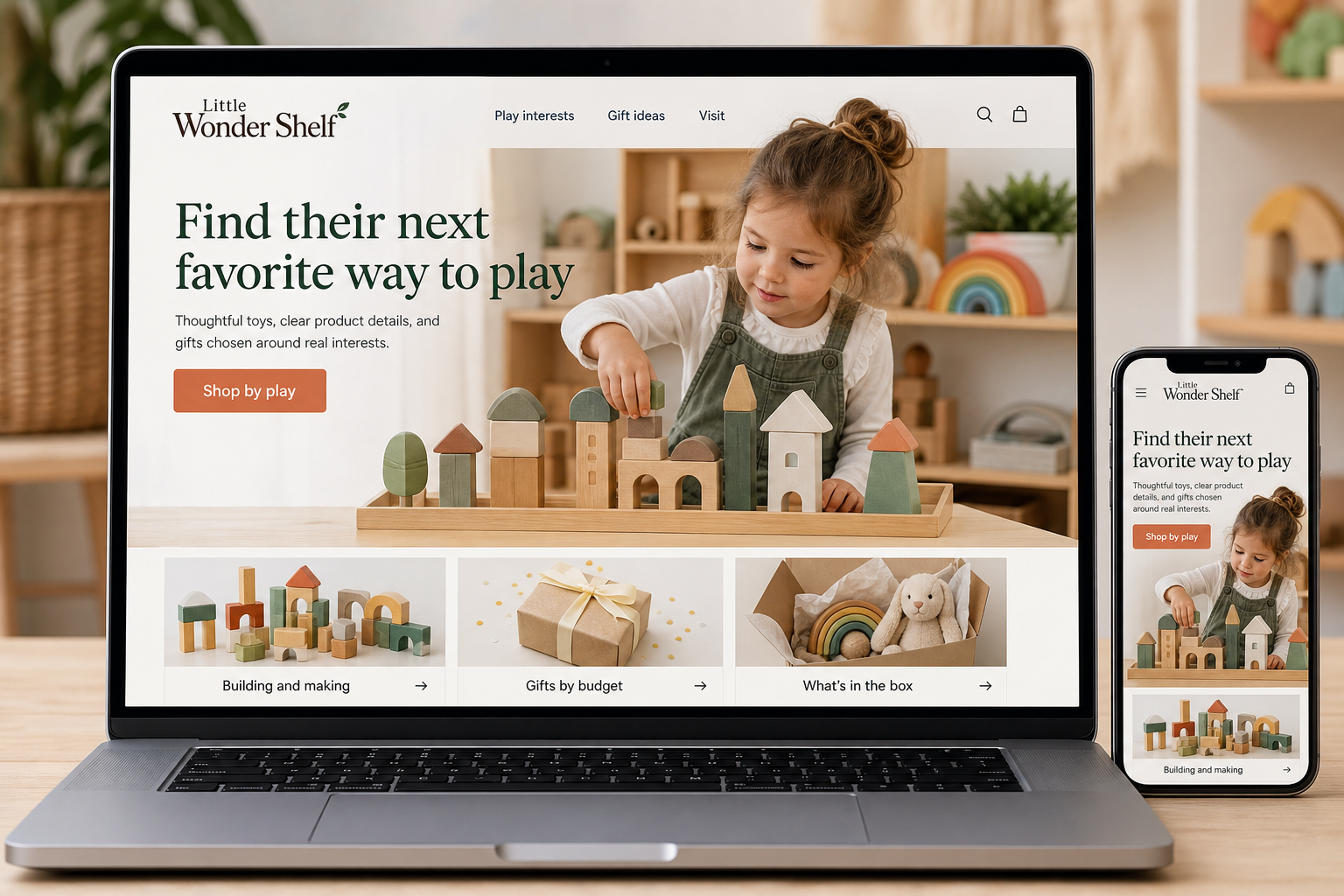
Explore this layout
Find their next favorite way to play
Thoughtful toys, clear product details, and gifts chosen around real interests.
The main action is “Shop by play”. Supporting sections cover Building and making, Gifts by budget, What's in the box.
Adults buying toys do not always know the name of the thing a child will enjoy. They may know the child loves building, inventing stories, or making a glorious mess. A useful website starts there. It should offer enough detail to make a considered choice while keeping age information, included pieces, and practical gift arrangements easy to find.
Let play interests lead
Offer collections such as construction play, pretend kitchens, drawing, and shared games. Use manufacturer age guidance visibly, but avoid treating age as the only indicator of suitability. Describe what a child actually does with the toy and whether play is mainly independent or shared. A short demonstration or sequence of photographs can explain an open-ended item better than a decorative lifestyle image that hides the product's scale and contents.
Show what comes in the box
List included pieces, approximate assembled dimensions, required batteries if applicable, and any additional items needed to use the product. Distinguish compatible accessories from included components. Show packaging when gift buyers need to judge presentation. Make manufacturer warnings and product information accessible near the description instead of relying on unreadable text inside a photograph. These details help avoid the disappointment of opening a gift that cannot be used as expected.
Build a useful gift journey
Allow a buyer to filter by interest and budget, then offer wrapping and a message where the shop provides them. State whether prices appear in the parcel and explain how collection works for someone other than the purchaser. Keep delivery expectations visible for birthday deadlines. A small selection of staff-chosen gifts can help uncertain shoppers, especially when the recommendation explains why the item suits a particular style of play.
Find out where advice earns trust
Track gift-guide visits through to product views, questions, and purchases. Ask staff which online descriptions still leave customers confused at collection. Those questions can reveal missing dimensions, unclear assembly requirements, or misleading photographs. Refresh collections when stock changes and retire seasonal banners promptly. The shop's knowledge should remain visible throughout the year, with useful explanations that outlast a promotion and make future gift shopping feel easier.
Before you launch
- List batteries and extra requirements
- Show manufacturer age guidance
- Confirm gift receipt behavior
- Photograph the included pieces
Should toys be organized only by age?
Age filters are helpful, especially for gift buyers, but they should sit alongside interests, play style, and manufacturer information. Children of the same age enjoy different activities. Combining those paths gives shoppers a more useful shortlist than a single age-based shelf can provide.