

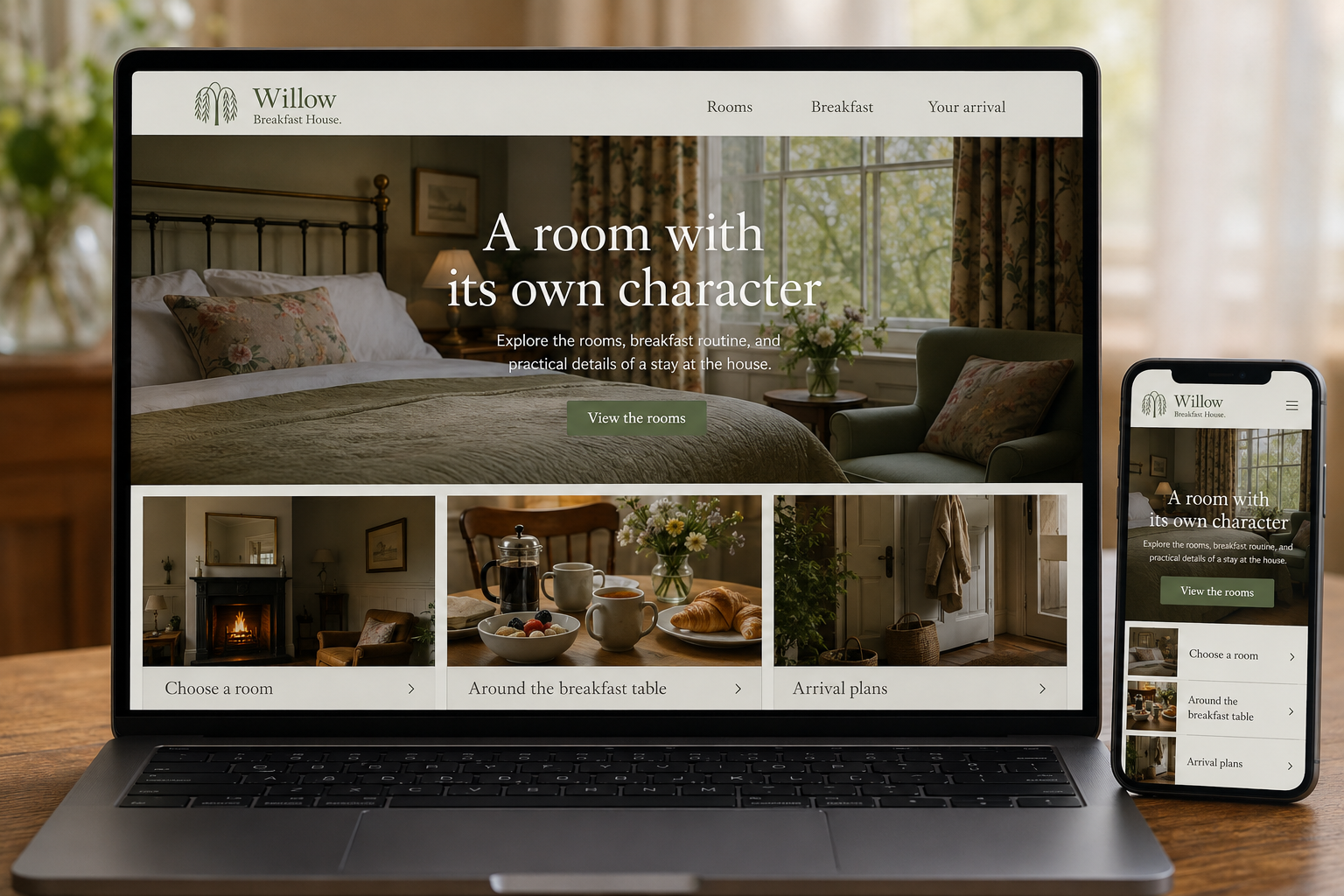
Explore this layout
A room with its own character
Explore the rooms, breakfast routine, and practical details of a stay at the house.
The main action is “View the rooms”. Supporting sections cover Choose a room, Around the breakfast table, Arrival plans.
A bed and breakfast is often a more personal experience than a large hotel, which makes expectations especially important. Guests may share a dining room, arrive at a particular time, or stay in rooms with different layouts. The website should describe those details warmly and plainly. Character becomes more inviting when visitors can picture the practical rhythm of staying in the house.
Give each room its own honest description
Show actual photographs, bed configuration, bathroom arrangements, and any features guests should know before choosing. If a room is reached by stairs or has a sloping ceiling, explain it clearly rather than hiding it behind a romantic name. Describe views accurately without implying that every room has the one shown on the homepage. A comparison can help guests choose among a small number of distinctive rooms without opening several repetitive pages.
Explain breakfast as part of the stay
Tell guests where breakfast is served, the usual timing, and whether the format is shared, individually ordered, or prepared another way. Describe how dietary questions should be raised before arrival using the property's actual practices. Avoid promising every request can be accommodated. Show whether breakfast is included in the selected offer. This is a central part of the experience, so it deserves more than a photograph of a table with no practical explanation.
Set a comfortable arrival routine
Publish check-in arrangements and explain how guests communicate a delayed arrival. State which spaces are private, shared, or available only at certain times. Include parking and access information where relevant and verified. If booking begins with an inquiry, make the response and confirmation stages explicit. Guests should know when a room is actually reserved and what information they will receive before traveling, especially when there is no continuously staffed reception desk.
Let local guidance reflect real hosting
A short guide to a nearby walk, a quiet afternoon, or places to eat can be useful when the host knows and maintains the information. Label dates where opening arrangements may change and link directly to appropriate sources. Measure room inquiries, completed bookings, and questions about the house routine. If guests repeatedly misunderstand bathroom arrangements or arrival windows, improve those pages first. Useful detail is more persuasive than describing every stay as unforgettable.
Before you launch
- Show each room's bathroom arrangement
- State breakfast timing and inclusions
- Explain delayed-arrival contact
- Identify shared and private spaces
Should a small property use instant booking?
It can work well when availability and room rules stay accurate. Inquiry-led booking may suit a property that needs to discuss particular arrangements first. Whichever route is used, explain when the reservation becomes confirmed and avoid making guests guess whether submitting their details has secured the room.