

Find your next night at the theater Explore the program, compare dates, and see the practical details for your visit. The main action is “Browse performances”. Supporting sections cover Choose a performance, Understand the seating, Before the doors open.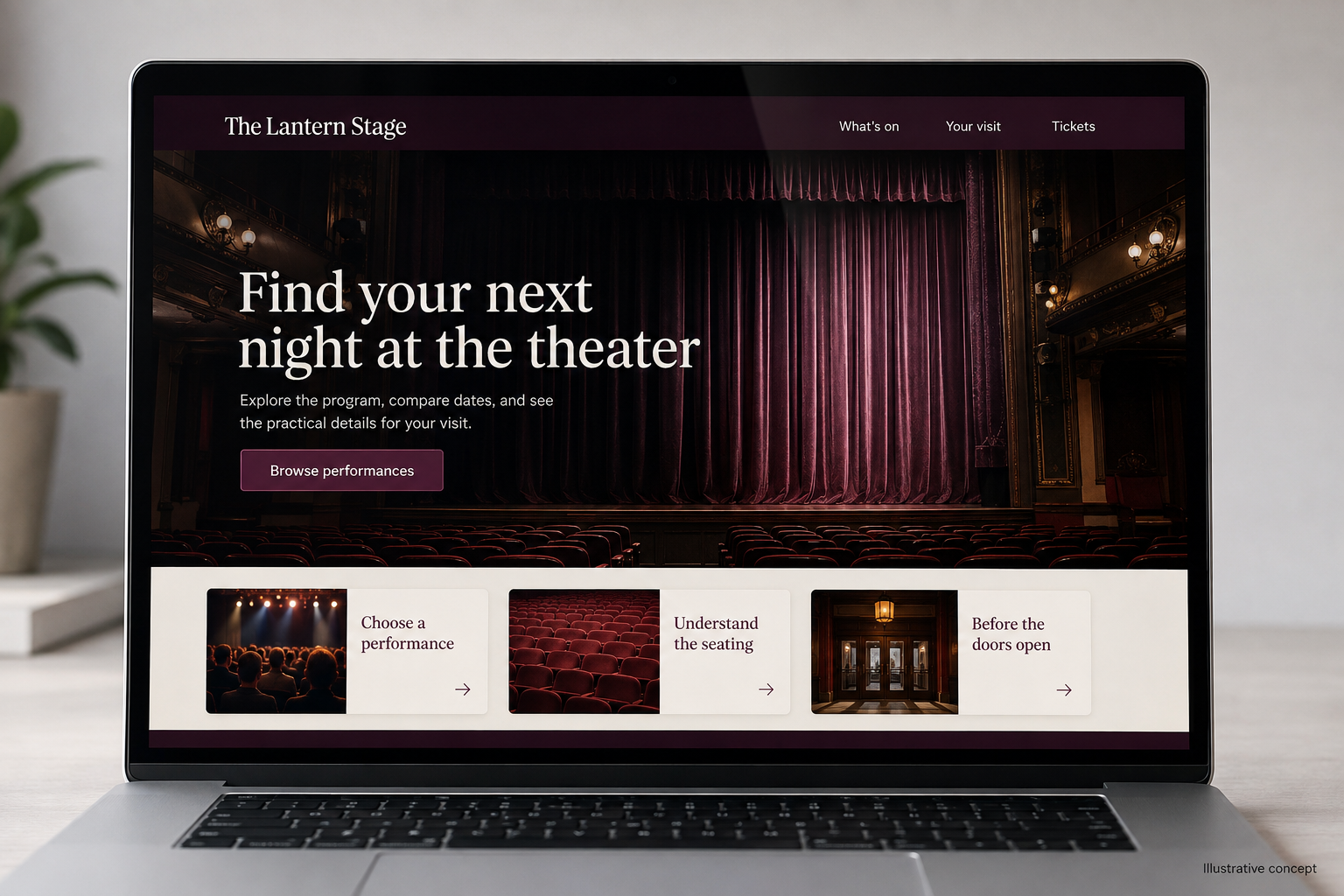
Explore this layout
People booking a performance need to coordinate a date, companions, seats, and arrival plans. A venue website should help them do that while communicating what the show offers. The performance description creates interest; clear ticketing and practical information carry it forward. A visitor should never have to choose between understanding the production and finding out which date they are actually booking.
Give each production a useful page
Describe the performance, credited artists, dates, approximate running time when known, and any interval information. Keep content notes and other audience guidance available in a consistent location using information supplied by the production. Distinguish a production's overall run from an individual performance time. Use permission-cleared images and avoid invented reviews. Visitors need enough context to judge interest and suitability without encountering a wall of promotional praise that says little about the experience.
Make ticket choices understandable
Show the selected performance date and time throughout seat selection and checkout. Explain seating categories, restricted views where relevant, and the actual charges before the final action. If seats are unreserved, say how admission works. Keep companion or group arrangements clear through the venue's established process. An external ticketing platform should preserve the production context so a customer does not feel they have lost their place or accidentally switched to a different event.
Prepare the audience for arrival
Publish entry location, opening time for doors, travel information, and verified access details. Explain how tickets are delivered and what the venue accepts at the entrance. Give visitors a way to ask individual questions before purchasing where published information is insufficient. If late arrival affects admission, state the venue's actual arrangement. Practical information should be accessible from both the show page and confirmation, because some people plan ahead and others check while traveling.
Build a program people can return to
Let visitors browse by date and meaningful performance type, with sold-out and ended events clearly marked. Offer updates through an optional, clearly described subscription where available. Measure show-to-ticket journeys, checkout completion, and repeat attendance where appropriate records exist. Review support requests about seat locations or ticket delivery. Those questions can reveal a more valuable improvement than adding another promotional banner. The website should make attending the next show easier as familiarity grows.
Before you launch
- Repeat performance date during checkout
- Label restricted-view seats
- Explain ticket delivery and entry
- Mark sold-out and ended performances
Should old performance pages be deleted?
They can remain as a clearly dated archive, especially when they contain program information or documented work. Remove active booking controls and link to upcoming performances. Visitors arriving from search should immediately understand that the event has ended and know where to find the current program.